Ink Blue RTA Kitchen, 2.4 Meter Run, Flat-Pack in Nine Cartons
0.71 m3 and 88 kg for a 2.4 meter run, about 88 runs to a 40HQ — an apartment-scale program priced by the linear meter and shipped by the cubic meter
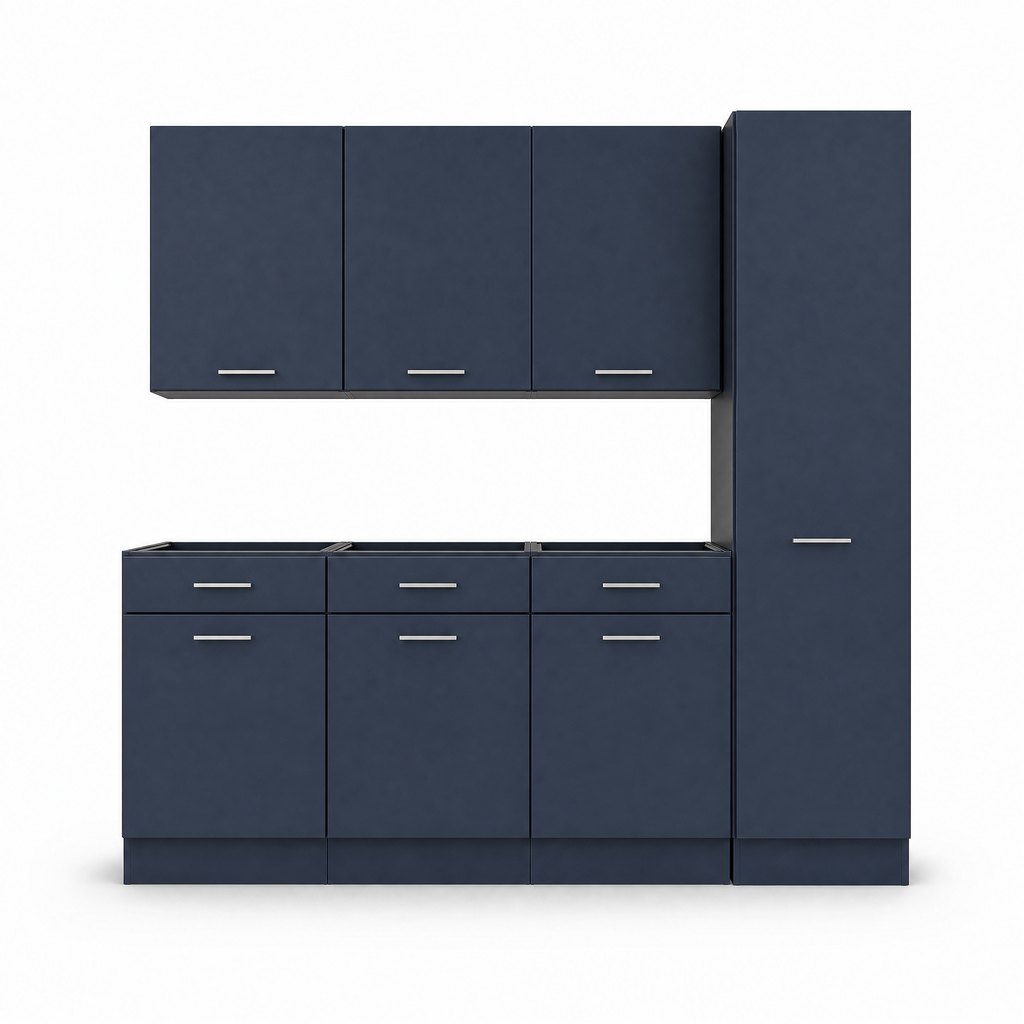
Apartment kitchens do not need a 3 meter run, and a program built only around 3 meters leaves money in the container. This one is seven units: a 2.4 meter base run in three 800 mm cabinets, a 1.8 meter wall run in three 600 mm cabinets and a 500 mm pantry, all in 18 mm EN 312 P3 board with deep ink blue super-matte melamine fronts. Nine cartons at 0.71 m3 and 88 kg gross, so about 88 runs go into a 40HQ and a 20GP still carries about 39. Assembly is cam and dowel, no glue, no specialist tool.
- ModelFAME-KC-RTA-IB
- Program scope2.4 m base run, 1.8 m wall run, one 500 mm pantry; seven units per run
- Carcass18 mm EN 312 P3 melamine-faced board, E1 emission class, 5 mm HDF back panel; 560 mm depth standard, 610 mm (24 in) US depth on the same cutting list
- Doors18 mm MFC, deep ink blue super-matte, 0.6 gloss units, 3 mm reveal, 1 mm ABS laser-fused edge on four sides, 128 mm matte aluminum bar handle
- HingesDTC 110 degree clip-on, 3D cam adjustment, 40,000 cycles
- DrawersDTC 30 kg tandem box, soft close, 50,000 cycles, 16 mm base panel
Trade inquiry only — this is a B2B catalog with no online checkout. Our team replies within 24 hours.
Full Specification
- ModelFAME-KC-RTA-IB
- Program scope2.4 m base run, 1.8 m wall run, one 500 mm pantry; seven units per run
- Carcass18 mm EN 312 P3 melamine-faced board, E1 emission class, 5 mm HDF back panel; 560 mm depth standard, 610 mm (24 in) US depth on the same cutting list
- Doors18 mm MFC, deep ink blue super-matte, 0.6 gloss units, 3 mm reveal, 1 mm ABS laser-fused edge on four sides, 128 mm matte aluminum bar handle
- HingesDTC 110 degree clip-on, 3D cam adjustment, 40,000 cycles
- DrawersDTC 30 kg tandem box, soft close, 50,000 cycles, 16 mm base panel
- WorktopNot included — 25.5 mm laminate or 20 mm compact option quoted separately
- Plinth100 mm adjustable plinth, 4 legs per unit, ABS kick board in the same decor
- AssemblyCam and dowel, 25 minutes per unit, hardware bag per carton, no glue
- PackingNine cartons, 0.71 m3 total, 88 kg gross per 2.4 m run
- Carton sizeLargest carton 1,180 x 560 x 92 mm; all cartons fit a 48 x 40 in GMA pallet
- Loading quantityAbout 88 runs per 40HQ, about 39 runs per 20GP
- MOQ20 sets (2.4 m run) per finish
- Lead time25-30 days after deposit and cutting list confirmation
- Loading portNingbo / Shanghai, FOB
Why Buyers Choose This Model
- Seven units make a 2.4 m base run, a 1.8 m wall run and a 500 mm pantry — one purchase order, one cutting list, no separate minimum order per unit width
- 18 mm EN 312 P3 board for load-bearing use in humid conditions in E1 emission class, edge banded on four sides with 1 mm ABS so a dishwasher leak does not open the seam
- Deep ink blue super-matte melamine at about 0.6 gloss units, a decor that hides fingerprints and appliance smudges without the sheen that shows every mark in a rental turnover
- Standard carcass depth 560 mm with a 610 mm (24 in) US-depth option on the same cutting list, so one program serves a European carcass and an American 24 in countertop
- DTC 110 degree clip-on hinges with 3D cam adjustment, tested to 40,000 cycles, so a door that drops after two years is a screwdriver job rather than a claim
- DTC 30 kg tandem drawer boxes with soft close, rated to 50,000 cycles, running on a 16 mm base panel rated for the same load, with a hardware bag in every carton
- Nine cartons at 0.71 m3 and 88 kg gross for the whole run — about 88 runs per 40HQ against roughly 28 assembled at 2.4 m3, and every carton fits a 48 x 40 in pallet
- Cam and dowel assembly at 25 minutes a unit with numbered panels and a paper template per carton, so a dealer builds against confirmed orders instead of stocking built boxes
Specification Questions Buyers Ask
Why build the program around 2.4 meters instead of the usual 3 meters?
Does the 610 mm US depth option cost more than the 560 mm carcass?
What exactly is inside 0.71 m3, and what is not?
Can mixed widths and a second finish ship in the same container?
How does the per-meter price react to drawer count and hardware brand?
Building a Kitchen Cabinets Program?
Send your target market, sizes and quantities — we reply within 24 hours with a tailored quotation.