1000mm Wall-Hung Vanity with a One-Piece Cast Resin Top-Basin in Clay Greige
0.158 m3 and 36 kg in two cartons, about 420 sets to a 40HQ — a cast resin top-basin costed by the cubic meter, not by the showroom
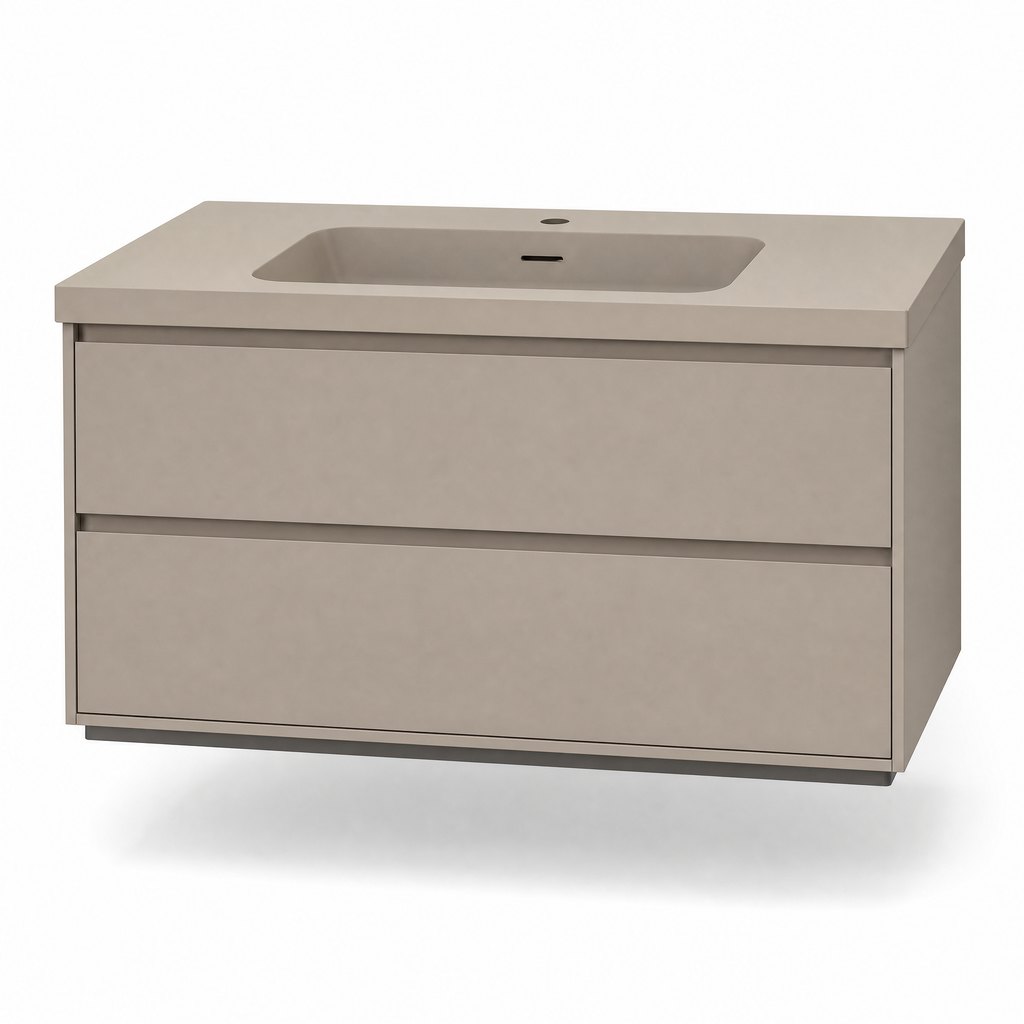
The argument for this vanity starts with the joint that is not there. The top and the basin are one casting in mineral-filled resin, 12 mm at the deck and 30 mm at the apron, so there is no silicone line around a bowl to go black in a rental bathroom. The carcass is 18 mm HMR particleboard in clay greige super-matte MFC, CARB Phase 2 and TSCA Title VI compliant, with two DTC 30 kg undermount drawers on a steel hanging rail. Two cartons, 0.158 m3 and 36 kg gross, about 420 sets to a 40HQ.
- ModelFAME-RB-1000CG
- Nominal size1000 x 480 x 520 mm (39.4 x 18.9 x 20.5 in), W x D x H, wall-hung
- Carcass18 mm HMR particleboard, CARB Phase 2 / TSCA Title VI compliant, 5 mm HDF back panel
- Fronts18 mm MFC slab, clay greige super-matte, 0.6 gloss, 1 mm ABS laser edge, integrated 45 degree finger pull, no handle drilling
- Top-basinOne-piece cast top-basin, mineral-filled resin (solid surface), 12 mm deck, 30 mm apron, matte at 3 gloss units
- Bowl520 x 340 x 120 mm, 12 L to overflow, integrated slotted overflow, 45 mm waste
Trade inquiry only — this is a B2B catalog with no online checkout. Our team replies within 24 hours.
Full Specification
- ModelFAME-RB-1000CG
- Nominal size1000 x 480 x 520 mm (39.4 x 18.9 x 20.5 in), W x D x H, wall-hung
- Carcass18 mm HMR particleboard, CARB Phase 2 / TSCA Title VI compliant, 5 mm HDF back panel
- Fronts18 mm MFC slab, clay greige super-matte, 0.6 gloss, 1 mm ABS laser edge, integrated 45 degree finger pull, no handle drilling
- Top-basinOne-piece cast top-basin, mineral-filled resin (solid surface), 12 mm deck, 30 mm apron, matte at 3 gloss units
- Bowl520 x 340 x 120 mm, 12 L to overflow, integrated slotted overflow, 45 mm waste
- Faucet drillingOne 35 mm single-hole as standard; 8 in (203 mm) widespread on request
- Drawers2 x DTC 30 kg undermount soft-close runners, 50,000 cycles, 16 mm MFC box, 1 mm ABS edge
- Hanging systemSteel rail, 2 x M8 through-bolts, 100 kg static load, levelling cams, EPDM wall gasket
- PackingTwo cartons: cabinet 0.088 m3 / 21 kg, top-basin 0.070 m3 / 15 kg
- Carton sizeLargest carton 1,180 x 520 x 96 mm; fits a 48 x 40 in GMA pallet and a 1,200 x 800 pallet
- Loading quantityAbout 420 sets per 40HQ, about 170 sets per 20GP
- MOQ20 pcs per model per finish
- Lead time25-30 days after deposit and finish confirmation
- Loading portNingbo / Shanghai, FOB
Why Buyers Choose This Model
- 1000 x 480 x 520 mm wall-hung carcass on a steel rail with two M8 through-bolts rated to 100 kg static, so the unit goes up after the tile without blocking out the wall
- 18 mm HMR particleboard in CARB Phase 2 and TSCA Title VI compliant panel, edge banded on four sides with 1 mm ABS so a wet towel left on a shelf is not a claim
- One-piece cast top-basin in mineral-filled resin, 12 mm deck and 30 mm apron, matte at 3 gloss units, so the joint that normally discolors around a bowl does not exist
- Bowl 520 x 340 x 120 mm with 12 L to overflow, an integrated slotted overflow and a 45 mm waste, drilled for a single-hole or an 8 in widespread faucet to order
- Cast resin can be sanded and re-polished on site, which turns a scorched deck or a scratched apron into 20 minutes of work instead of a replacement top
- Two DTC 30 kg undermount soft-close runners rated to 50,000 cycles, carrying 16 mm MFC drawer boxes with 1 mm ABS edges and no steel side profile to rattle loose
- Clay greige super-matte at about 0.6 gloss units, matched to the resin top so carcass and top read as one surface in daylight rather than two materials in a photograph
- Two cartons at 0.158 m3 and 36 kg gross — about 420 sets per 40HQ against roughly 210 assembled at 0.32 m3, and the largest carton fits a 48 x 40 in pallet
Specification Questions Buyers Ask
Is a cast resin top-basin as durable as a ceramic one?
How is a resin deck actually repaired after damage?
Does a 1000 mm wall-hung carcass need different fixings from a floor-standing vanity?
What does CARB Phase 2 and TSCA Title VI compliance require from me as the importer?
Can the top be drilled for an 8 inch widespread faucet, and does that change the lead time?
Building a Basins Program?
Send your target market, sizes and quantities — we reply within 24 hours with a tailored quotation.