Chalk White HMR Flat-Pack Kitchen on a 16 mm Carcass, Priced by the Meter
Sixteen module widths on a 720 mm HMR carcase — 0.52 m3 of cartons per three-meter run
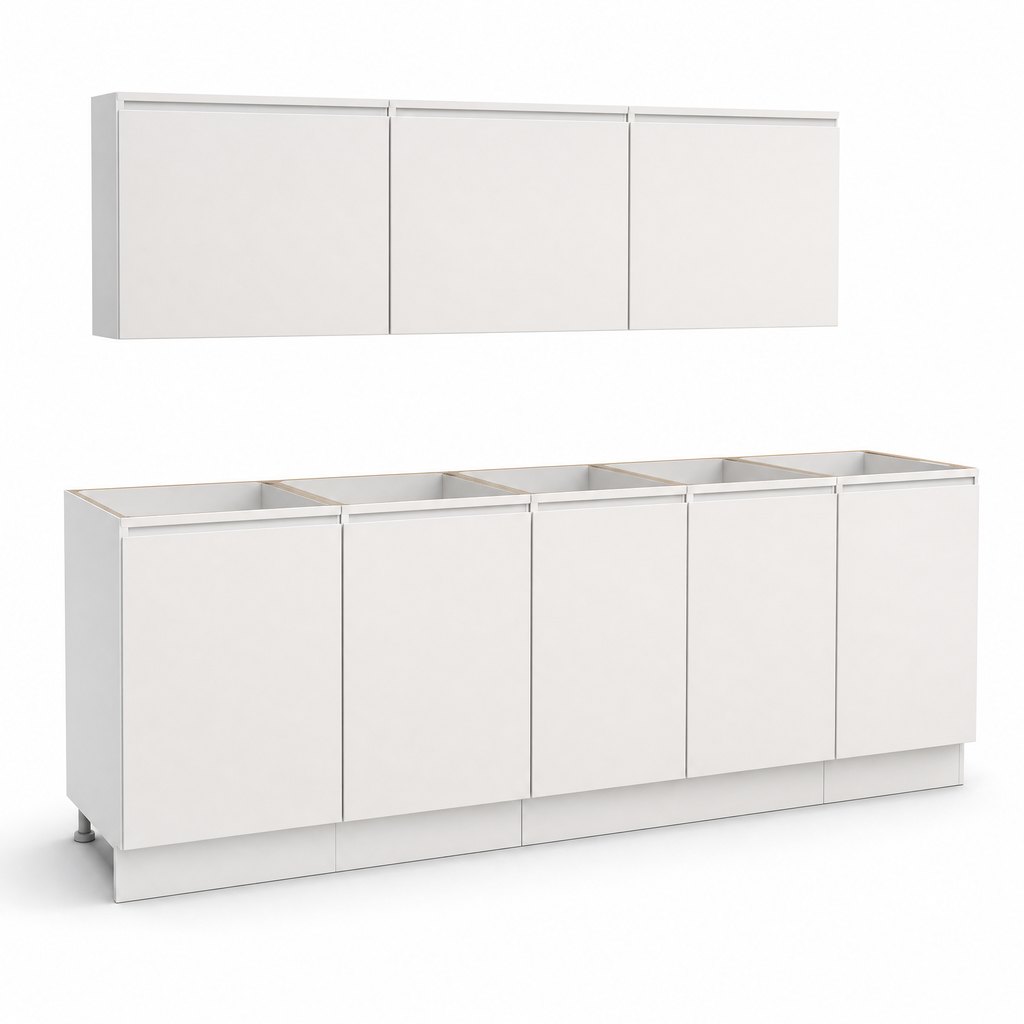
A kitchen program is a carcass program, and in Australia the carcass is usually 16 mm HMR — high moisture resistant particleboard with a green-dyed core — not the 18 mm interior board that European programs are built on. This range is that board: 720 mm carcases, 560 mm base depth, sixteen module widths from 150 to 1000 mm and 2100 mm tall units for a 2400 mm ceiling, all drilled from one cutting list. Doors are flat chalk white slabs with a color-matched 1 mm ABS edge. It ships flat only: a three-meter run packs into eight cartons at 0.52 m3, and that number decides the freight per meter.
- ModelFAME-KC-HMR-CW
- Module widths150, 200, 300, 400, 500, 600, 800, 900 and 1000 mm; base, wall and tall versions
- Carcase16 mm HMR particleboard, 720 mm high, 560 mm base depth, 300 mm wall depth, 2100 mm tall units
- Front finishChalk white matte melamine flat slab door, 1 mm ABS edge on four sides, color-matched
- InteriorWhite melamine, one adjustable shelf per unit, 32 mm system holes
- HardwareDTC soft-close 110° hinges, full-extension ball-bearing runners, cam-and-dowel plus Minifix
Trade inquiry only — this is a B2B catalog with no online checkout. Our team replies within 24 hours.
Full Specification
- ModelFAME-KC-HMR-CW
- Module widths150, 200, 300, 400, 500, 600, 800, 900 and 1000 mm; base, wall and tall versions
- Carcase16 mm HMR particleboard, 720 mm high, 560 mm base depth, 300 mm wall depth, 2100 mm tall units
- Front finishChalk white matte melamine flat slab door, 1 mm ABS edge on four sides, color-matched
- InteriorWhite melamine, one adjustable shelf per unit, 32 mm system holes
- HardwareDTC soft-close 110° hinges, full-extension ball-bearing runners, cam-and-dowel plus Minifix
- Legs and plinth100 / 120 / 150 mm adjustable legs, 16 mm HMR plinth in the matching decor
- WorktopNot included; 33 mm laminate or 20 mm engineered stone quoted as a separate line
- PackingFlat pack, 8 cartons per three-meter run, 0.52 m3 total
- Loading quantityAbout 125 three-meter runs (375 linear meters) per 40HQ
- MOQ20 units per module type per finish
- Lead time25–30 days after deposit and cutting list confirmation
- Loading portNingbo / Shanghai
- Test evidenceAS/NZS 1859.1 board certificate and E1 formaldehyde class report on request
- Trade termsFOB, CIF or DDP on request; mixed container with vanities allowed
Why Buyers Choose This Model
- 16 mm HMR particleboard carcass and doors with a green-dyed moisture-resistant core — the board grade most Australian flat-pack joinery is specified in, not an 18 mm interior board
- 720 mm carcase height, 560 mm base depth and 300 mm wall depth, so a run lands on a 900 mm bench height over a 150 mm plinth without packing
- Sixteen module widths from 150 to 1000 mm plus 2100 mm tall units, all cut and drilled from one cutting list, so a 2400 mm ceiling run does not need fillers cut on site
- 1 mm ABS edge on all four sides of every door and panel, color-matched to the chalk white decor from the same supplier batch, so a repeat order does not arrive two-tone
- Cam-and-dowel plus Minifix connectors: a base unit assembles in about 10 minutes with a screwdriver and an 8 mm bit, and comes apart again for a second fit
- Flat-pack only: a three-meter run of five base and three wall units ships in eight cartons at 0.52 m3, which puts about 125 runs — roughly 375 linear meters — into a 40HQ
- DTC soft-close hinges and full-extension ball-bearing runners rated to 50,000 movements, with 16 mm HMR drawer boxes and a 1 mm edge instead of stapled hardboard
- Quoted by the linear meter and split across carcass, door, hardware and plinth, so an upgrade from a flat door to a routed J-profile moves one line instead of the whole price
Specification Questions Buyers Ask
What does the per-meter price include, and what sits outside it?
Is 16 mm strong enough, or should we specify 18 mm?
Does the board meet Australian formaldehyde requirements?
How is timber packaging handled for Australian biosecurity?
Can one container mix kitchens, vanities and mirror cabinets?
Building a Kitchen Cabinets Program?
Send your target market, sizes and quantities — we reply within 24 hours with a tailored quotation.