Concrete Grey RTA Kitchen, 3 Metre Run, Flat-Pack in 13 Cartons
0.92 m3 and 116 kg for a 3 m run, about 66 runs to a 40HQ — the number that matters is the cost per linear meter landed, not the door style
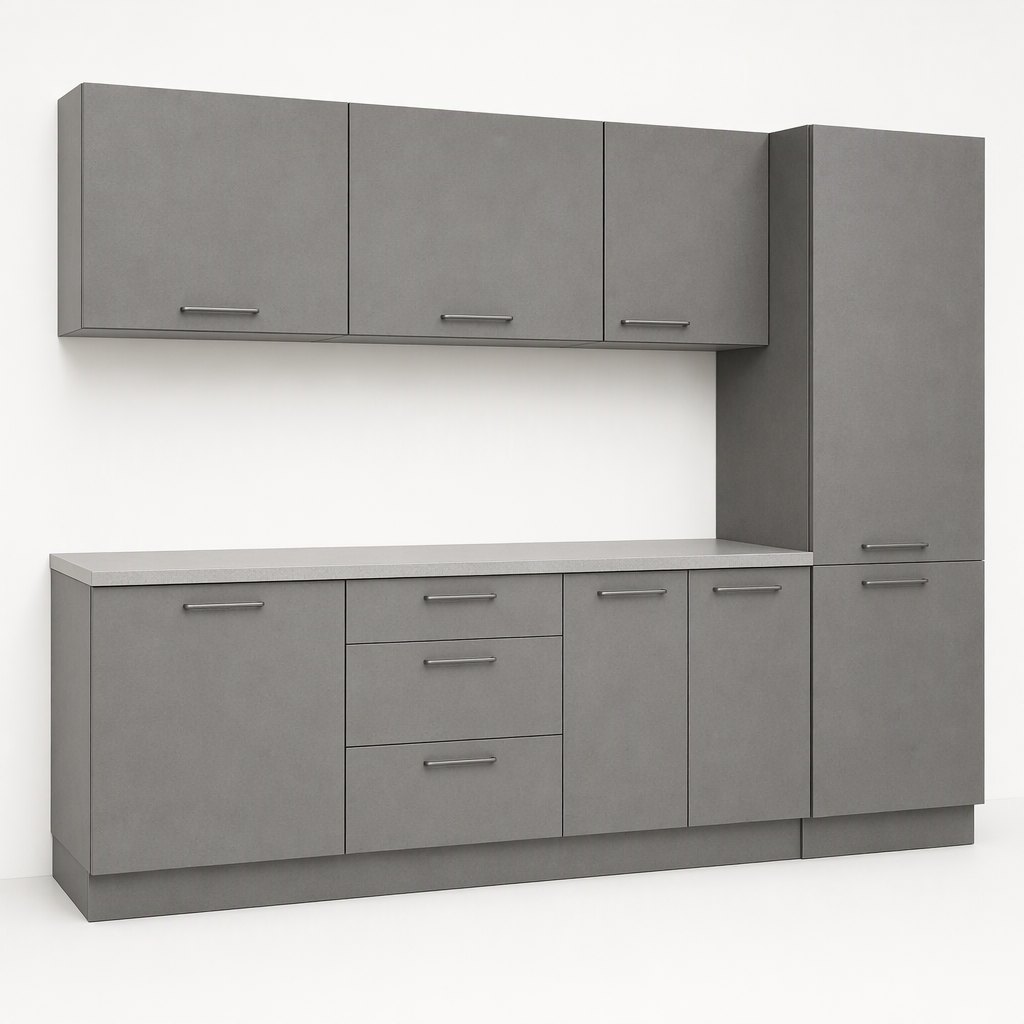
This program is priced by the linear meter and shipped by the cubic meter. Eight units make a 3.0 m base run, a 2.4 m wall run and a 600 mm pantry: 18 mm EN 312 P3 carcass in concrete grey super-matte melamine, 5 mm HDF back panels, 1 mm ABS laser edges, DTC clip-on hinges and 30 kg tandem drawers. Everything ships knock-down in 13 cartons at 0.92 m3 and 116 kg gross, so a 40HQ carries about 66 runs and a 20GP about 30. Assembly is cam-and-dowel, 25 minutes a unit, no glue and no specialist tool.
- ModelFAME-KC-RTA-CG
- Program scope3.0 m base run, 2.4 m wall run, one 600 mm pantry; 8 units per run
- Carcass18 mm EN 312 P3 melamine-faced board, E1 emission class, 5 mm HDF back panel
- Doors18 mm MFC, concrete grey super-matte, 0.6 gloss units, 3 mm reveal, 1 mm ABS laser-fused edge on four sides, 128 mm matt aluminum bar handle
- HingesDTC 110 degree clip-on, 3D cam adjustment, 40,000 cycles
- DrawersDTC 30 kg tandem box, soft close, 50,000 cycles, 16 mm base panel
Trade inquiry only — this is a B2B catalog with no online checkout. Our team replies within 24 hours.
Full Specification
- ModelFAME-KC-RTA-CG
- Program scope3.0 m base run, 2.4 m wall run, one 600 mm pantry; 8 units per run
- Carcass18 mm EN 312 P3 melamine-faced board, E1 emission class, 5 mm HDF back panel
- Doors18 mm MFC, concrete grey super-matte, 0.6 gloss units, 3 mm reveal, 1 mm ABS laser-fused edge on four sides, 128 mm matt aluminum bar handle
- HingesDTC 110 degree clip-on, 3D cam adjustment, 40,000 cycles
- DrawersDTC 30 kg tandem box, soft close, 50,000 cycles, 16 mm base panel
- WorktopNot included — 28 mm laminate or 20 mm compact option quoted separately
- AssemblyCam and dowel, 25 minutes per unit, hardware bag per carton, no glue
- Packing13 cartons, 0.92 m3 total, 116 kg gross per 3 m run
- Carton dimensionsLargest carton 1,180 x 560 x 95 mm; all cartons fit a 1,200 x 800 pallet
- Loading quantityAbout 66 runs per 40HQ, about 30 runs per 20GP
- MOQ20 sets (3 m run) per finish
- Lead time25-30 days after deposit and cutting list confirmation
- Loading portNingbo / Shanghai, FOB
Why Buyers Choose This Model
- 3.0 m base, 2.4 m wall and a 600 mm pantry in eight units — one purchase order, one cutting list, no separate minimum order per unit width
- 18 mm EN 312 P3 board for humid conditions in E1 emission class, edge banded on all four sides with 1 mm ABS so a damp kitchen does not open at the seam
- Concrete grey super-matte melamine at about 0.6 gloss units, the surface that hides fingerprints in a working kitchen without the sheen of a high-gloss finish
- DTC 110 degree clip-on hinges with 3D cam adjustment, tested to 40,000 cycles, so a door that drops after two years is a screwdriver job rather than a claim
- DTC 30 kg tandem drawer boxes with soft close, rated to 50,000 cycles, running on a 16 mm base panel rated for the same load
- 13 cartons at 0.92 m3 and 116 kg gross for the whole run — about 66 runs per 40HQ against roughly 24 assembled at 2.6 m3
- Cam-and-dowel assembly at 25 minutes a unit with a hardware bag per carton, so a dealer assembles against a confirmed order instead of stocking built boxes
- Every panel is machined on a nesting program, so a 900 mm base becomes a 600 mm base by cutting-list change rather than by new tooling or a new minimum
Specification Questions Buyers Ask
Is 18 mm EN 312 P3 board genuinely different from standard chipboard?
Why ship 13 cartons when an assembled unit is one box?
What exactly is inside the 0.92 m3, and what is not?
Can the program ship mixed widths in one container?
How is the price per linear meter actually built, and what moves it?
Building a Kitchen Cabinets Program?
Send your target market, sizes and quantities — we reply within 24 hours with a tailored quotation.