900mm Clear-Anodized Silver Aluminum Vanity with a One-Piece Ceramic Top
Two cartons at 0.133 m3 and 32 kg gross, about 480 sets to a 40HQ — an aluminum vanity costed by the cubic meter, not by the showroom
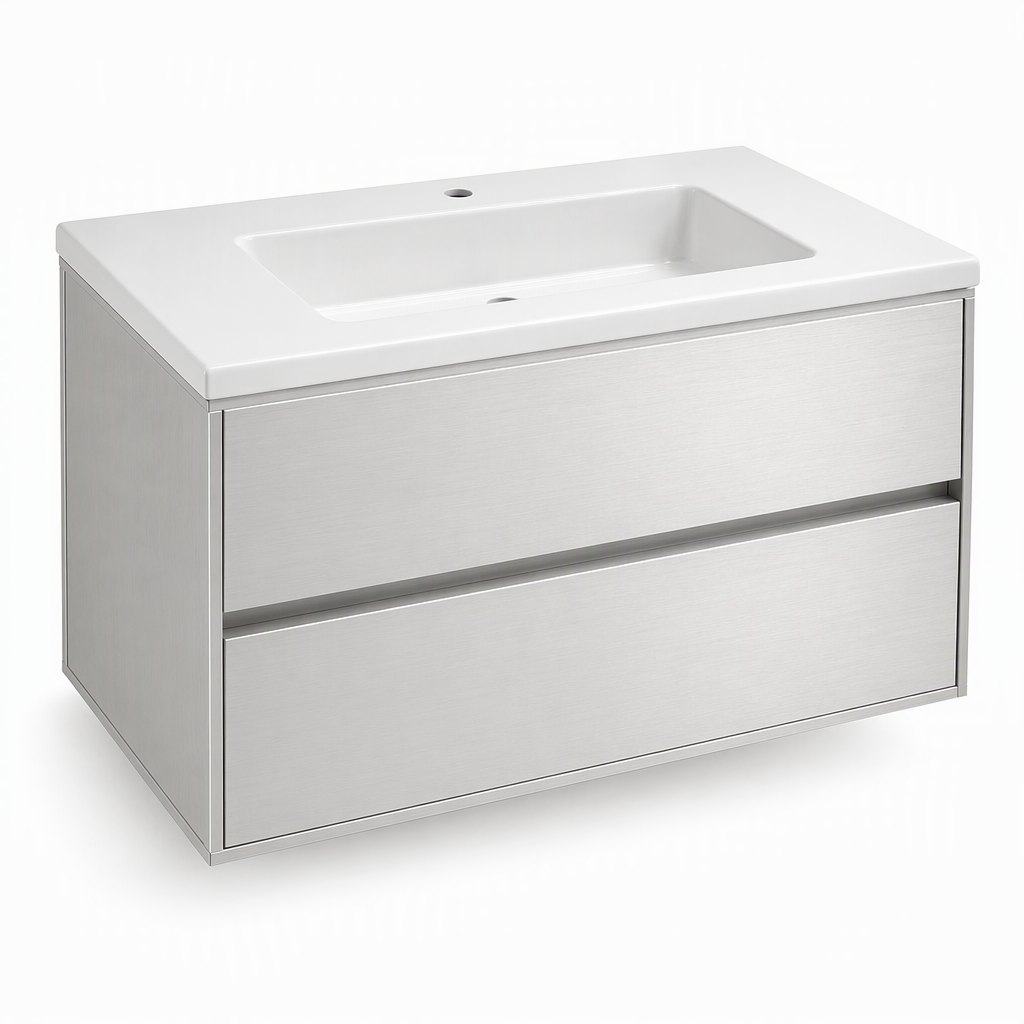
The spec sheet for this vanity starts with a material argument and ends with a freight number. The body is a 1.2 mm aluminum profile frame with 18 mm aluminum honeycomb side panels, finished in clear anodizing at 12 to 15 micron, so there is no board core to swell when the shower runs. The top is one-piece vitreous china at 900 x 460 mm, so the joint that normally fails around a basin does not exist. Two DTC 30 kg runners, a steel hanging rail, two cartons at 0.133 m3 and 32 kg gross, about 480 sets to a 40HQ.
- ModelFAME-AL-900SV
- Nominal size900 x 460 x 520 mm (35.4 x 18.1 x 20.5 in), W x D x H, wall-hung
- Carcass1.2 mm aluminum profile frame, 18 mm aluminum honeycomb side and back panels
- FinishClear anodized natural silver, 12-15 micron anodic layer, 480 h neutral salt spray
- Fronts4 mm aluminum skin on 18 mm honeycomb core, 3 mm shadow gap, push-to-open
- DrawersDTC 30 kg full-extension soft-close runners, 50,000 cycles; 5.5 mm aluminum drawer box
Trade inquiry only — this is a B2B catalog with no online checkout. Our team replies within 24 hours.
Full Specification
- ModelFAME-AL-900SV
- Nominal size900 x 460 x 520 mm (35.4 x 18.1 x 20.5 in), W x D x H, wall-hung
- Carcass1.2 mm aluminum profile frame, 18 mm aluminum honeycomb side and back panels
- FinishClear anodized natural silver, 12-15 micron anodic layer, 480 h neutral salt spray
- Fronts4 mm aluminum skin on 18 mm honeycomb core, 3 mm shadow gap, push-to-open
- DrawersDTC 30 kg full-extension soft-close runners, 50,000 cycles; 5.5 mm aluminum drawer box
- TopOne-piece vitreous china, 900 x 460 mm, 25 mm profile edge, glazed both faces
- BasinMolded rectangular bowl 430 x 320 x 130 mm, 12 L to overflow, 45 mm waste
- Tap drillingOne 35 mm punch, centered; three-hole or offset drilling to drawing
- Hanging systemSteel rail with 2 x M8 through-bolts, 100 kg static load, leveling cams, EPDM wall gasket and sealed cut-outs
- PackingTwo cartons: cabinet 0.085 m3 / 18 kg, top 0.048 m3 / 14 kg
- Loading quantityAbout 480 sets per 40HQ, about 230 sets per 20GP
- MOQ20 pcs per model per finish
- Lead time25-30 days after deposit and finish confirmation
- Loading portNingbo / Shanghai, FOB
Why Buyers Choose This Model
- 900 x 460 x 520 mm wall-hung body on a steel rail with two M8 through-bolts, rated to 100 kg static load, so the unit goes up after tiling without blocking out the wall
- 1.2 mm aluminum profile frame with 18 mm aluminum honeycomb side and back panels — no chipboard core, so a leak under the basin cannot delaminate the carcass
- Clear anodizing at 12 to 15 micron, tested to 480 hours of neutral salt spray, which is the finish that holds its tone in a wet room and in a coastal apartment
- One-piece vitreous china top at 900 x 460 mm with a 430 x 320 x 130 mm bowl, a 45 mm waste and one 35 mm tap punch — no silicone line around the basin to go black
- Two DTC 30 kg full-extension soft-close runners rated to 50,000 cycles, carrying 5.5 mm aluminum drawer boxes that stay square without a steel side profile
- Anodized silver is color in the metal at 12 to 15 micron, not a foil or a powder coat, so a replacement front ordered two years later matches the original without a color card
- Cabinet 0.085 m3 at 18 kg and top 0.048 m3 at 14 kg — 0.133 m3 and 32 kg gross per set, about 480 sets per 40HQ against roughly 220 assembled at 0.30 m3
- 100 percent of the aluminum carcass and drawer boxes separate as metal at end of life and the fired ceramic top goes to inert waste, which is the material breakdown a tender in Germany now asks the importer to supply
Specification Questions Buyers Ask
Does an anodized aluminum carcass need different wall fixings from a wooden vanity?
Why pair an aluminum body with a ceramic top instead of solid surface?
How does clear anodizing compare with powder coating on a bathroom unit?
Can the width change to 600 or 1200 mm without new tooling?
What is the real cube saving against an assembled painted MDF vanity in a 40HQ?
Building a Bathroom Cabinets Program?
Send your target market, sizes and quantities — we reply within 24 hours with a tailored quotation.