600 mm Aluminum Mirror Cabinet - Anodized Body, No Board
A mirror cabinet with no board behind the glass: an anodized aluminum body, two copper-free mirror doors and no electrics, so there is nothing in the wet zone to swell and no electrical file to carry.
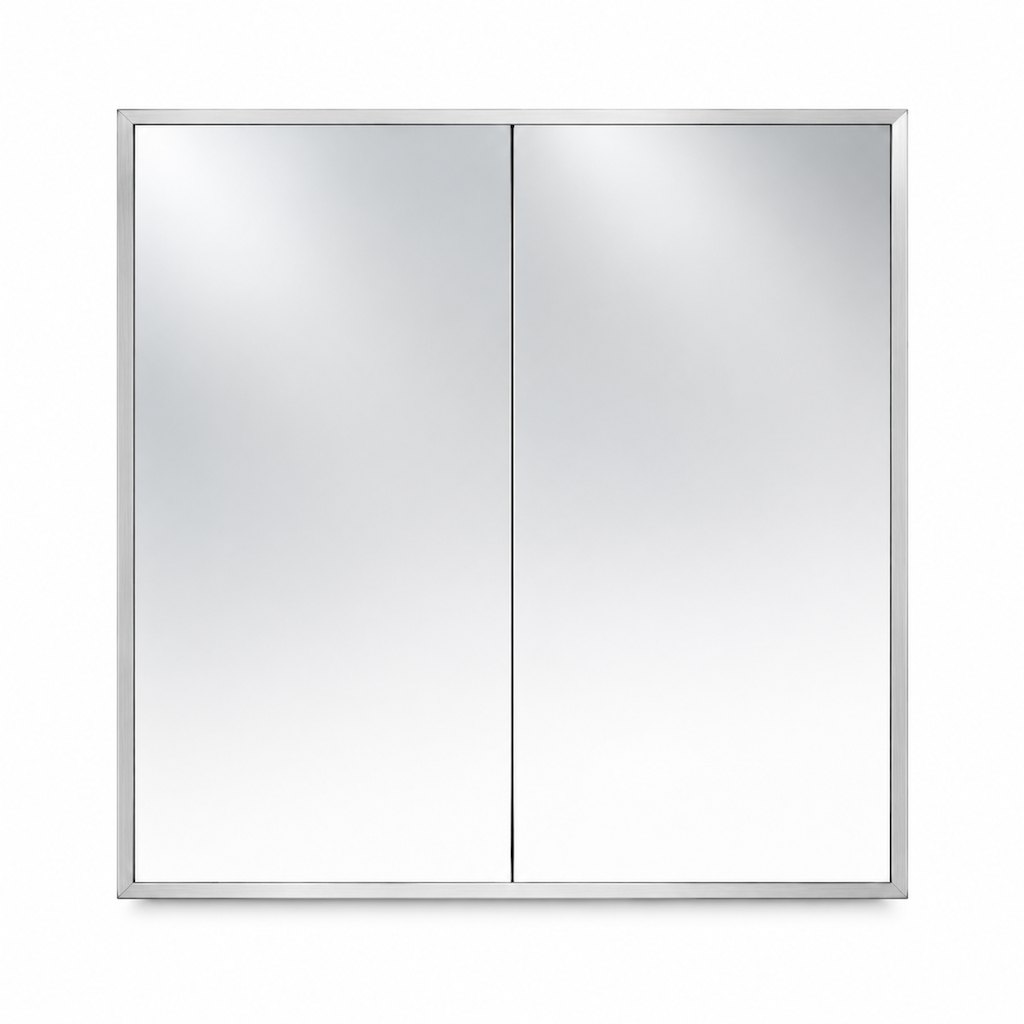
Hotel and apartment programs do not lose mirror cabinets to breakage as often as they lose them to the edge. A 4 mm economy mirror with an unsealed rim black-spots from the perimeter inward, a board carcass swells at the bottom rail where the mop reaches, and a cabinet sold with an LED driver adds a technical file the buyer did not budget for. MC60 removes all three: a 0.8 mm clear-anodized aluminum body, two 300 mm doors in 5 mm copper-free mirror to EN 1036-1 with a sealed edge and back coat, and three glass shelves on anodized pins. No electrics anywhere. It ships as one carton at 0.106 m3 and 15.5 kg gross, and 640 pieces fit a 40HQ on cube.
- ModelFAME-MC-60AL (MC60 series)
- Overall size600 W x 150 D x 700 H mm, surface mounted, 13.2 kg net
- Body0.8 mm clear-anodized aluminum, 20 mm box section frame, riveted corner cleats, no board in the carcass
- Doors2 x 300 mm, 5 mm copper-free silver mirror to EN 1036-1, 1 mm polished arris, 2 mm shadow gap
- Mirror buildSilvered float glass, 0.3 mm protective back coat, sealed edge, safety backing film, supplied double-faced on request
- Interior0.8 mm anodized aluminum liner, 3 adjustable 5 mm glass shelves on anodized pins at 32 mm pitch, 8 kg per shelf
Trade inquiry only — this is a B2B catalog with no online checkout. Our team replies within 24 hours.
Full Specification
- ModelFAME-MC-60AL (MC60 series)
- Overall size600 W x 150 D x 700 H mm, surface mounted, 13.2 kg net
- Body0.8 mm clear-anodized aluminum, 20 mm box section frame, riveted corner cleats, no board in the carcass
- Doors2 x 300 mm, 5 mm copper-free silver mirror to EN 1036-1, 1 mm polished arris, 2 mm shadow gap
- Mirror buildSilvered float glass, 0.3 mm protective back coat, sealed edge, safety backing film, supplied double-faced on request
- Interior0.8 mm anodized aluminum liner, 3 adjustable 5 mm glass shelves on anodized pins at 32 mm pitch, 8 kg per shelf
- Hinges4 x 304 stainless concealed hinges, 110 degree, 3-way adjustment, 50,000-cycle rated
- OpeningConcealed push-latch, no handle drilling; soft-close cartridge available as an option at the same hinge pattern
- ElectricsNone. No LED, driver, sensor or switch; no LVD, EMC or WEEE scope on this SKU
- MountingGalvanized steel cleat with +/- 5 mm levelling, template and 4 anchors in the carton; recessed conversion against a 620 x 720 x 130 mm opening
- FinishesClear anodized silver as standard; matte black anodized and champagne anodized to the same extrusion, 60 pcs minimum per finish
- Packaging1 carton 670 x 790 x 200 mm, 5-layer corrugated, molded mirror-edge protectors, 15 mm foam, corner boards
- Volume / weight0.106 m3 per piece, 15.5 kg gross (13.2 kg net), 146 kg per m3
- Loading / MOQ640 pcs per 40HQ at 68 m3 usable, 260 pcs per 20GP; MOQ 20 pcs per model, 3 finishes mixable from 60 pcs; 25-30 days after deposit and finish approval
- Port / termsFOB Ningbo or Shanghai; CIF Le Havre and Marseille-Fos quoted on request, with THC and ISPS shown separately on the freight line
Why Buyers Choose This Model
- 600 W x 700 H x 150 D mm, 13.2 kg net - hangs in a 620 mm gap between a shower screen and a wall return, and at 150 mm deep it still clears a 700 mm door swing
- 0.8 mm clear-anodized aluminum body in 20 mm box section with riveted corner cleats and no board anywhere behind the glass, so there is nothing to swell at 80 percent relative humidity
- Two 300 mm doors in 5 mm copper-free silver mirror to EN 1036-1, 0.3 mm protective back coat and a sealed polished edge - the edge is where an economy mirror fails first
- Four 304 stainless concealed hinges, 110 degree opening, 3-way adjustment, 50,000-cycle rated, with a concealed push-latch and a 2 mm shadow gap so no handle snags a towel
- Three adjustable 5 mm glass shelves on anodized pins at 32 mm pitch, each rated 8 kg, with the bottom shelf clear of the hinge cups so tall bottles stand upright
- Zero electrics: no LED, driver, sensor or switch, so the cabinet sits outside the Low Voltage and EMC technical-file route and adds no WEEE registration line to the French invoice
- One carton per piece, 0.106 m3 and 15.5 kg gross, mirror edges in molded protectors with 15 mm foam - 640 pieces per 40HQ and 260 per 20GP at 146 kg per m3, filling on cube at under 10 t
- The same carcass converts from surface-mounted to recessed against a 620 x 720 x 130 mm opening, so one SKU serves a renovation schedule and a new-build schedule without a second drawing
Specification Questions Buyers Ask
Why specify an aluminum body instead of a board carcass for a mirror cabinet?
Does a cabinet with no electrics really avoid the electrical conformity work?
What mirror specification belongs on the drawing?
How does a mirror cabinet load with a kitchen program in one container?
What arrives damaged on this product, and what should ship as spares?
Building a Bathroom Cabinets Program?
Send your target market, sizes and quantities — we reply within 24 hours with a tailored quotation.