1,050 mm Traffic White Aluminum Vanity - RAL 9016, No Board
A 480 mm deep vanity with an aluminum body and a china top: no chipboard in the wet zone, nothing to reseal at the plinth, and 240 sets to a 40HQ on cube.
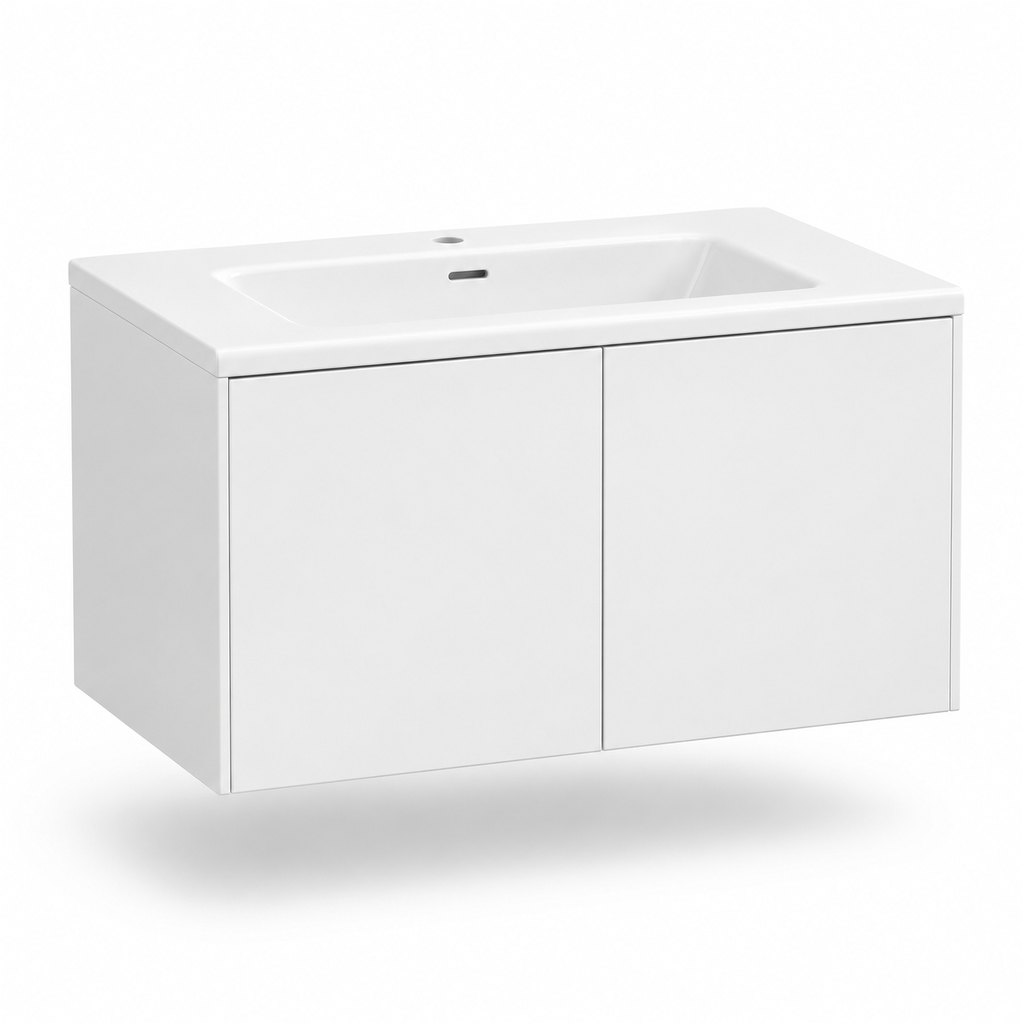
A 1,050 mm vanity is where a German bathroom program often pays twice: once for the cabinet, and once for the second delivery after a board carcass has swollen at the bottom rail. AL1050 removes the second payment. The body is 1.0 mm aluminum in 20 mm box section, powder-coated RAL 9016 traffic white at 60 to 70 micron, and the top is a single-piece vitreous china casting with a 480 mm bowl. Nothing in the wet zone absorbs water, nothing needs an edge resealed on site, and the set leaves the factory as two cartons at 0.278 m3. At 480 mm deep it fits the 1.60 m by 2.00 m bathrooms that dominate German new-build apartment schedules.
- ModelFAME-AL-105TW (AL1050 series)
- Overall size1,050 W x 480 D x 520 H mm, wall-hung, 26.5 kg net
- Body1.0 mm aluminum, 20 mm box section frame with welded and riveted corners, anodized base coat under powder
- FinishRAL 9016 traffic white powder coat at 60 to 70 micron, stoved at 200 C; RAL 7035, 7016 and 9005 to the same profile from 60 pcs per color
- Doors2 x 520 mm x 480 H, 2 mm shadow gap, no handle drilling, push-latch standard, aluminum pull bar optional
- Top / basinOne-piece vitreous china, 1,050 x 490 mm, single bowl 480 x 340 x 120 mm deep, overflow, water absorption below 0.5 percent
Trade inquiry only — this is a B2B catalog with no online checkout. Our team replies within 24 hours.
Full Specification
- ModelFAME-AL-105TW (AL1050 series)
- Overall size1,050 W x 480 D x 520 H mm, wall-hung, 26.5 kg net
- Body1.0 mm aluminum, 20 mm box section frame with welded and riveted corners, anodized base coat under powder
- FinishRAL 9016 traffic white powder coat at 60 to 70 micron, stoved at 200 C; RAL 7035, 7016 and 9005 to the same profile from 60 pcs per color
- Doors2 x 520 mm x 480 H, 2 mm shadow gap, no handle drilling, push-latch standard, aluminum pull bar optional
- Top / basinOne-piece vitreous china, 1,050 x 490 mm, single bowl 480 x 340 x 120 mm deep, overflow, water absorption below 0.5 percent
- Tap holeOne 35 mm center hole, drilled at the factory; 3-hole on request with the hole pattern confirmed on the drawing
- WasteNot included; 32 mm or 40 mm click-clack waste quoted separately against the same top
- InteriorAluminum liner, one adjustable 5 mm glass shelf, door tray optional, no board component inside the wet zone
- Hinges4 x 304 stainless concealed soft-close, 110 degree, 3-way adjustment, 50,000-cycle rated
- MountingGalvanized steel hanging rail with +/- 6 mm levelling, template, 6 anchors and a 2 mm spacer shim set in the carton
- Packaging2 cartons per set, 5-layer corrugated, 15 mm foam corners on the carcass, molded corners and a full-face foam sheet on the china top
- Volume / weight0.278 m3 per set (0.121 + 0.157), 30.5 kg gross (26.5 kg net), 110 kg per m3
- Loading / MOQ240 sets per 40HQ at 68 m3 usable, 98 per 20GP; MOQ 20 sets per model, 3 colors mixable from 60; 25-30 days after deposit and color approval
- Port / termsFOB Ningbo or Shanghai; CIF Hamburg and Bremerhaven quoted on request, with THC, ISPS and the German import file shown as separate lines
Why Buyers Choose This Model
- 1,050 W x 480 D x 520 H mm wall-hung, 26.5 kg net - the 480 mm depth leaves 550 mm of clear floor beside it on a 1,600 mm wall, which is the dimension an accommodation schedule actually checks
- 1.0 mm aluminum body in 20 mm box section, powder-coated RAL 9016 traffic white at 60 to 70 micron and stoved at 200 C, so there is no board, no edge band and no cut face to swell at 80 percent relative humidity
- Two 520 mm doors on a 2 mm shadow gap with no handle drilling, so a replacement front lands on the same hinge pattern in year three without a new template
- Four 304 stainless concealed soft-close hinges, 110 degree opening, 3-way adjustment, rated 50,000 cycles - the same hinge family as our kitchen line, so one spare parts box covers both categories
- One-piece vitreous china top at 1,050 x 490 mm, single bowl 480 x 340 x 120 mm deep with an overflow and one 35 mm tap hole, fired to a water absorption below 0.5 percent
- Aluminum interior liner with one adjustable 5 mm glass shelf, so the inside dries instead of absorbing - no melamine shelf to delaminate above a radiator
- Two cartons per set: carcass 1,080 x 560 x 200 mm and top 1,120 x 540 x 260 mm, 0.278 m3 and 30.5 kg gross, giving 240 sets per 40HQ at 68 m3 usable
- No solid wood and no board anywhere in the pack, so no ISPM 15 mark, no fumigation booking and no wood packaging line on the German import file
Specification Questions Buyers Ask
Why aluminum at 480 mm depth instead of a board vanity?
Is RAL 9016 traffic white the right white for a German project?
What has to be on the drawing for the china top?
How does the set load with a kitchen program in one 40HQ?
What arrives damaged, and what should be in the spare parts box?
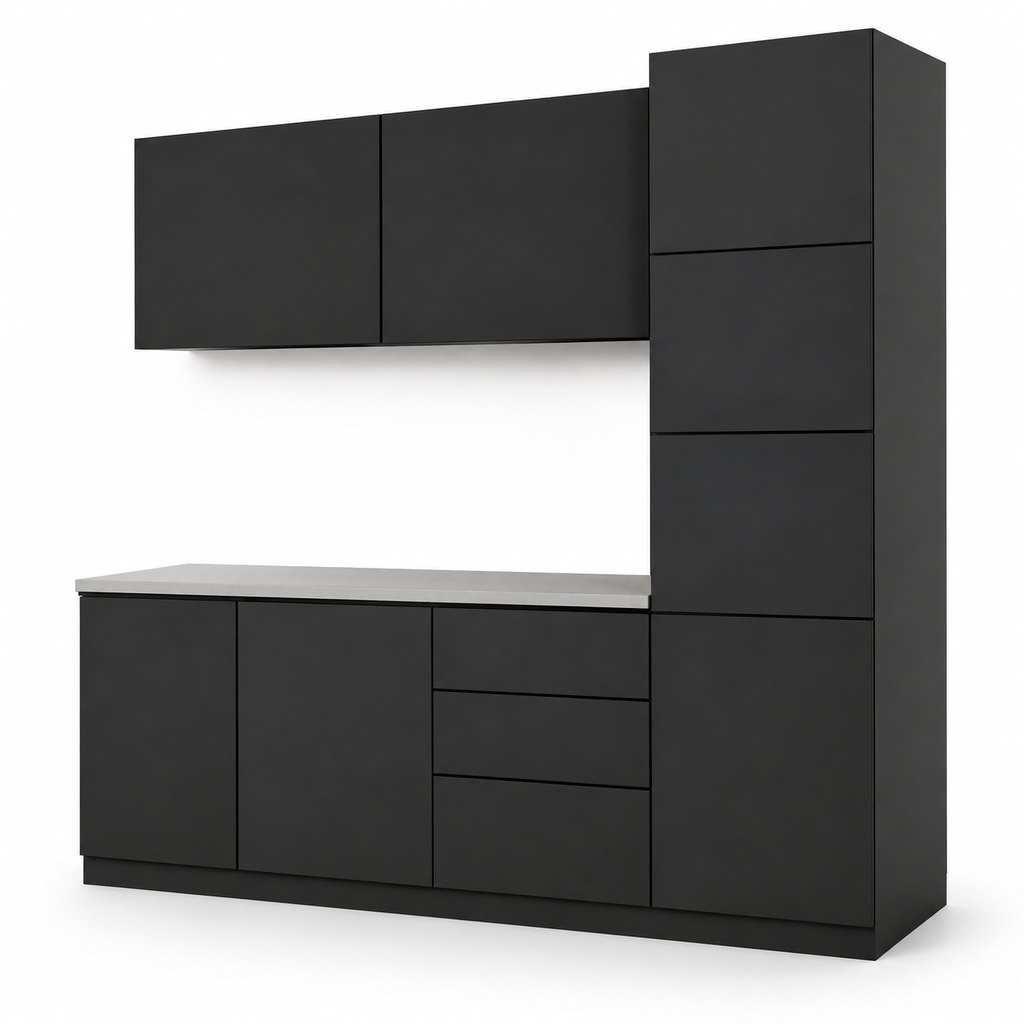
Building a Bathroom Cabinets Program?
Send your target market, sizes and quantities — we reply within 24 hours with a tailored quotation.