The US Import File for Cabinets and Vanities: Four Documents and One Number
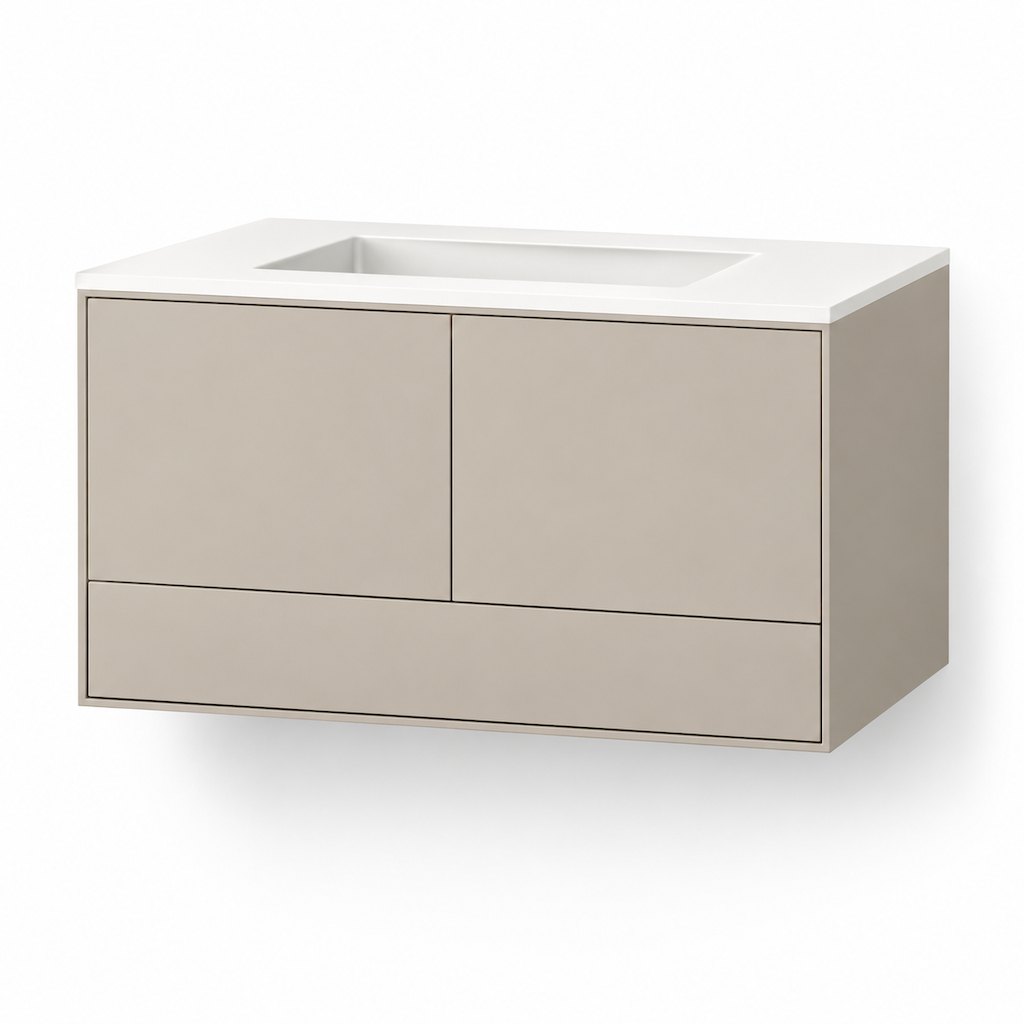
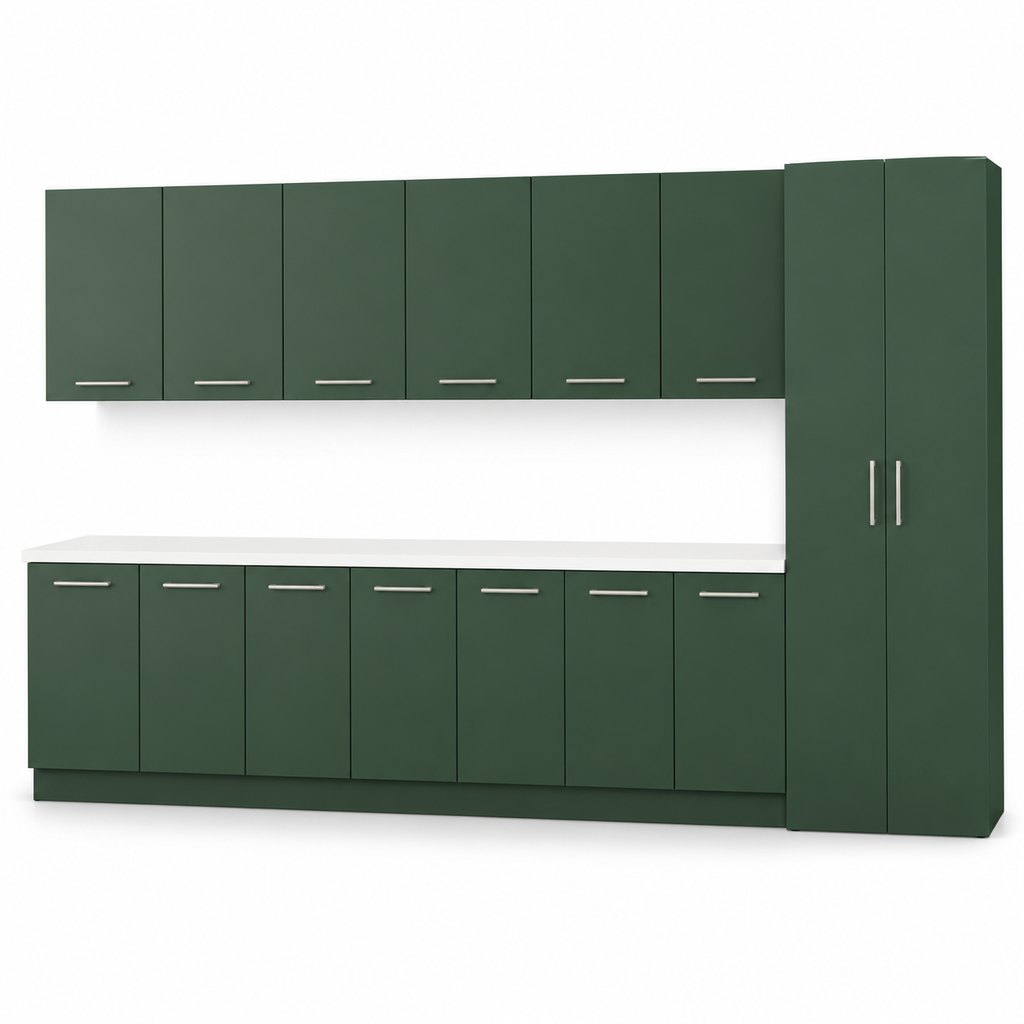
A US buyer asking for a quotation on a container of vanities and a kitchen run is really asking four questions at once: what is in the panel, what is listed on the basin, when does the filing have to be made, and how many units fit. The product is the easy part. Here is the paperwork and the arithmetic, laid out as a supplier sees it on the factory side, using a 1,300 mm aluminum vanity and a 4,200 mm RTA kitchen as the units.
27 November 2026 · US market · Fame Industry Co., Ltd.
The four documents that decide whether a container clears
A US cabinet import file is not one document. It is four, and they are produced by four different parties: the panel producer for the composite wood record, the fixture factory or its listing agency for the basin and faucet listing, the importer of record for the customs entry and its bond, and the supplier for the packing list and carton plan that all of it has to agree with. When a container is held, it is almost never because the product was wrong; it is because one of those four does not match the others.
The mismatch is usually a model number. A vanity page may show a basin in one size and the listing may cover the same basin under a different factory model code, and the customs broker cannot reconcile the invoice to the listing. That is why we confirm the basin model number against the listing before an order is confirmed rather than after, and why the packing list names the model rather than the marketing name.
This matters more for a mixed container than a single-reference one. A container with 60 vanities and 46 kitchen runs has two product families, two sets of panel documentation and, if the vanities ship as sets, a plumbing fixture listing in addition. Each of those has to appear on the same commercial invoice consistently, and the invoice is the document that gets read first.
- Panel record: composite wood compliance evidence, held by the importer of record
- Fixture listing: per basin and faucet model, not per brand or per catalogue
- Customs entry: importer of record, bond, HTS classification and the entry itself
- Packing list and carton plan: the document that has to agree with all of the above
TSCA Title VI: the numbers, and who actually certifies them
The US federal formaldehyde rule for composite wood is TSCA Title VI, and it is built on the California Air Resources Board airborne toxic control measure. For practical purposes the emission limits applied are the CARB ATCM Phase 2 figures: 0.05 ppm for hardwood plywood, 0.09 ppm for particleboard and 0.11 ppm for medium density fiberboard, with 0.13 ppm for thin MDF. A cabinet made from an 18 mm particleboard-core melamine panel is inside the 0.09 ppm line or it is not importable.
The certification is not self-declared. Compliance is verified by a third-party certifier approved for the panel producer, and the panels carry the producer's label. What the importer of record keeps is the record: invoices, bills of lading and the panel documentation, so that the chain from the finished cabinet back to a certified panel batch can be shown. That is why the packing list references the panel producer and batch - it turns a separate email chain into a document set.
The commercial consequence is simple. A supplier who cannot name the panel producer and the certification behind the batch is asking the buyer to carry a risk the buyer cannot underwrite. An aluminum-bodied cabinet has no wood-based panel in the body at all, which removes the question for the cabinet itself; the same is not true of the door fronts on a laminate kitchen, so the two product families carry different paperwork even when they ship in the same box.
- Hardwood plywood: 0.05 ppm; particleboard: 0.09 ppm; MDF: 0.11 ppm; thin MDF: 0.13 ppm
- Verified by a third-party certifier approved for the panel producer, not self-declared
- The importer of record holds the records, built from invoice, bill of lading and panel documents
- An aluminum carcass carries no composite wood in the body; laminate fronts still need panel evidence
cUPC is per model, not per factory
If the vanity ships as a set with a ceramic basin, the basin is a plumbing fixture and the US market expects a listing under the Uniform Plumbing Code, which is what cUPC refers to in practice. Ceramic plumbing fixtures are tested to ASME A112.19.2 and CSA B45.1, and faucets to ASME A112.18.1 and CSA B125.1. The listing is issued for a specific model and is held by the listing holder, which may be the factory or a private label brand.
The practical trap is the set. A buyer orders a 1,300 mm vanity with a basin, receives a container, and finds the basin that arrived is a different model from the one on the listing because the factory substituted a similar shape from another line. That is a substitution the buyer never approved and cannot use in a code-inspected project. The defence is procedural: the basin model number goes on the purchase order and on the packing list, and a substitution requires written approval.
Where a project is not code-inspected - a residential remodel sold through a dealer - the listing question is often skipped, and that is the buyer's commercial decision. It stops being a decision the moment the same cabinet goes into a multifamily or hospitality project, where an inspector will ask for the mark on the fixture. Deciding which channel the container is destined for before the order is placed is cheaper than discovering it at the first inspection.
- Ceramic fixtures: ASME A112.19.2 / CSA B45.1; faucets: ASME A112.18.1 / CSA B125.1
- The listing is per model and held by a named listing holder
- Put the basin model number on the purchase order and the packing list; substitutions need written approval
- Residential remodel and code-inspected multifamily are different requirements for the same cabinet
The number that drives everything: cubic meters per unit
Freight per unit is the container rate divided by the number of units, and the number of units is fixed by the carton, not by the weight. A 40HQ carries roughly 65.4 m3 of usable space after the door recess and the unavoidable voids. Our 1,300 mm wall-hung vanity packs at 0.44 m3 in a single carton, so the box takes 148 sets at 3.9 t gross. A 4,200 mm RTA kitchen run packs at 0.84 m3 across 21 cartons, so the same box takes 77 runs at 12 t gross.
Both loads are under half the payload of a 40HQ, which is above 26 t. That single fact explains most of the pricing behaviour in this trade: cabinets and vanities are volume cargo, so the buyer's cost is decided by how well the cartons nest, and a supplier who quotes a lower unit price on a bulkier carton can still be the more expensive option on a landed basis.
A mixed container is where the arithmetic pays. Sixty vanities fill 26.4 m3 and leave 39 m3, which is 46 kitchen runs at 0.84 m3. The 60 percent fill on the kitchen side is not a mistake - it is what a mixed first order looks like when the buyer wants both families on one shipment rather than waiting for a second container, and the per-unit freight on the kitchen is simply the container rate divided by 46 instead of 77.
- 1,300 mm aluminum vanity: 0.44 m3, 148 sets per 40HQ, 75 per 20GP
- 4,200 mm RTA kitchen run: 0.84 m3 across 21 cartons, 77 runs per 40HQ, 39 per 20GP
- A 40HQ payload is above 26 t, so these loads are volume-limited, not weight-limited
- Mixed example: 60 vanities at 26.4 m3 plus 46 kitchen runs at 38.6 m3 fills 65.0 m3
The filing calendar: what has to happen before the vessel sails
Two filings sit before the container reaches a US port. The Importer Security Filing, often called 10+2, has to be filed at least 24 hours before the cargo is loaded on the vessel, which in practice means it is due while the container is still at the Chinese port. The customs entry itself is filed on arrival, and it requires a bond and a classification for every article in the container. A supplier cannot file either of these for the buyer, and a supplier who offers to is describing an arrangement the buyer should examine closely.
Classification is the part worth doing early. A vanity cabinet, a ceramic basin, a faucet and a flat-pack kitchen run do not share a single tariff line, and the duty that applies depends on the classification and on whatever measures are in force at the time of entry. Those measures change, sometimes with little notice, so the only responsible answer to 'what is the duty rate' is a number confirmed by the buyer's customs broker against the entry date, not a number carried in a supplier's quotation. We quote FOB and let the broker price the duty.
The calendar that works backwards from a delivery date looks like this: broker engaged and classification agreed, then order confirmed and deposit paid, then production and inspection, then booking, then ISF at least 24 hours before loading, then sailing, then entry on arrival. Skipping the first step is the most common cause of a container sitting at a terminal while a classification is argued.
- ISF (10+2): filed at least 24 hours before loading on the vessel
- Entry: filed on arrival, needs a bond and a classification per article
- Duty depends on classification and on measures in force at entry - confirm with the broker, not the supplier
- Sequence: classification, order, production, booking, ISF, sailing, entry
Where first containers go wrong
The failures are boring and repeatable. The first is a carton plan that was never checked against the packing list, so the container that was costed at 77 runs arrives with 70 because two extra shelves per run pushed the carton count up. The second is a mixed load where the heavy cartons went on top because nobody specified the stack order; a mirror or a glass door under 200 kg of kitchen carcass is a claim, not a delivery.
The third is spare parts. A 40HQ of vanities is 148 sets, and on a project that means 148 doors that can arrive chipped. Shipping two percent of the order as spare doors, invoiced at cost, is cheaper than a second shipment, and it is the single line item most often left out of a first purchase order because it looks like padding until the first callback.
The fourth is inspection. A commercial buyer has a duty to inspect goods and to notify defects within the period the applicable commercial code allows, and a delivery that arrives as 21 unopened cartons per kitchen run has not been inspected. Agree the method with the first order - a sample tier opened at the warehouse, or a factory inspection before loading - because a defect found eight weeks into stock is a different conversation from one found at the ramp.
- Check the carton plan against the packing list before booking, not after arrival
- Specify stack order: glass and mirrors never under carcass cartons
- Two percent spare doors at cost is cheaper than a second shipment
- Agree the inspection method with the first order; unopened cartons are not an inspection
What belongs in the purchase order
A purchase order for this trade should carry more than a product name and a quantity. It should name the panel producer and the certification behind the batch, the basin model number where a set ships, the carton count and volume per unit, the stack order for a mixed load, the spare parts allowance, the inspection method and the incoterm with the named port. Each of those is a line that prevents a conversation later, and none of them costs anything to write.
The product specification sits on top of that: carcass material and thickness, hinge and runner ratings, edge banding, finish and its test method, and the fixing schedule for a wall-hung unit. A specification that names a hinge cycle rating and a salt spray duration is a specification a factory can be held to; one that says 'soft close' and 'good quality' is not.
The point of all of it is that the factory side and the import side are the same decision seen from two ends. A cabinet that is easy to document is a cabinet that is easy to clear, and the suppliers who make documentation difficult are usually the ones whose carton plan does not survive a second look either.
- Panel producer, batch and certification; basin model number where the vanity ships as a set
- Carton count, volume per unit, gross weight and stack order for a mixed load
- Spare parts allowance and the inspection method, agreed before production
- Incoterm with the named port, plus the duty confirmed separately by the broker
Questions Buyers Ask
Is TSCA Title VI the same thing as CARB Phase 2?
Does a bathroom vanity need a CE mark or a UL mark to enter the US?
Can one basin listing cover several vanity models?
How long does the paperwork take if a first container has to sail next month?
Want the Numbers for Your Own Program?
Send your model list, sizes and destination port — we reply within 24 hours with FOB pricing, MOQ and lead time.