Germany: Streckengeschäft or Lager — What Changes When the Container Lands
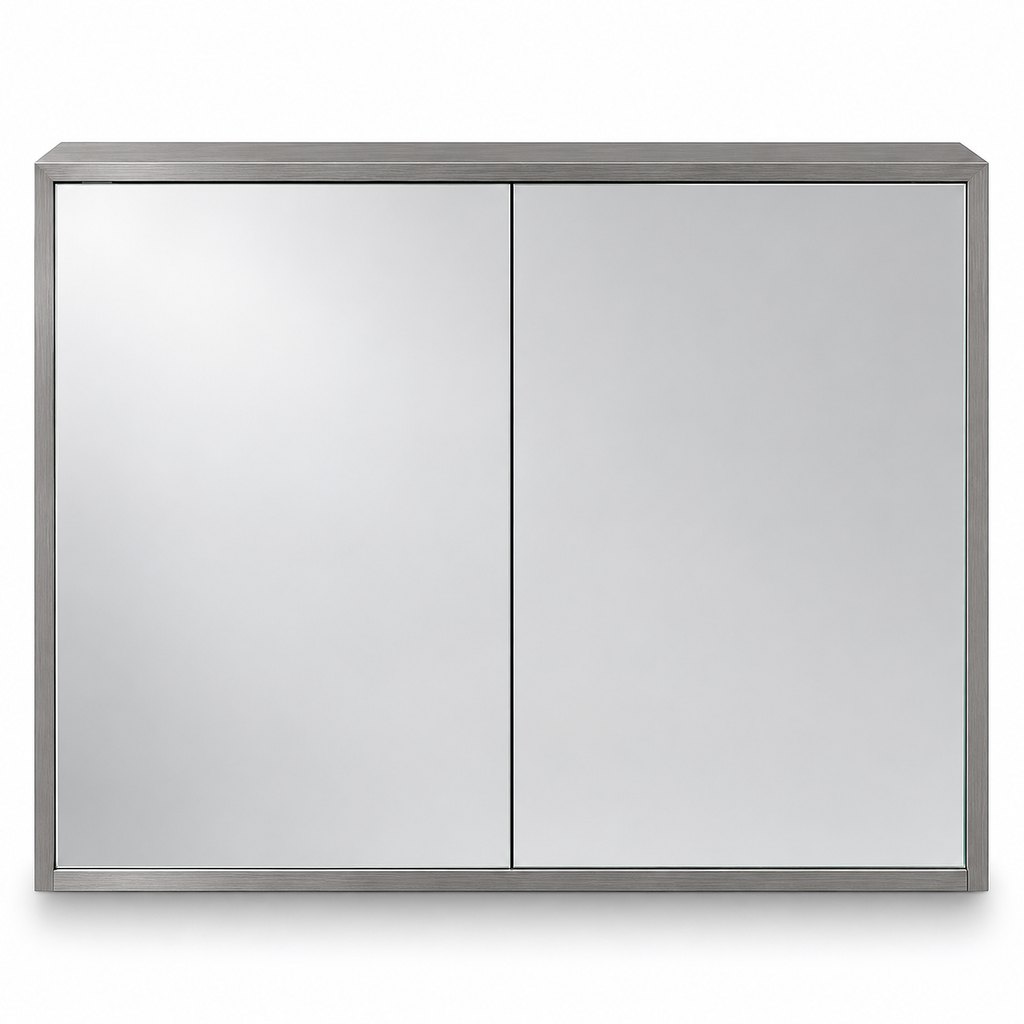
A German wholesale buyer makes one decision before price is even discussed: does the container go straight out to named sites, or does it come into a warehouse and leave again in smaller lots. The two models carry different documents, different cash requirements and different per-unit freight. Here is the arithmetic as a supplier sees it, using a 3,600 mm kitchen run and a 900 mm mirror cabinet as the units.
26 November 2026 · DE market · Fame Industry Co., Ltd.
What the two models actually mean
In a Streckengeschäft the goods never enter the buyer's warehouse. The container is declared to a German consignee, or split at a deconsolidation point, and delivered to the end customer's address while the invoice runs through the wholesaler. In a Lagergeschäft the buyer imports into its own stock, holds the units, and ships them out against individual orders. Both are normal; the choice is made by whoever owns the installation schedule, not by whoever owns the brand.
The distinction matters to a supplier because the shipping documents, the carton marking and the delivery discipline are different. A Strecke delivery ships against a named consignee with a delivery note that references the end customer's order number, and a neutral document set is often required so the wholesaler's customer does not see the factory. A Lager delivery ships against the buyer's own address, and the packing list is the document that gets opened first, because the receiver needs to book 18 cartons per kitchen run into a location before anything else happens.
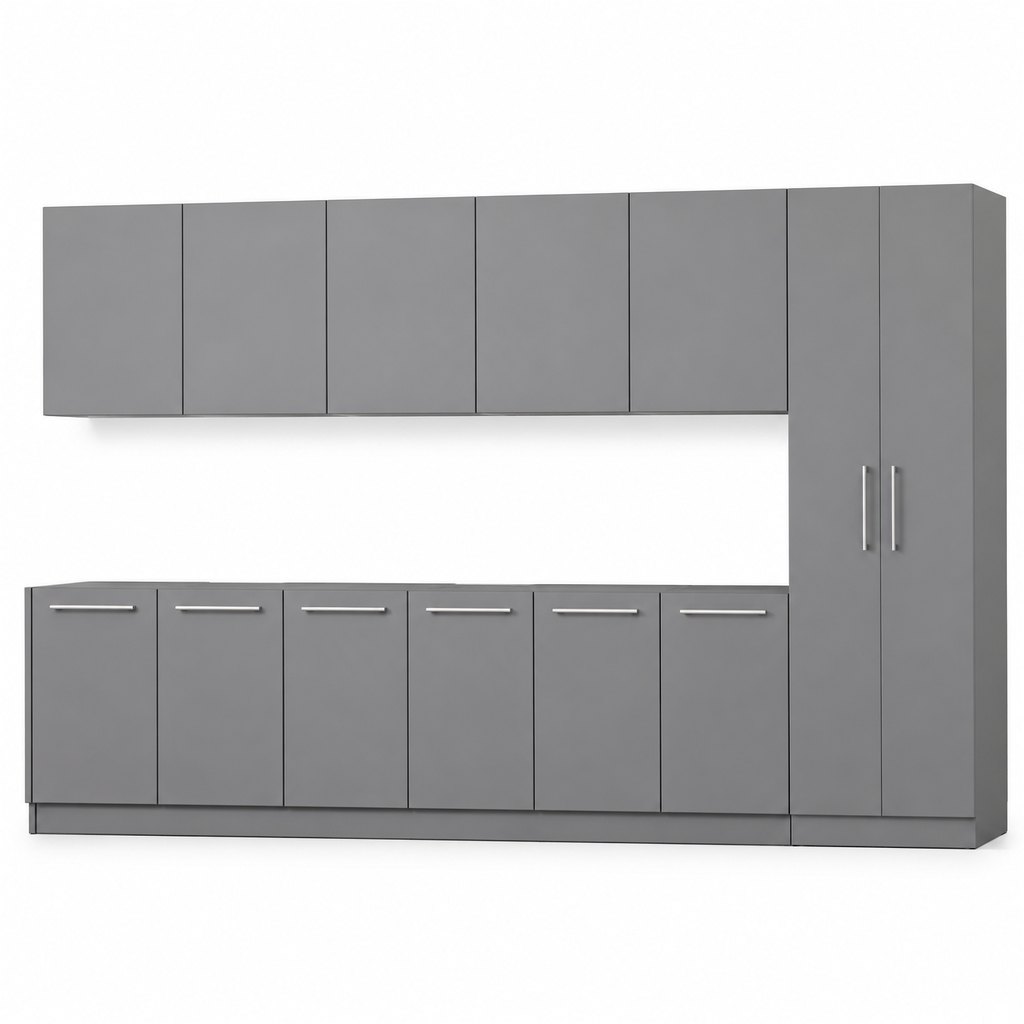
The product itself does not change, which is the part buyers underestimate. A flat-pack kitchen run of six base modules, five wall units and a 2,100 mm larder is the same article whether it is cross-docked or stocked; what changes is how much handling it absorbs and how long the money sits still.
- Strecke: goods go from supplier to the end customer, invoice runs through the wholesaler
- Lager: goods are imported into the buyer's stock and issued against later orders
- Strecke needs neutral documents and consignee references; Lager needs a bookable packing list
- The article is identical; the handling and the cash profile are not
The cube maths that decides the model
Freight per unit is the container rate divided by the number of units, and the number of units is fixed by the carton, not by the product weight. Our 3,600 mm kitchen run packs at 0.72 m3, so a 40HQ of 65.4 m3 usable carries 90 runs and a 20GP carries 46. A 900 mm mirror cabinet packs at 0.16 m3 in a single carton, so the same 40HQ carries 408. Those two numbers set everything that follows.
A Strecke programme usually wants one reference per delivery, because the site it ships to is a single building. A Lager programme wants a mix, because the stock has to cover a range of orders. The mix is where the per-unit freight moves: 70 kitchen runs and 90 mirror cabinets fill 64.8 m3 of a 40HQ, and the mirror cartons ride at the top of the stack, which is exactly where a receiver with a forklift wants them. A buyer who insists on a full container of one reference pays for the simplicity in stock.
The model also decides what happens to a partial container. In a Strecke programme a 40HQ that is 80 percent full is a cost that is recovered on the next site. In a Lager programme the same container is stock that has to be sold before the next one is costed, so the freight per unit is only realised when the last unit leaves the rack.
- 3,600 mm kitchen run: 0.72 m3, 90 runs per 40HQ, 46 per 20GP
- 900 mm mirror cabinet: 0.16 m3, 408 sets per 40HQ, 207 per 20GP
- A mixed 40HQ of 70 runs and 90 cabinets fills 64.8 m3 of 65.4 m3 usable
- Strecke tolerates a partial container; Lager turns it into stock, not freight
Pallets, unloading and the delivery window
Two things go wrong at the ramp far more often than in the container: the pallet account and the time slot. If your cartons are palletised, they travel on EPAL euro pallets of 1,200 x 800 mm, exchanged under the pool rules, which means a like-for-like swap at the receiving end rather than a purchase. A 13.6 m curtainsider takes 33 euro pallets in one tier, so a shipment quoted as a full truck is a pallet count as much as a weight.
Our cartons are floor-loaded, not palletised, and that is deliberate: a pallet adds about 150 mm of height per tier for nothing on a lightweight cabinet set. Floor loading keeps the cube per run at 0.72 m3 and puts the burden on the receiver's unloading arrangements instead. A warehouse with a dock leveller and a forklift handles that in half an hour; a Strecke delivery to a building site with a tail-lift and one driver needs the cartons to be man-portable, which at 138 kg gross over 18 cartons they are, at roughly 7.7 kg each on average.
The time slot is the part to write into the contract before the first order. German warehouses and logistics platforms book receiving windows, and a vehicle that arrives outside its window is turned away or waits at a cost that lands on whoever booked the freight. For a Strecke programme the same discipline applies to each site, and a site with no forklift needs a delivery method agreed in writing, not on the morning of delivery.
- EPAL euro pallets are 1,200 x 800 mm and exchanged like-for-like, not bought
- A 13.6 m trailer carries 33 euro pallets in one tier
- Floor-loaded cartons keep 0.72 m3 per kitchen run; pallets add about 150 mm of height per tier
- Book the receiving window in the contract, not with the driver
Documents: what differs between the two models
Under a Strecke, the supplier produces the commercial invoice, packing list and transport documents against a consignee the wholesaler names, and the neutral set has to be consistent across all three. Under a Lager, the buyer is the importer of record, files the customs declaration in its own name and deducts the import turnover tax as input tax on its own return. Both routes need an EORI number at the German end, and both need the tariff classification to be settled before the first container, because a reclassification after import is a correction, not a conversation.
Packaging registration follows the importer, not the factory. The German packaging rules require whoever first places the filled packaging on the market to register and report volumes, and system participation is arranged through a producer responsibility organisation. We mark every carton with its material code so that the registration can be built from the packing list rather than from a guess, and we do not claim that our own registration covers a German importer's obligation.
The product evidence is the same in both models and is where a specification is usually won or lost: EN 14749 strength and stability on the assembled unit, board to E1 with the chamber test behind it, EN 1036 for copper-free mirror glass. Furniture carries no CE mark, and a file that includes one suggests the specification was not read. Electrical items are the exception: an LED mirror or a lit cabinet needs its own declaration of conformity and marking, on the component, not on the cabinet.
- Strecke: neutral invoice, packing list and transport documents consistent with each other
- Lager: buyer is importer of record, files the declaration and deducts import turnover tax
- Packaging registration sits with whoever first places the filled packaging on the German market
- EN 14749 and E1 evidence apply to both models; CE marking does not apply to furniture
Cash: payment terms, discount and the cost of standing stock
A Lager programme converts a freight decision into a balance-sheet decision. Ninety kitchen runs is roughly two thirds of a 40HQ of stock, and every day it stands in a rack costs rent, insurance and the interest on the money that bought it, before a single unit is sold. A Strecke programme does not remove that cost; it moves it to the end customer, which is why a Strecke price is normally the higher of the two per unit.
Payment terms are where the two models diverge in practice. German commercial practice is settled in the contract: a payment period, and often a discount for early settlement, which is a price concession agreed in advance rather than a right. Where a contract says nothing, the statutory default applies, and late payment carries statutory default interest from the point the debtor is in default. On a two-container programme the difference between paying on day 30 and paying on day 90 is larger than the discount being negotiated.
The inspection duty belongs here too. A commercial buyer has to inspect the goods and notify defects within the period the commercial code allows, and a delivery that arrives as 18 unopened cartons per run is not an inspection. Agree the inspection method with the first order, whether that is a sample tier opened at the warehouse or a factory inspection before loading, because a defect found after eight weeks in stock is a different conversation from one found at the ramp.
- Standing stock carries rent, insurance and the cost of the money tied up in it
- Payment period and any early-settlement discount belong in the contract, not in an email
- Statutory default interest applies once the debtor is in default
- Agree the inspection method with the first order; unopened cartons are not an inspection
When each model wins
A Strecke wins when the buyer has firm site orders and no warehouse: project business, housing refurbishment with a phased schedule, and any programme where the end customer takes delivery in a building. It also wins when the product range is wide and shallow, because there is no stock to age. The cost is document discipline and a delivery method agreed per site.
A Lager wins when the buyer sells from a catalogue and cannot wait 35 days for a call-off, or when the range is narrow and deep enough that a full container per reference is normal. It also wins where the buyer can consolidate several suppliers into one inbound container, because the fixed cost of the shipment is then shared. The cost is capital and rent, and the risk is a decor that does not sell sitting in a rack for a season.
The practical answer for most first orders is neither extreme: import into stock, then run the first two months as a Strecke against confirmed site orders until the sell-through on the decor is known. That sequence costs a little more per unit in the first container and removes the risk of ordering 90 runs of a colour nobody has seen.
- Strecke: firm site orders, project schedules, wide and shallow range
- Lager: catalogue selling, short lead time required, narrow and deep range, container consolidation
- First order: stock the first container, then switch to Strecke until sell-through is known
- Decide the model before the price, because it sets the per-unit freight
Questions Buyers Ask
Can a Chinese supplier invoice a Streckengeschäft directly to German end customers?
Is a full container of one reference cheaper per unit than a mixed container?
Do the cartons need to be palletised for a German warehouse?
What single figure should be agreed before the first container is booked?
Want the Numbers for Your Own Program?
Send your model list, sizes and destination port — we reply within 24 hours with FOB pricing, MOQ and lead time.