800 mm Wall-Hung MFC Vanity - Putty Matt, Two Cartons a Set
Two cartons at 0.20 m3 and 327 sets to a 40HQ: an 800 mm flat-pack vanity in putty matt melamine, priced per set so a merchant can hold stock instead of a display.
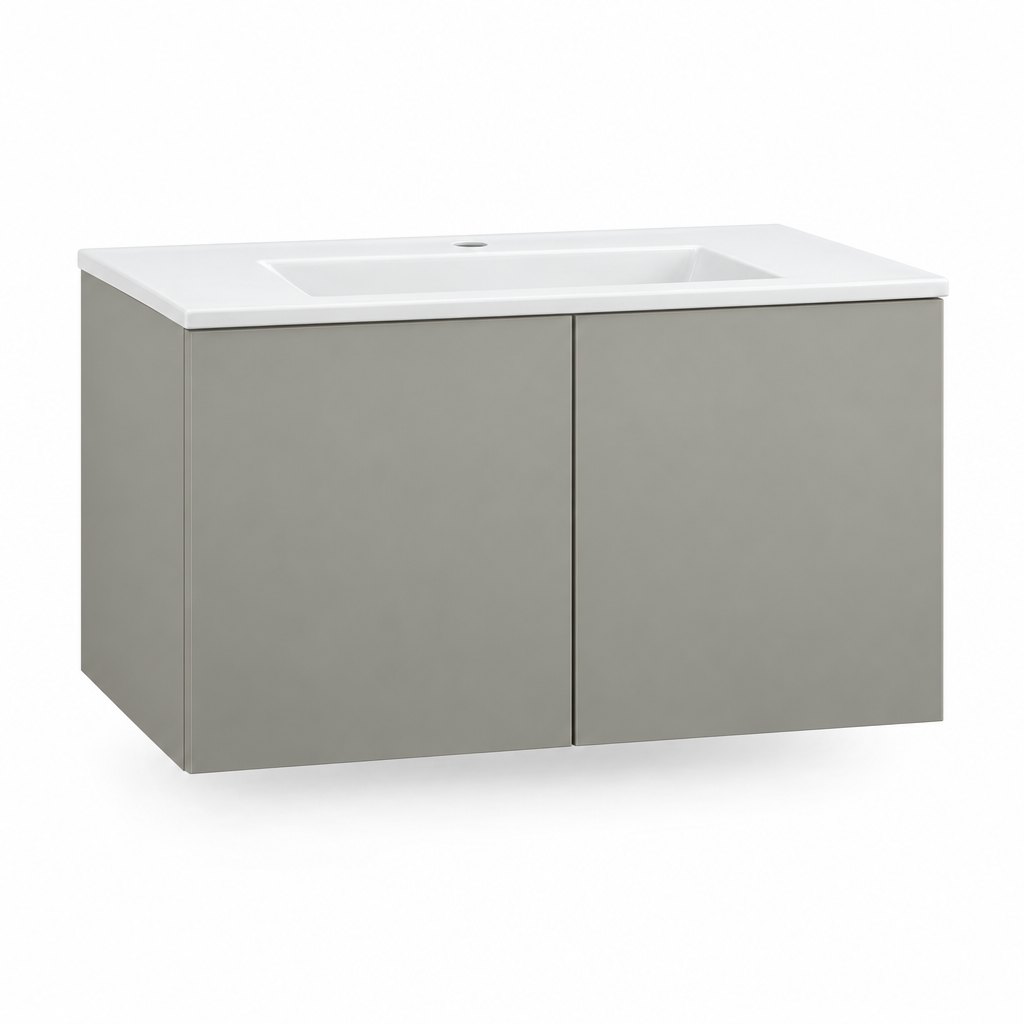
Eight hundred millimeters is the width a UK bathroom actually is: an en suite in a second bedroom, a rental flat, a hotel bath. MFC800 is built for that market as a flat-pack cabinet rather than a rigid one, because a knocked-down 800 mm unit packs at 0.20 m3 in two cartons and a 40HQ takes 327 of them. The body is 18 mm moisture-resistant melamine-faced chipboard to EN 312 P3, edged in 2 mm ABS on every visible face and finished in putty matt melamine at 6 gloss units. It is not a statement piece. It is the unit a merchant can hold in stock without giving up a shelf bay to a display model.
- ModelFAME-MFC-800PU (MFC800 series)
- Overall size800 W x 460 D x 520 H mm, wall-hung; 15.2 kg net, 17.8 kg gross
- Carcass18 mm melamine-faced chipboard on a moisture-resistant EN 312 P3 core, 460 mm deep, 15 mm grooved back panel, cam-and-dowel joints
- Panel classE1 emission class to EN 717-1 declared on the mill certificate, reconciled to the board purchase invoice for the shipment
- Fronts18 mm putty matt melamine at 6 gloss units, slab profile with no frame, 2 mm colour-matched ABS edge on all four sides
- DoorsTwo 390 mm doors, 110 degree clip-on soft-close hinges rated 50,000 cycles, 3-way adjustment, 3 mm shadow gap, no face handle
Trade inquiry only — this is a B2B catalog with no online checkout. Our team replies within 24 hours.
Full Specification
- ModelFAME-MFC-800PU (MFC800 series)
- Overall size800 W x 460 D x 520 H mm, wall-hung; 15.2 kg net, 17.8 kg gross
- Carcass18 mm melamine-faced chipboard on a moisture-resistant EN 312 P3 core, 460 mm deep, 15 mm grooved back panel, cam-and-dowel joints
- Panel classE1 emission class to EN 717-1 declared on the mill certificate, reconciled to the board purchase invoice for the shipment
- Fronts18 mm putty matt melamine at 6 gloss units, slab profile with no frame, 2 mm colour-matched ABS edge on all four sides
- DoorsTwo 390 mm doors, 110 degree clip-on soft-close hinges rated 50,000 cycles, 3-way adjustment, 3 mm shadow gap, no face handle
- ShelvingOne adjustable 18 mm shelf on four-position nickel-plated pins plus a fixed bottom panel; 240 mm clear above the shelf
- HardwareNickel-plated steel hinges and pins; stainless steel hanger plates and fixings, no plated steel in the wet zone
- Basin and topCabinet supplied on its own, or as a set with a one-tap-hole ceramic basin and a matching top; where a UK specification names a basin, the model number goes on the order and the packing list
- MountingTwo galvanised steel hanger plates 560 mm apart on a 1,000 mm rail with level notch, six 8 x 60 mm fixings and a paper template; a masonry or stud wall with a plywood backing is assumed
- PackagingTwo cartons, moulded pulp corner blocks and 3 mm foam on door faces, five-ply outer, hardware bag and template taped inside carton A; EPS corner blocks only where a buyer specifies them
- Volume and loading0.20 m3 per set in two cartons, 17.8 kg gross; 327 sets per 40HQ and 160 per 20GP, cubing out at 5.8 t against a payload above 26 t
- MOQ and lead timeMOQ 20 sets per model, 50 sets to open a new decor; 25-30 days after deposit and finish approval, 30-35 days on a first order
- Compliance and portCarcass tested to BS EN 14749 with the wall fixings named in the report; panel E1 declared by the mill; FOB Ningbo or Shanghai, CIF Felixstowe and Southampton with THC and documentation shown as separate lines
Why Buyers Choose This Model
- 800 W x 460 D x 520 H mm wall-hung body at 15.2 kg net, sized to a UK 800 mm basin and to a 700 mm clear height over a 150 mm back-to-wall pan
- 18 mm melamine-faced chipboard on a moisture-resistant EN 312 P3 core, so the panel is rated for the humid side of a bathroom rather than for dry interior joinery
- Putty matt melamine at 6 gloss units over a structured press plate, no woodgrain print, 2 mm colour-matched ABS edge on all four sides of every door and panel
- Two 390 mm doors on 110 degree clip-on soft-close hinges rated 50,000 cycles, with 3-way adjustment and a 3 mm shadow gap, so a twisted wall still closes to an even line
- One adjustable 18 mm shelf on four-position nickel-plated pins plus a fixed bottom panel, giving 240 mm clear above the shelf for a 500 mm tall bottle
- Two galvanised steel hanger plates set 560 mm apart on a 1,000 mm rail with a level notch, six 8 x 60 mm fixings and a paper template, about 12 minutes for one installer
- Two cartons totalling 0.20 m3 and 17.8 kg gross, 850 x 480 x 300 mm and 830 x 470 x 200 mm: 327 sets per 40HQ and 160 per 20GP, cubing out at 5.8 t
- Supplied as a cabinet or as a set with a one-tap-hole ceramic basin in the same carton group, with the basin model number written on the packing list rather than only in the offer
Specification Questions Buyers Ask
Why ship this flat pack instead of a rigid assembled vanity?
Is P3 board genuinely different from standard chipboard?
The carton is 0.20 m3. How does that translate into a landed cost per set?
What is required on site to hang one, and what fixing is assumed?
Can the decor be changed without opening a new panel batch?
Building a Bathroom Cabinets Program?
Send your target market, sizes and quantities — we reply within 24 hours with a tailored quotation.