Germany 2026: The Zolltarif Code Decides the Margin First
A German cabinet program is not priced by the FOB number on the invoice, it is priced by five lines on a customs declaration. A kitchen in cartons, an aluminum vanity, a china basin, a faucet and a mirror are not one product; they are separate tariff positions with separate rates, separate weights and separate cash-flow effects. This is the sequence a German distributor or project buyer works through before the second container, and the arithmetic that decides whether the first one made money.
19 November 2026 · DE market · Fame Industry Co., Ltd.
The code is fixed before the price is quoted
A ten-digit Combined Nomenclature code is what a German import declaration carries, and it is chosen by the importer of record, not by the supplier. That single sentence explains most of the arguments that follow a first container: the factory quotes FOB against a product, the broker declares against a code, and the two are only the same thing if somebody looked at the goods and the tariff text together before the purchase order was confirmed.
The consequence is practical. Ask for the code on the quotation, in writing, per model, and treat a supplier who answers with a four-digit heading as a supplier who has not answered. On a program that mixes bathroom and kitchen product, the code also decides how the packing list has to be built: one container with five codes needs line-level quantities, weights and values, because a declaration is made per line and a single blended line cannot be checked against the cartons.
- Ten-digit code per model on the quotation, not a four-digit heading
- Net and gross weight per model line, because the declaration asks for both
- One packing-list line per code, matching the carton marks on the physical box
- The country of origin stated as CN on the invoice, with the production site named
- No preference claimed: there is no preferential rate to invoke on Chinese origin goods
Where a flat-pack kitchen sits in the tariff
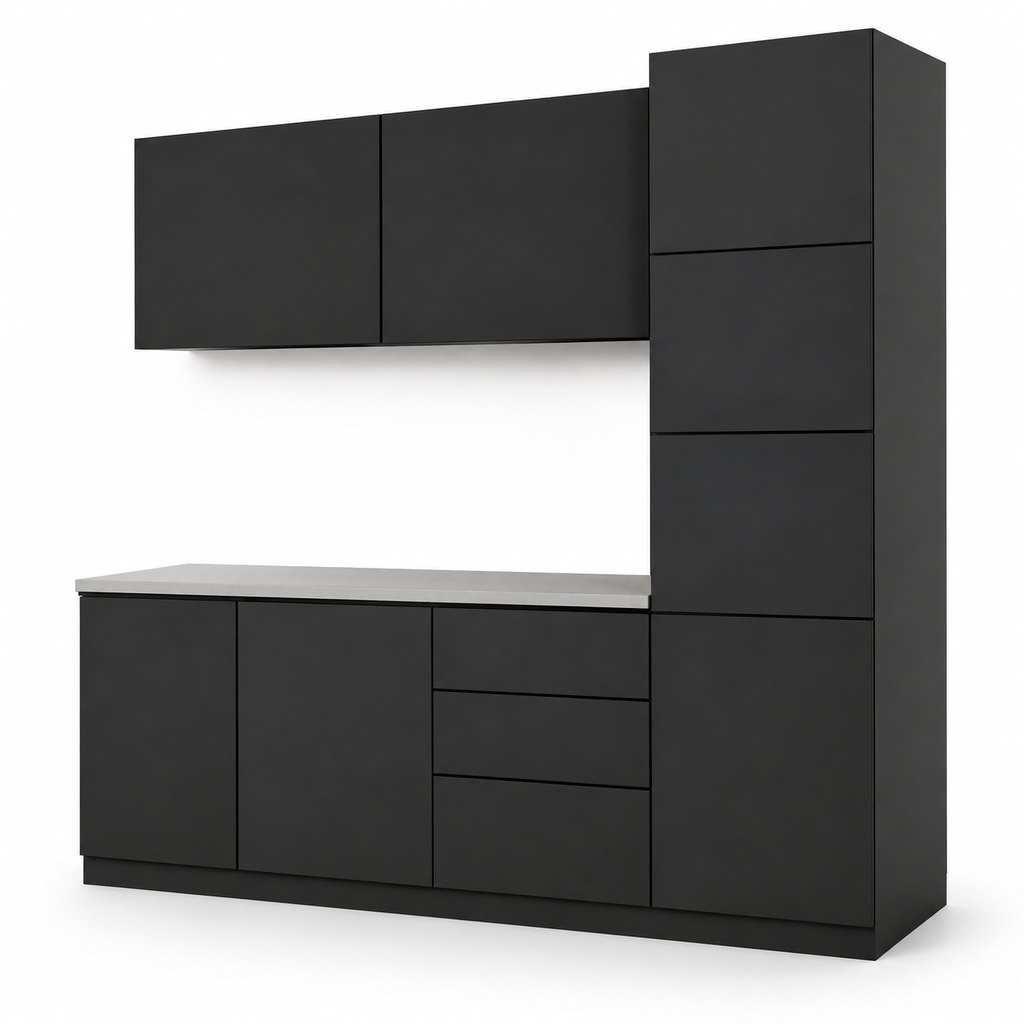
Kitchen furniture has its own position in the tariff rather than sitting inside general furniture, and the wording is what matters: furniture for kitchens, as opposed to furniture that happens to be used in a kitchen. A run of base units, wall units and a larder column sold as a kitchen is declared against the kitchen line; a single wall cabinet sold as storage is not, and a program that ships both needs both codes on the file rather than an average.
Flat-pack does not change that. The General Rules for the Interpretation of the Combined Nomenclature treat an article presented unassembled or disassembled as the complete article, provided it has the essential character of the finished piece. Twelve cartons of panels, hinges and a hardware box are not twelve consignments of board; they are one kitchen, and declaring them as board components because they travel flat is the kind of shortcut that survives until the first audit and then does not.
- A kitchen sold as a kitchen is declared on the kitchen furniture line, not on a board line
- Unassembled or disassembled goods keep the code of the complete article under GIR 2(a)
- A single storage cabinet sold outside a kitchen may sit on a different line - do not average
- Carton count and net weight still have to match the declaration line by line
- Bathroom furniture is not kitchen furniture: a vanity is declared on its own position
The aluminum vanity is not on the same line as the wooden one
Material drives classification in furniture, and this is where an engineering line diverges from a board line. A body built from aluminum box section and powder-coated is metal furniture; a body built from coated chipboard is wooden furniture even when the front is a laminate. Two vanities that look identical in a photograph can therefore sit on two different tariff positions with two different rates, which is one more reason the bill of materials belongs next to the drawing.
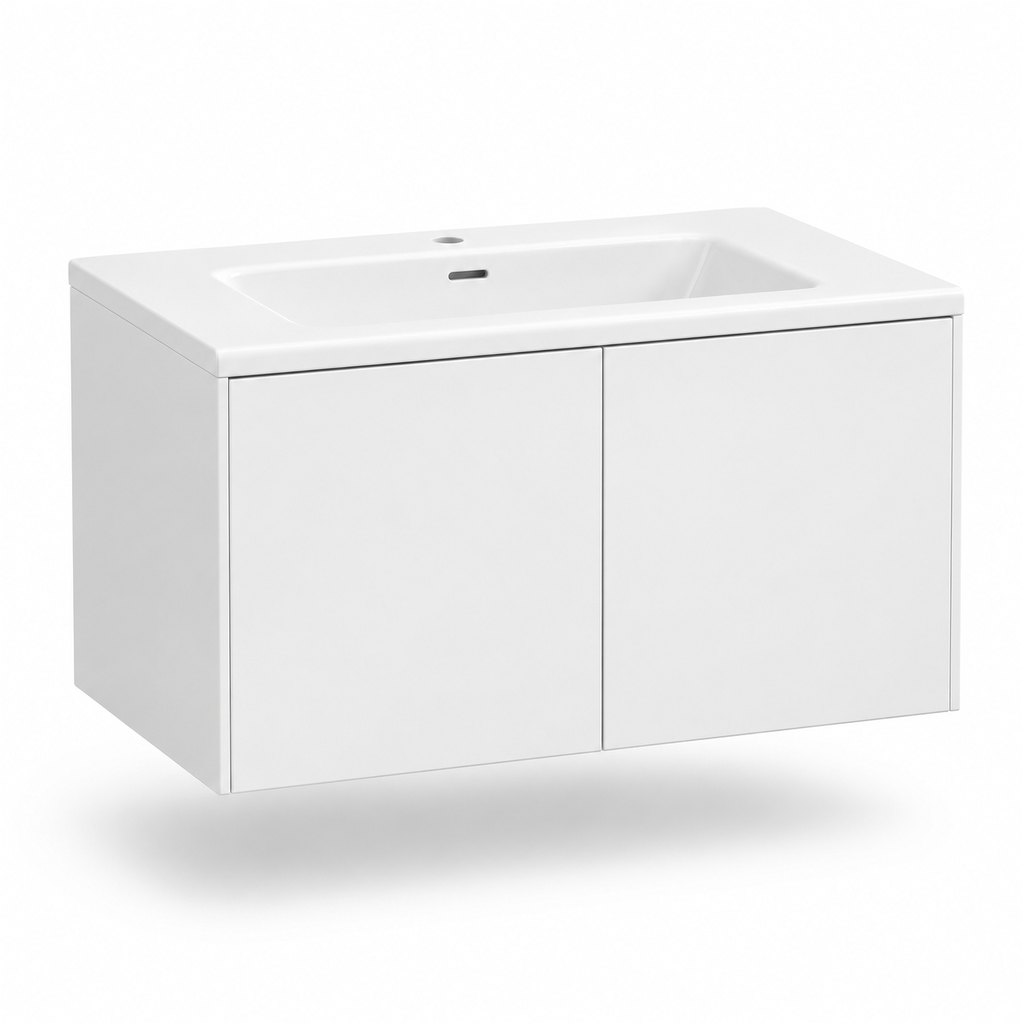
The same logic splits a set. A vanity sold complete is furniture; the same order shipped as a carcass, a separate china top, a faucet and a mirror is four classifications in one container. Ceramic sinks and wash basins have their own position, taps and valves another, and framed mirrors another again. The LED version is the difficult one: a mirror cabinet with a driver, an LED strip and a switch is a luminaire as much as a mirror, and the essential-character test is what decides which position leads. Declare it once, consistently, and keep the technical file that supports the choice.
- Metal furniture and wooden furniture are separate positions - the body material decides
- A powder-coated aluminum carcass is not a board carcass with a different color name
- Ceramic wash basins sit on a ceramics position of their own when shipped as a component
- Taps, mixers and valves are classified in the valve chapter, not as furniture fittings
- Framed mirrors have their own position; an LED mirror cabinet needs the essential-character decision documented
Zollwert: what an FOB price leaves out
Duty is charged on the customs value, and the customs value is not the FOB number. Under the Union Customs Code the starting point is the transaction value - the price actually paid or payable - and the transport and insurance costs of bringing the goods to the customs territory of the Union are added to it. On an FOB Shanghai or Ningbo quote, the ocean freight, the insurance and the terminal costs to Hamburg or Bremerhaven sit outside the invoice, and somebody still has to put them on the declaration.
This is not a rounding issue on a mixed container. It decides who carries the freight in the duty base, and it is why two importers buying the same FOB price can end up with different landed costs without either supplier being wrong. Settle it before the first order: state on the quotation whether freight and insurance are shown separately on the commercial invoice, whether the forwarder invoices the importer directly, and which figure the broker will use. A broker who has to reconstruct a freight figure after clearance is reconstructing it from memory.
- Customs value starts from the price actually paid or payable, then adds transport and insurance to the Union border
- FOB leaves ocean freight, insurance and destination terminal costs outside the invoice
- The duty base and the VAT base are not identical: VAT also covers the duty itself
- Ask for the freight and insurance figures before the container sails, not after clearance
- Keep one convention across all suppliers, or the cost comparison between programs is meaningless
ATLAS entry: the data set the broker will ask for
German declarations are lodged electronically in ATLAS, and the practical consequence for a supplier is that the data has to exist in a structured form before the vessel arrives. The importer of record needs an EORI number, and every line of the declaration carries the ten-digit code, a description that matches the goods, the net and gross mass, the number and kind of packages, the invoice value, the country of origin and the procedure code being used.
The two documents that cause delays are the ones nobody audits until they are wrong: the commercial invoice and the packing list. The invoice has to describe the goods in tariff language rather than marketing language, and the packing list has to reconcile to the cartons that are physically in the container. A description that reads like a catalog headline, or a packing list that summarizes twelve cartons as one run, is work the broker has to redo at the port, and port time is the most expensive time in the chain.
- EORI number of the importer, confirmed before the booking, not before the arrival
- Ten-digit code plus a tariff-language description on every invoice line
- Net and gross mass per line, and the package count reconciled to the packing list
- Country of origin and the production site named on the invoice
- A packing list written per module and per code, matching the carton marks
Nineteen percent import VAT is a cash line, not a cost
Import VAT in Germany is charged at the standard rate of nineteen percent, and it is charged on a base that includes the customs value, the duty and the related costs of the import. For a VAT-registered importer it is recoverable as input tax, so it is not a cost of goods - but it is cash, and on a full container it is usually the largest single amount paid on the day of clearance, larger than the duty itself.
That matters for how a program is financed rather than for how it is priced. An importer paying import VAT at clearance and recovering it weeks later is lending the difference to the state, and the size of the loan scales with the container value, not with the margin. Plan the working capital against the VAT line, keep the customs decisions and the VAT return consistent, and if cash is tight, discuss a deferral arrangement with the customs adviser before the first container rather than after the third.
- Nineteen percent standard rate, charged on customs value plus duty plus related costs
- Recoverable as input tax for a VAT-registered importer, so a cash item rather than a cost
- The VAT amount per container usually exceeds the duty amount
- Finance the working capital against the VAT line, not against the gross margin
- Keep the declared customs value and the booked purchase value consistent, or the input tax deduction becomes a question
The mixed 40HQ that survives a customs check
A defensible first German container for a distributor testing both categories is thirty kitchen runs and a hundred and twenty vanity sets. The kitchen run is 0.92 m3 and 138 kg gross, so thirty runs are 27.6 m3 and 4.1 t; the vanity set is 0.278 m3 and 30.5 kg gross, so a hundred and twenty sets are 33.4 m3 and 3.7 t. Together that is 61.0 m3 and 7.8 t against roughly 68 m3 usable and a payload above 26 t, which means the container fills on cube with weight to spare - the normal shape of a furniture load.
What makes it survive a check is not the cube, it is the paper. Three documents have to agree with each other and with the physical cartons: the commercial invoice in tariff language, the packing list per module and per code, and the declaration lines lodged in ATLAS. Build the packing list from the carton marks, not from the sales order, and photograph the load before the doors close. A discrepancy found at the port is a delay; the same discrepancy found in an audit months later is an assessment, and by then the cartons are gone.
- 30 kitchen runs: 27.6 m3 and 4.1 t gross
- 120 vanity sets: 33.4 m3 and 3.7 t gross
- Total 61.0 m3 and 7.8 t against about 68 m3 usable - cube-bound, with payload to spare
- Invoice, packing list and ATLAS lines reconciled line by line before the vessel sails
- Load photographs and carton marks kept with the file, not with the forwarder
Questions Buyers Ask
Does a flat-pack cabinet in cartons get classified as furniture?
Is duty charged on the ocean freight?
Can one container carry five tariff codes?
What does a German customs broker need from a Chinese supplier?
Want the Numbers for Your Own Program?
Send your model list, sizes and destination port — we reply within 24 hours with FOB pricing, MOQ and lead time.