A 40HQ of Flat-Pack Cabinets into Germany: Cube, Pallets, Duty and Cash
The compliance file gets a supplier shortlisted in Germany. The freight file decides whether the program makes money. This is the second conversation, in the order a German importer actually runs it: what fits in the box, what the box costs to move, what the customs entry adds, and when the cash comes back.
5 November 2026 · DE market · Fame Industry Co., Ltd.
Cost per cabinet is a derived number; cost per cubic meter is the real one
A German importer buying cabinets does not compare FOB prices, because an FOB price per piece says nothing until it is divided by the space the piece occupies. Ocean freight, terminal handling, inland trucking and warehousing are all charged on volume or on a container, not on a cabinet. Two factories can quote the same unit price and land at different costs per meter of kitchen simply because one packs 0.92 m3 for a 3 m run and the other packs 1.35 m3.
The arithmetic is worth doing explicitly. A 40 foot high cube has roughly 76 m3 of nominal internal volume, and after stowage loss, pallet voids and door-end blocking the practical figure is nearer 68 m3. At 0.92 m3 a run, that is about 66 runs per container; at 1.35 m3 it is about 50. The same freight invoice, spread over 16 fewer kitchens, is the difference between a program that clears its landed cost target and one that quietly does not.
- Nominal 40HQ volume: roughly 76 m3 internal; plan on about 68 m3 usable
- Flat-pack 3 m run at 0.92 m3: about 66 runs per 40HQ
- The same run at 1.35 m3: about 50 runs per 40HQ, same freight invoice
- Assembled 3 m run at about 2.6 m3: roughly 24 runs per 40HQ
Carton geometry decides more than carton count
A container is 2.35 m wide inside, which is two 1,200 x 800 mm pallets across with a hand's width left over, or two 1,000 x 1,200 pallets with nothing left over. That single dimension explains most packing decisions in the trade: cartons are designed to sit inside a 1,200 x 800 footprint, stacked no higher than the door opening allows, and the longest carton in a kitchen program is normally the worktop or the tall-unit side panel rather than the base carcass.
Floor loading beats palletising on cube, because a pallet is 144 mm of dead height and the voids between pallet feet are wasted volume. It loses on handling time at destination, and German warehouse labour is not cheap. The honest answer is that a program sold to a distributor who re-packs is usually floor loaded, and a program sold to a retailer who cross-docks is usually palletised, and the cube difference between those two decisions is typically 5 to 8 percent of the container.
- Euro pallet footprint: 1,200 x 800 mm, 144 mm high, EPAL exchange pool
- Container internal width: about 2.35 m, so two Euro pallets across leaves a working gap
- Longest carton in a kitchen run is usually a side panel, not a base unit
- Floor loading gains roughly 5 to 8 percent cube against palletising
The terminal bill arrives before the container does
On a CIF or CFR booking the importer discovers at destination that the ocean freight was the smallest line. Terminal handling charges, ISPS, documentation, customs clearance and the forwarder's release fee are billed locally and are not part of the freight quote. On a DAP or DDP arrangement the supplier carries them, which is why DDP prices per container vary so much between forwarders: the difference is usually in what is excluded rather than in the rate.
Demurrage and detention are the two charges that turn a good margin into a bad month. Demurrage runs on the container sitting in the terminal, detention on the container sitting outside it, and both start after a free period that is shorter than most importers assume. A cabinet container that arrives without a confirmed delivery slot, a confirmed unloading crew and a confirmed place to put 66 flat cartons will burn its free time on the quay rather than in the warehouse.
- Charged locally, not in the ocean freight: THC, ISPS, documentation, clearance, release
- Incoterms 2020 decide who pays which line: CIF and CFR stop at the destination port
- DAP and DDP move the terminal and inland cost to the seller, with a price to match
- Demurrage is terminal time, detention is container-out time; both start after free days
Duty is a small line; import VAT is a cash-flow line
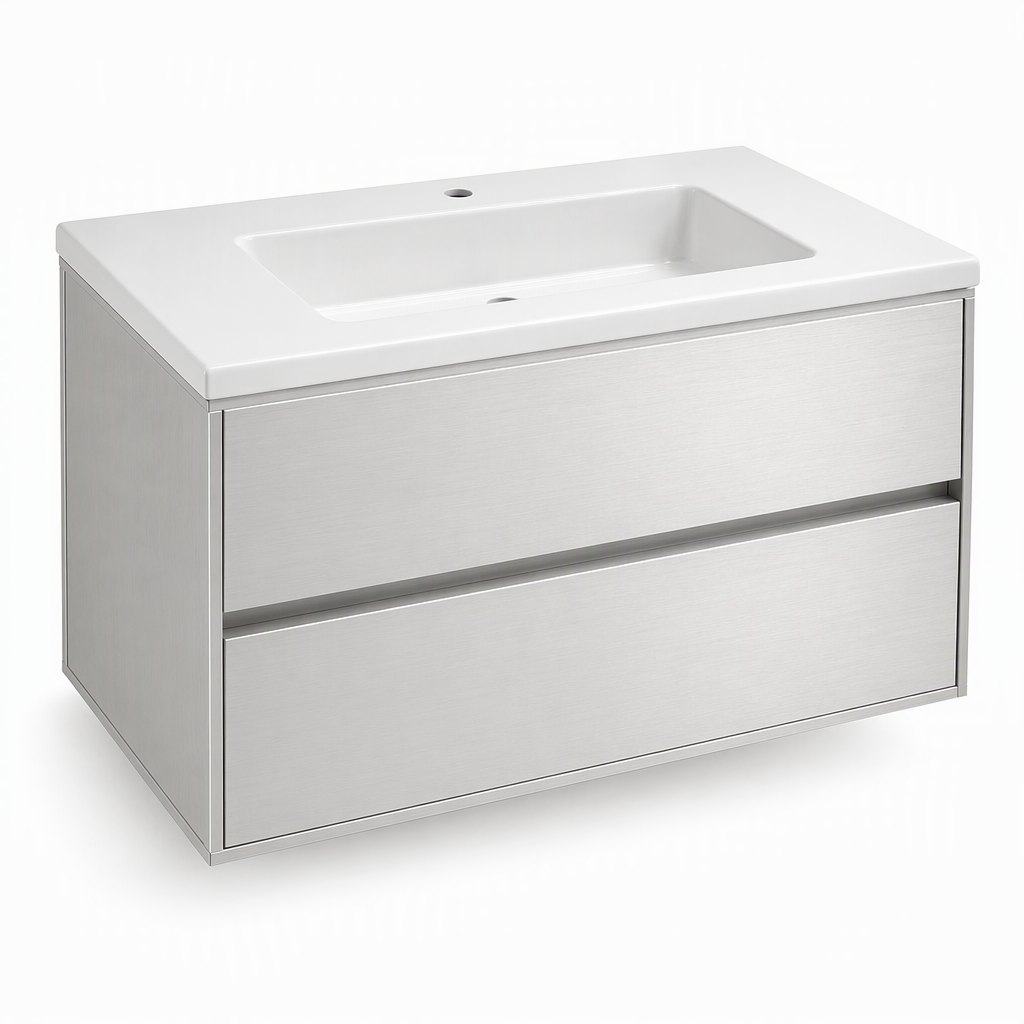
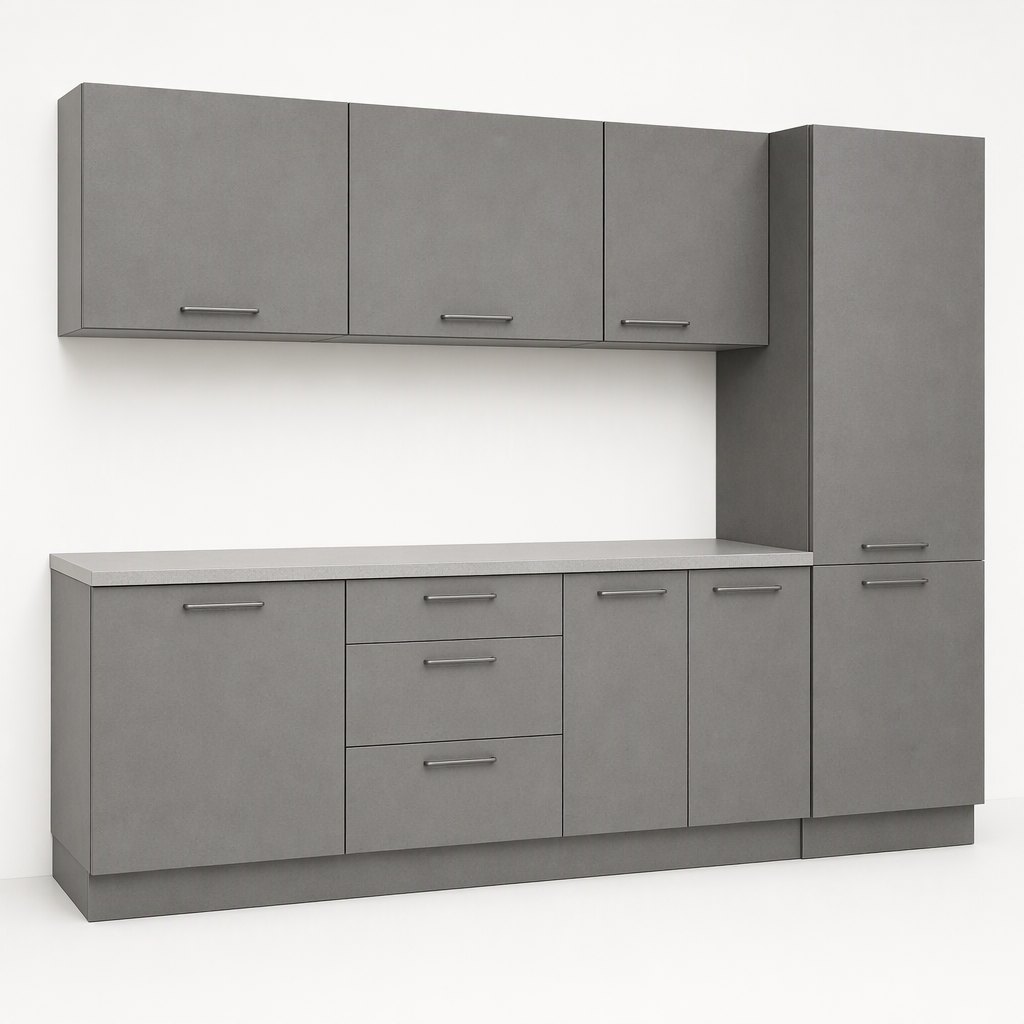
A mixed cabinet container is not one customs line. Kitchen units fall in CN 9403 40 as wooden furniture of a kind used in kitchens, bathroom vanities in CN 9403 60 as other wooden furniture, a ceramic basin top leaves chapter 94 for chapter 69 as ceramic sanitary ware, and a lit mirror is a luminaire with its own classification and its own electrical obligations. Each line needs its own description and unit price on the commercial invoice, and a reclassification at the port arrives after the goods are already on the quay.
German import VAT is 19 percent of the customs value plus duty plus the freight and insurance that form part of the customs value, and for a VAT-registered importer it is recoverable input tax rather than a cost. It is still cash out of the account on the day of release and back weeks later, which for a 66-run container is a five-figure float. An EORI number, a customs agent mandated in advance, and a clear decision on whether the entry is filed by the importer or by the forwarder under a direct-representation arrangement, are the three things that determine whether that float is 30 days or 90.
- 9403 40: wooden furniture of a kind used in kitchens
- 9403 60: other wooden furniture, including bathroom vanities
- 6910: ceramic sinks and washbasins, including a one-piece basin top
- 9405: luminaires, where a lit mirror stops being furniture
- German import VAT: 19 percent, recoverable for a VAT-registered importer but paid at release
Wood packaging is a phytosanitary question, not a furniture question
ISPM 15 applies to solid wood packaging: crates, pallets, dunnage and any bracing made from sawn timber. It requires heat treatment or fumigation and a visible IPPC mark on the wood, and it is enforced at the EU border independently of what is inside the box. Processed wood such as plywood, MDF, HDF and particleboard is outside the scope, which is why a carton-only shipment of knock-down cabinets usually needs no phytosanitary certificate at all.
The failure mode is not the pallet, it is the crate. A program that switches to a timber crate for a fragile ceramic top, or a factory that adds a softwood brace across a tall carton to stop it bowing, has just brought solid wood packaging into the shipment without the mark. The fix is a line in the packing instruction rather than a certificate, and it is worth writing because a rejected crate at the border costs more than the crate.
- ISPM 15 scope: solid wood packaging — crates, pallets, dunnage, bracing
- Requirement: heat treatment or fumigation, plus the visible IPPC mark on the wood
- Out of scope: plywood, MDF, HDF, particleboard and cartonboard
- Risk point: an added timber brace or a one-off crate that no one marked
Cash flow is where small importers actually fail
A cabinet container ties up money three times: a deposit at order, the balance before the bill of lading is released, and the duty and import VAT at clearance, before a single kitchen has been sold. The deposit and balance are usually 30 and 70 percent, which means the full FOB value is committed roughly six weeks before the goods are on a shelf. That is a working-capital problem, not a sourcing problem, and it is why the same program that looks healthy on a margin sheet can stall on the second container.
The levers are ordinary ones. Ask for a shipping schedule that does not put two containers in the same week. Ask the forwarder for a credit line against the bill of lading rather than paying cash. Confirm whether the entry can be filed with a deferred VAT arrangement, which for a German importer with a standing customs account moves the cash date by a month. None of that changes the landed cost per meter, but all of it changes how many containers a year the business can actually run.
- Typical terms: 30 percent deposit, 70 percent against the bill of lading
- Cash committed roughly six weeks before sellable stock exists
- VAT and duty land at release, before any revenue from the container
- Practical levers: staggered shipping schedule, forwarder credit, deferred VAT account
How to audit a cube claim before you sign
Every factory will quote a loading quantity. Very few will send the carton list that produces it, and the carton list is the only thing that can be checked. Ask for it per carton: length, width, height in millimeters, net and gross weight, and the model or unit it belongs to. Multiply out the volumes, add them, and compare the total with the claimed sets per container. If the two numbers cannot be reconciled within a few percent for stowage, one of them is a sales figure.
The second check is dimensional honesty. A 1,180 mm carton fits a 1,200 mm pallet and a 2.35 m container width in two rows; a 1,240 mm carton does neither cleanly and quietly costs a row. The third check is the tallest carton against the door opening, because a carton that has to be tilted to get through the door is a carton that arrives with a damaged corner on every unit. These are five-minute checks with a tape measure and a spreadsheet, and they are the difference between a loading quantity that is a plan and one that is a hope.
- Ask for: per-carton L x W x H in mm, net and gross weight, model reference
- Multiply out the volumes and reconcile against the claimed sets per container
- Check the longest carton against the 1,200 mm pallet and the 2.35 m container width
- Check the tallest carton against the container door opening before you approve the packing
Questions Buyers Ask
Do I need a separate customs line for a ceramic basin top in the same container?
Is 19 percent import VAT a cost I should build into the landed cost?
Does a carton-only flat-pack shipment need ISPM 15 wood packaging treatment?
How much cube can a factory realistically take out of a kitchen program?
Want the Numbers for Your Own Program?
Send your model list, sizes and destination port — we reply within 24 hours with FOB pricing, MOQ and lead time.