France: The Two-Year Guarantee Behind a Kitchen Program
A French program is priced on cost per meter and settled on conformity. Between the purchase order and the first claim sits a two-year legal guarantee with a twenty-four month presumption, an import VAT line that moved onto the VAT return in 2022, and a test standard a specifier will name before he reads a finish. This is the sequence a distributor or a project buyer works through before the second container.
18 November 2026 · FR market · Fame Industry Co., Ltd.
The guarantee starts at delivery, not at the factory gate
The legal guarantee of conformity in the French consumer code is two years from delivery of the goods, and since 1 January 2022 any lack of conformity that appears within twenty-four months is presumed to have existed at delivery. That presumption is the part that changes the commercial calculation: the burden of proof moves to the seller for the whole two years, so a distributor that has no test report and no board documentation is arguing from a position it cannot win.
The guarantee of conformity sits alongside the older action for hidden defects under the civil code, which runs for two years from the moment the defect is discovered and covers defects that make the product unfit for its intended use. In practice a board carcass that swells at an unsealed cut edge can be pursued on either route. Both are obligations of the seller in the French chain, which is why the specification has to answer them at the drawing stage rather than at the claim.
- Two years of legal conformity from delivery, with a twenty-four month presumption of pre-existing non-conformity
- Hidden-defects action available for two years from discovery, independent of any commercial warranty
- The seller in France carries it - so the specification, the test report and the parts stock are the defense
- Write the guarantee position into the supply agreement before the first purchase order, not after the first complaint
EN 14749 is the language a French tender uses
When a French buyer writes a specification for kitchen storage units and bathroom furniture, the test frame he names is EN 14749. It covers the safety requirements and test methods for domestic kitchen units and bathroom furniture: static load on shelves and bases, door and hinge endurance, drawer and runner endurance, wall-fixing strength and stability. A supplier who answers a tender with a photograph and a finish swatch has answered a different question.
What a buyer should ask for is not a certificate but a report: the test house, the date, the exact configuration tested, and whether the unit was tested wall-fixed as it will be installed. A report on a 600 mm wall unit does not cover a 900 mm corner unit with a carousel, and it does not cover a 2,700 mm run whose wall-fixing load is shared across more modules. Ask for the configuration list to match the drawing.
- Report naming the test house, the date and the configuration tested - not a compliance logo
- Wall-fixing strength tested in the installed condition, which is where a tall or corner unit actually fails
- One report per configuration family, and a written statement on what the report does not cover
- Keep the report with the customs file, because the importer of record is the one who will be asked for it
What an all-aluminum cabinet removes from the file
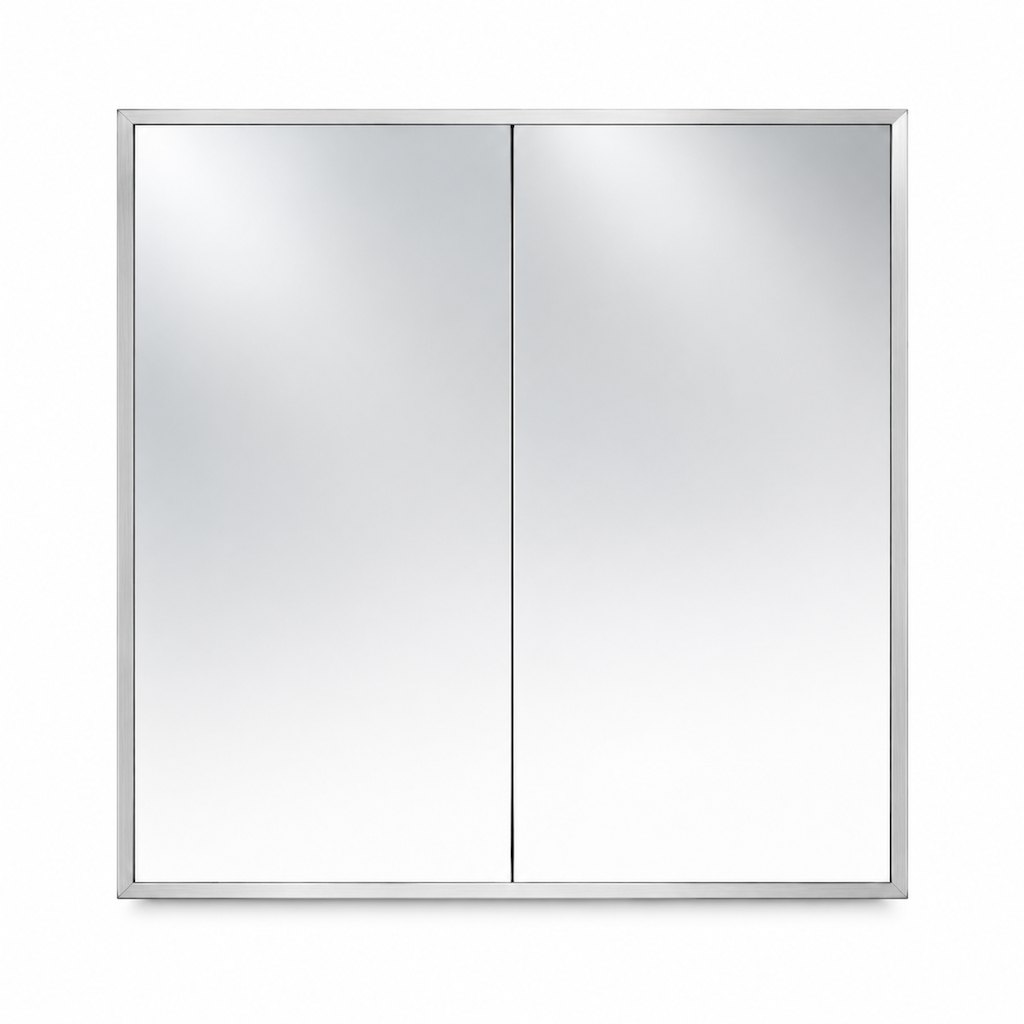
A mirror cabinet with an anodized aluminum body and no board in the carcass removes two arguments at once. There is no cut edge to seal and no core to swell in the wettest part of the room, and because there is no LED, driver, sensor or switch there is no Low Voltage or EMC technical file and the item is not electrical and electronic equipment, so no WEEE registration line attaches to it in France.
What does not disappear is general product safety. Under Regulation (EU) 2023/988, applicable since 13 December 2024, placing the product on the French market requires a responsible economic operator established in the EU, traceability of the product and its producer, and safety information the consumer can read in French. That is a supplier-level file rather than a per-SKU test, and it is the first thing a serious retail buyer asks for now.
- Aluminum body: no board in the wet zone, no formaldehyde question on the cabinet itself
- No electrics: no LVD or EMC file, no WEEE or DEEE registration for that SKU
- Mirror to EN 1036-1 for internal use, copper-free, sealed edge and back coat - specify the standard, not the thickness
- EU responsible operator, traceability and French-language safety information in place before the first shipment
Import VAT left the customs desk in 2022
Since 1 January 2022, VAT on imports into France is self-assessed by the importer on the VAT return, form 3310-CA3, instead of being paid at customs. The practical effect is cash flow: the VAT is declared and deducted on the same return, so a French-established importer with a French VAT number no longer funds twenty percent of the customs value for the weeks between clearance and repayment. It also means the entry file and the VAT return have to reconcile, line by line, and that an importer without a French VAT number cannot use the mechanism at all.
Customs duty is a separate line and is still paid at clearance. Wooden kitchen furniture sits in CN 9403 40 00 and other wooden furniture in 9403 60, both at a conventional rate in the low single digits - 2.7 percent on 9403 40 00 under the current tariff - applied to the customs value rather than the invoice total. Rates change by regulation and by measure, so the number that matters is the one in force on the day of registration, confirmed in writing by the broker.
- Autoliquidated import VAT on the CA3 since 1 January 2022, for importers with a French VAT number
- EORI number in place before the first booking, and the commercial invoice carrying it
- Duty at 2.7 percent on CN 9403 40 00 against the customs value - confirm the code and the rate on the day
- A broker instruction that identifies the party responsible for the safety and security declaration, in writing
Cube, not tonnage, on the Le Havre leg
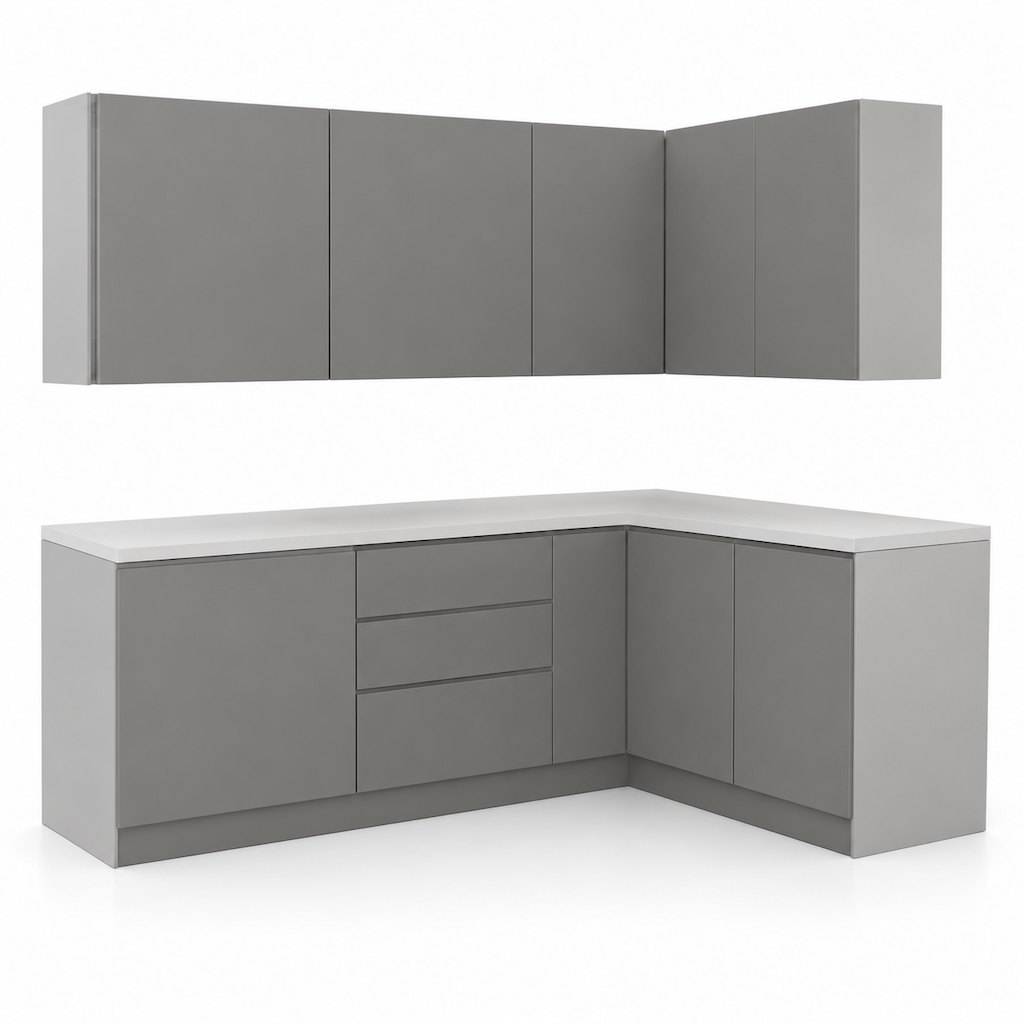
Board goods fill a container on volume. A 2,700 mm L-shaped run is 0.86 m3 and 132 kg gross, an aluminum mirror cabinet is 0.106 m3 and 15.5 kg gross, and both land near 150 kg per cubic meter. A 40HQ carries about 68 m3 of usable cube, and that cube is exhausted at roughly 10 tonnes against a payload above 26 tonnes. Nothing in a kitchen and bathroom program is weight-limited, so the planning variable is mix, not payload.
A first container that tests both categories is 40 runs and 250 cabinets: 34.4 m3 plus 26.5 m3 is about 61 m3 and 9.2 tonnes, leaving a little air for pallets or a second finish. Load the mirror cartons flat, on top or at the door end, never underneath kitchen cartons, and allow five to six weeks door to door to Le Havre or Marseille-Fos. Desiccant belongs in the container: condensation over a long crossing damages board goods more reliably than impact does.
- 68 m3 usable per 40HQ; 28 m3 per 20GP - the cube is the constraint in every scenario
- Mixed load of 40 runs and 250 cabinets: about 61 m3 and 9.2 t, comfortably inside the payload
- Mirror cartons flat and on top, kitchen cartons behind them, desiccant in the container
- Loading photo set with the shipping documents, because a corner dent found at the port is a freight claim
Parts are a purchase-order decision, not a claim decision
The two-year guarantee is short enough to be absorbed by a parts stock and long enough to bankrupt a program that has none. A hinge or a runner is cheap at the factory and expensive as a parcel from Zhejiang to Lyon, and the delay in between is the period in which a consumer is entitled to a remedy. The parts line belongs in the first container because that is the only shipment where the marginal cost is a rounding error.
The quantities are not complicated: two percent of hinges and runners, one door and one drawer front per twenty units, a bag of cam locks, dowels and shelf pins, and one spare shelf per ten wall or corner units. Two details get missed. The parts need a material code and a value on the invoice so they are not treated as samples at entry, and the assembly drawing and care instructions have to be in French inside the carton, because that insert is a retail requirement rather than a customs one.
- Two percent of hinges and runners per container, plus fixings and shelf pins
- One door or drawer front per twenty units; one shelf per ten wall or corner units
- Parts invoiced as goods with a material code, not declared as samples
- French assembly drawing and care instructions in the carton for every SKU shipped
Sequencing a French launch
The order that avoids expensive mistakes is short. Sample one run and one cabinet, and test what a French buyer tests: assemble the run from the corner datum and check the door line, put water on the worktop edge and the cut edges and look for wicking, open and close every door and drawer against its rating, and hang the mirror cabinet on its cleat to check the levelling range. Photograph the label, the packing list and the test report against the invoice.
Then lock the specification - board grade, edge thickness, drilling pattern, carton plan, mirror standard - because every change after approval reopens the carton engineering and, in a two-year guarantee market, reopens the conformity file. Only then order the container, with the parts line, the classification confirmed in writing, the EU responsible operator named, and the French documents inside the carton. The second container is ordered against sell-through, not against a freight saving.
- Sample and test the edges and the corner joints, not the showroom face
- Classification and duty confirmed in writing before the deposit
- Parts line, French inserts and the safety file bundled with the first container
- Second container against sell-through, with the freight and duty lines already reconciled
Questions Buyers Ask
How long is the legal guarantee on kitchen and bathroom furniture sold in France?
When can import VAT be self-assessed rather than paid at customs?
What duty applies to a flat-pack kitchen and an aluminum mirror cabinet?
Is a test report or a certificate required to place the goods on the French market?
Want the Numbers for Your Own Program?
Send your model list, sizes and destination port — we reply within 24 hours with FOB pricing, MOQ and lead time.