Selling Flat-Pack Cabinets into Chile: Zofri, the Entry File and the Cube
Chile is a small market with a long coastline and two very different ways to hold stock: clear the container at San Antonio or Valparaiso and pay the tax, or sit it in the bonded zone at Iquique and decide later. The choice changes the cash-flow profile of a container before it changes the price of a cabinet. This is the sequence a distributor works through, from the entry file to the carton cube, written for the person signing the purchase order rather than the person filing the document.
9 November 2026 · CL market · Fame Industry Co., Ltd.
Two ways to hold stock, and what each one costs
The direct route is the one most first-time importers take. The container discharges at San Antonio or Valparaiso, a customs broker files the entry, duty and IVA are paid, and the goods go to a warehouse in Santiago or Concepcion. The cash goes out at the port and the stock is yours, which is simple and expensive in the month it lands. Everything about the product then has to be right the first time, because there is no holding position to correct a wrong finish in.
The second route is the Zona Franca de Iquique, known as Zofri, established in 1975 and operated as a bonded commercial and industrial zone in the north of the country. Goods entering the zone are held outside the general tariff territory: they can be stored, repacked, consolidated, shown to buyers and re-exported, and the tax point is deferred until goods leave the zone for the rest of Chile or for another country. For a distributor selling into Peru, Bolivia or the south of Chile as well as Santiago, that deferral is a working-capital decision rather than a niche. The mechanism is a customs regime, not an exemption on the final sale, so the entry into Chilean territory is still an entry; the arithmetic is set by a broker who works in the zone.
- Direct entry: discharge at San Antonio or Valparaiso, duty and IVA paid at the port, stock owned outright
- Bonded entry: goods held in Zofri at Iquique, tax point deferred until they leave the zone for Chile or a third country
- Zofri suits consolidation, repacking and re-export; it does not remove the obligation on goods finally sold in Chile
- The regime is administered by a customs broker working in the zone — take the structure from the broker, not from a supplier's brochure
- The choice is a cash-flow decision first and a freight decision second, because Iquique is a separate sailing from San Antonio
The entry file belongs to the despachador, not the factory
Chilean imports are cleared through a despachador de aduanas, a licensed customs broker who files the Declaracion de Ingreso electronically against the importer's RUT. A factory cannot file it and should not pretend to: what the factory supplies is the document set that the broker builds the entry from. That set is short and unglamorous — commercial invoice, packing list, bill of lading, certificate of origin where a preference is claimed, and an insurance certificate if the terms require one — and the most common cause of a hold is not a missing document but a mismatch between two of them.
The mismatch that matters most is the goods description. The broker classifies against the invoice description, the certificate of origin has to describe the same goods, and the packing list has to reconcile to the same carton count. Furniture of the kind used in kitchens and bathrooms sits in heading 9403, and within that heading the split between wooden furniture and other materials changes the line, so a container holding melamine carcasses, ceramic tops and aluminum-framed mirrors is more than one line on the entry. Writing the invoice in the same modules the buyer ordered — units, cartons, cubic meters, gross weight — is what lets the broker build that entry without a round of questions while the container sits at the wharf.
- Importer needs a RUT; the entry is filed against it by a licensed despachador de aduanas
- Document set: commercial invoice, packing list, bill of lading, certificate of origin, insurance certificate
- Heading 9403 covers the furniture; a mixed container is several lines, not one
- Invoice, certificate and packing list must describe the same goods and the same carton count
- Quote the modules the buyer ordered, in units, cartons, cubic meters and gross weight
Nineteen percent is charged on a value that already includes the freight
Chilean IVA is 19 percent, and the base it is charged on is not the FOB price. The tax is calculated on the customs value, which is the transaction value adjusted to the border plus the international transport and insurance to that border, and then on the duty as well. That ordering is what makes a cheap freight rate worth chasing: a lower freight number reduces the duty base, and the duty reduces the IVA base, so a saving on the ocean leg is multiplied by roughly 1.2 before it reaches the shelf.
This is also where the Incoterm stops being a piece of shorthand and starts deciding who is the importer of record. On FOB or CIF the Chilean buyer is the declarant, needs the RUT and pays the tax at entry, and can recover the IVA against sales. On DDP the supplier or its agent takes the entry, which in Chile is not a formality: it requires a local presence and a registration the seller may not have. A first container sold DDP by a factory that has never filed a Chilean entry is the arrangement that most often ends with the goods in a bonded warehouse and the buyer re-quoting the deal.
- IVA 19 percent, charged on the customs value plus international freight and insurance plus duty
- A lower ocean freight reduces the duty base and therefore the IVA base — the saving compounds
- FOB or CIF: the Chilean buyer is importer of record, declares and recovers the IVA
- DDP: the seller takes the entry, which needs a local registration rather than a promise
- First container: price on FOB and let the buyer's broker file, then negotiate DDP once volumes justify it
The cube is the price: 0.229 m3 and 0.72 m3
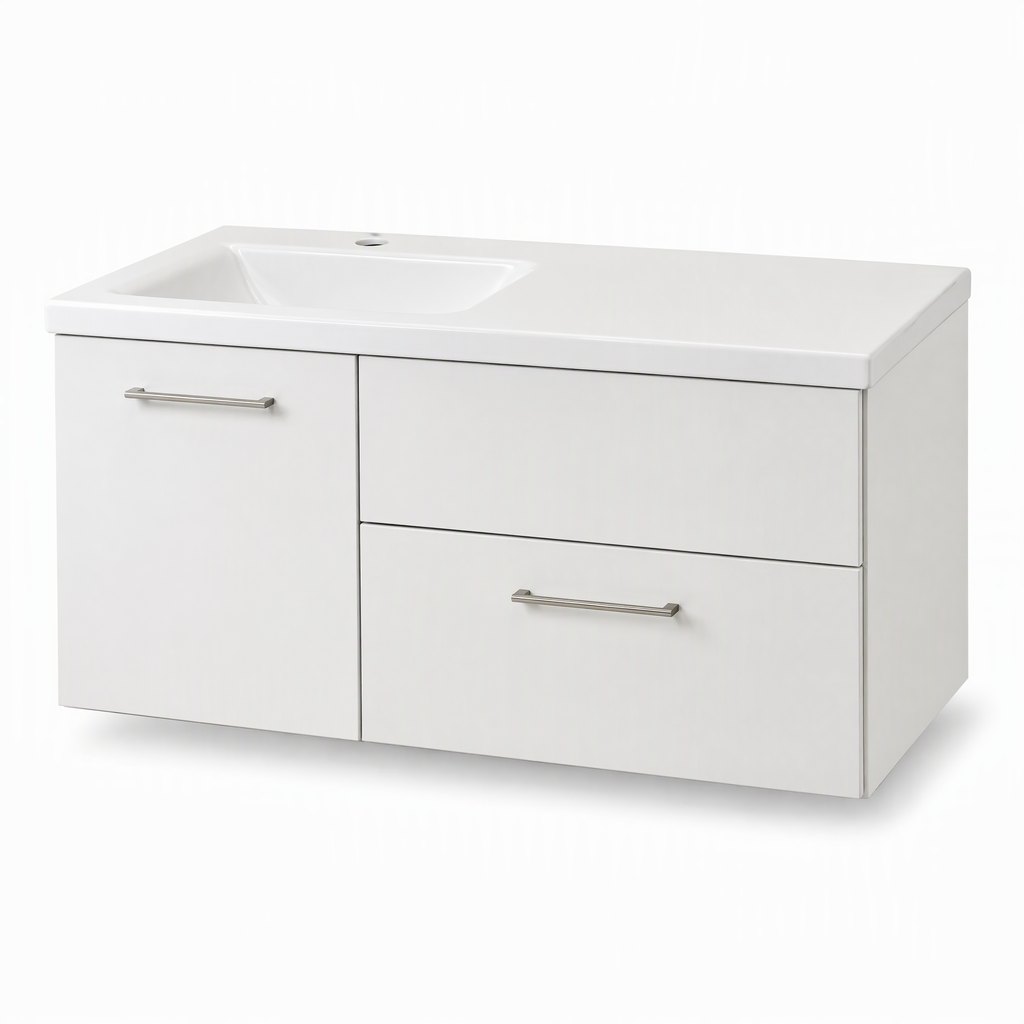
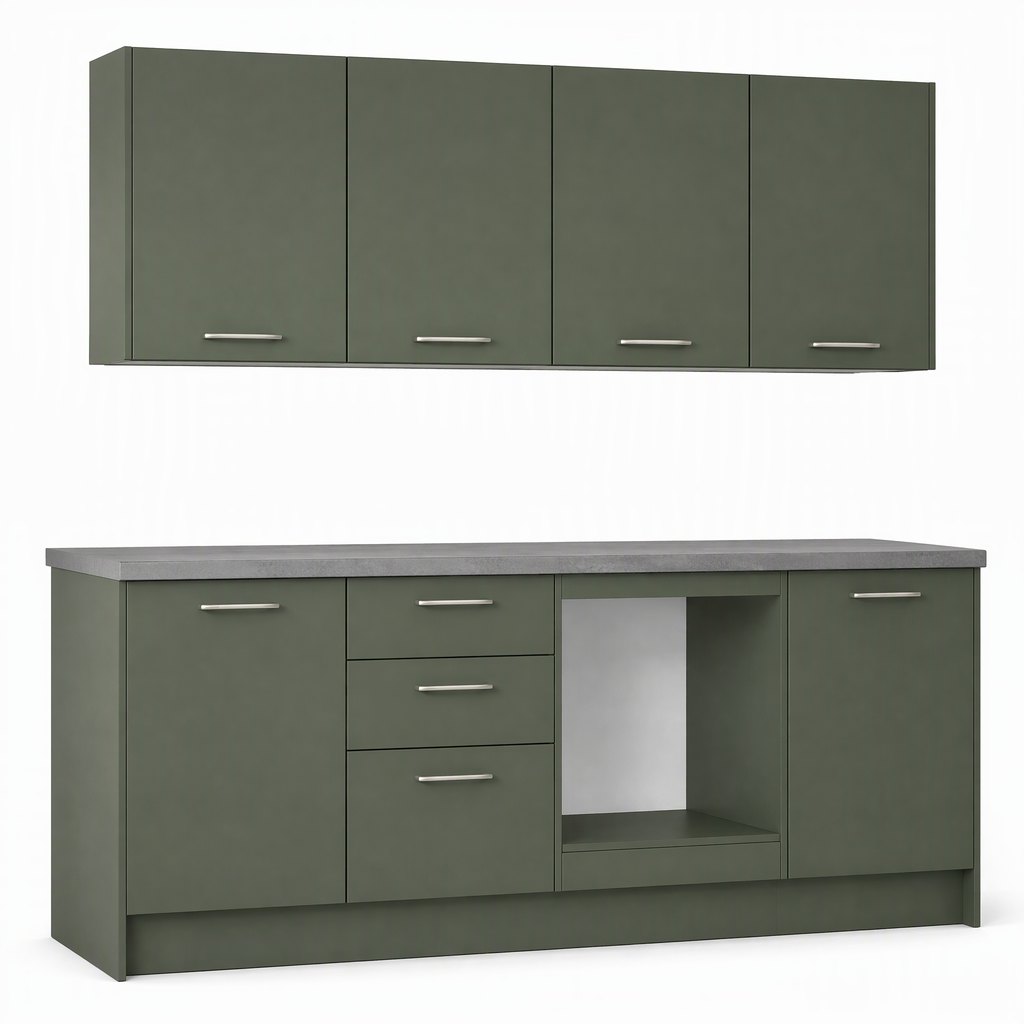
A distributor's margin in Chile is set less by the unit price than by how many metres of run fit in a 40 foot high cube. At a planning figure of about 68 m3 usable, a 1000 mm wall-hung vanity that packs to 0.229 m3 in three cartons puts roughly 295 sets, or 295 metres of vanity run, in a container. A 2.4 m flat-pack kitchen that packs to 0.72 m3 in ten cartons puts about 94 packs in the same box, which is roughly 226 linear metres of kitchen. Those two numbers are the ones to put next to a freight quote, because freight is bought by volume and a container of vanities and a container of kitchens earn very differently per cubic meter.
The trap is buying on price per unit and discovering the cube later. Two 500 mm vanities rarely occupy 0.229 m3 between them once each has its own carton, its own void and its own pallet footprint; the same metre of run built as one 1000 mm carcass is usually 15 to 20 percent less cube, and the difference is not the board but the packaging that surrounds it. The same logic drives kitchen module counts: eight units on a shared carton plan nest better than eight units ordered loose. The document that settles it is the carton list, measured in millimeters and kilos, and a supplier who cannot produce one has not costed the freight either.
- 40HQ planning figure: about 68 m3 usable, against roughly 76 m3 nominal
- One 1000 mm vanity: 0.229 m3 in three cartons — about 295 sets, 295 metres of run
- One 2.4 m kitchen pack: 0.72 m3 in ten cartons — about 94 packs, 226 metres of run
- Wider carcasses remove carton overhead: one metre as a single unit runs 15 to 20 percent under two half-metre units
- Ask for the carton list in millimeters, kilos and cubic meters before confirming the order
Board and edge in a coastal climate
Chile's coastal cities are damp and salty, and the bathrooms in them are frequently unventilated, which is the combination that finds a cheap panel in year two. The specification that survives it is not exotic: 18 mm EN 312 P3 board, which is the load-bearing grade for humid conditions, an E1 emission class declared on the mill's report, melamine faced on both faces, and an ABS edge bonded on all four sides of every exposed panel before assembly. The failure in a wet room almost never starts in the middle of a panel; it starts at an edge where the core is open, and it travels inward from the bottom edge or from a waste cut-out.
Two details are worth writing into the order because they are cheap at the factory and expensive on site. The first is the back panel: a 5 mm HDF back rebated into the side panels rather than stapled to the rear, which keeps a leaking trap away from an unprotected core. The second is the finish on the cut edges around the tap and waste holes, which should be drilled and sealed in the plant rather than cut by the installer, because a hole cut on site leaves a raw edge inside the cabinet where nobody looks until it has swollen. On a coastal container these two line items cost a fraction of one callback.
- 18 mm EN 312 P3 board: load-bearing grade for humid conditions, not a decorative grade
- E1 emission class declared against the panel mill's report, matched to the board in the shipment
- 1 mm ABS edge on all four sides of exposed panels, bonded before assembly
- 5 mm HDF back rebated into the sides rather than stapled to the rear
- Tap and waste holes drilled and sealed in the plant, never cut on site
Competing with a local fabricator on lead time and parts
There is a furniture industry in Chile, and it wins on one thing: a local shop can deliver a made-to-measure carcass in two weeks. It loses on three others, and those three are the argument a flat-pack importer should be making. The first is repeatability: a container of 295 identical vanities has one specification and one spare-parts list, while twenty local carcasses have twenty variations. The second is hardware life, where a DTC hinge rated at 40,000 cycles and a runner at 50,000 cycles is a number a fabricator buying local hardware cannot always match. The third is the packed cube, where flat panels travel at a fraction of the volume of an assembled box.
The part of that argument that has to be backed with a commitment is spare parts. A distributor holding 295 vanities will sell a door in a color that has to match within two years, and an importer holding 94 kitchen packs will be asked for a hinge in year five. The practical arrangement is a spare-parts kit per container — a small percentage of fronts and a bag of hinges and runners per finish — plus a written statement of how long the decor and the hinge pattern stay in production. Twenty to thirty days of production lead time is competitive against a local fabricator only if the parts supply behind it is longer than the warranty, and that is a promise a factory can make in writing and a trading company usually cannot.
- Local fabricators win on two-week delivery; flat-pack wins on repeatability, hardware life and packed cube
- Specify hinge and runner cycles as numbers: 40,000 and 50,000 respectively
- Ship a spare-parts kit per container: a percentage of fronts plus hinges and runners per finish
- Ask in writing how long the decor and the hinge drilling pattern stay unchanged
- 25 to 30 days production lead time only works commercially if the parts supply outlasts the warranty
The RFQ lines that make two quotes comparable
Most cabinet RFQs into Chile are incomparable, and the reason is that they ask for a price per unit without fixing the five variables that move it: the module list, the carton plan, the loading quantity, the finish minimum and the port. A quote that answers all five can be turned into a landed cost in an afternoon. A quote that answers none of them produces the situation where the cheaper unit price arrives in a container that carries 20 percent fewer sets, and the difference is discovered after the deposit.
The list below is short enough to paste into an email, and it is the same list a broker, a forwarder and a bank will each ask part of. Adding the HS heading and the packaging declaration to the RFQ costs nothing at the enquiry stage and saves a week at the wharf, because those two items are what turn a document set into an entry. It is also worth asking for the carton weights per top option on a vanity, since a ceramic top and a solid-surface top differ by several kilos and that changes the pallet plan rather than the product.
- Module list in millimeters, with widths, heights and depths for every unit
- Carton list: count, dimensions, gross weight, cubic meters per set, and which carton is floor-loaded
- Loading quantity per 40HQ and per 20GP at a stated planning figure
- MOQ per finish, and whether the carcass finish and the door finish are counted separately
- Lead time after deposit, loading port, HS heading, and the packaging declaration for the pallets
Questions Buyers Ask
Does bringing goods through Zofri mean no duty when they are sold in Santiago?
Is a certificate of origin enough to get zero duty?
What Incoterm should a first container use into Chile?
Can vanities and kitchens travel in the same container?
Want the Numbers for Your Own Program?
Send your model list, sizes and destination port — we reply within 24 hours with FOB pricing, MOQ and lead time.