Brazil: The Cascade That Takes 70 Percent at the Border
A container of vanities and kitchens is bought on an FOB price and paid for on a tax calculation that runs in a fixed order. At the published rates the taxes come to about 70 percent of the FOB value at the port, of which roughly 50 points are credits a registered importer recovers and about 19 points are cost that never comes back. This is the order of the calculation, the rate on each line, and the one decision that decides where the credits land.
24 November 2026 · BR market · Fame Industry Co., Ltd.
The calculation has an order, and the order is the money
Brazil does not charge one import tax. It charges five, and each is calculated on a base that already contains the previous one. The customs value, the valor aduaneiro, is the FOB price plus international freight plus insurance. Import duty is a percentage of that value. IPI is calculated on the value plus the duty. PIS and COFINS-importacao are calculated on the value. AFRMM is 8 percent of the ocean freight. State ICMS comes last, on a base that includes everything above, and it is itself inside its own base.
That last point is the one most often missed by a buyer comparing suppliers. ICMS is not 18 percent added to a total; it is 18 percent divided out of a total, which is what brasileiros mean by a tax calculated por dentro. On the same goods, the gross-up moves the ICMS number by roughly a fifth against a straight-line multiplication.
Work the arithmetic on one set with an FOB value of USD 100, freight of USD 12 and insurance of USD 0.60. The customs value is USD 112.60. The import duty at 16.2 percent is USD 18.24. IPI at 3.25 percent on value plus duty is USD 4.25. PIS at 2.1 percent is USD 2.36 and COFINS at 9.65 percent is USD 10.87. AFRMM at 8 percent of the freight is USD 0.96. Add the Siscomex fee, which is charged per declaration rather than per set and lands near USD 0.10 a set in a full container.
The sum before ICMS is USD 149.38. Divided out at an 18 percent state rate, the ICMS base is USD 182.18 and the ICMS is USD 32.79, which puts the total tax at USD 69.58 on a USD 100 set. At 17 percent the total is USD 67.38 and at 20 percent it is USD 74.13. Multiplied across a 297-set container, the cash paid at the port is about USD 20,700 on USD 29,700 of goods.
Then separate the two halves of that number, because they behave differently on the P&L:
- Creditable against tax on domestic sales: IPI 4.25, PIS 2.36, COFINS 10.87 and ICMS 32.79, which is USD 50.27 of the USD 69.58
- Cost that stays cost: import duty 18.24, AFRMM 0.96 and the Siscomex fee 0.10, which is USD 19.30
- So the border event is a working capital problem of about 70 percent of FOB and a margin problem of about 19 percent, provided every credit is taken
- Broker fees, THC, storage, demurrage and inland haulage sit outside all of these numbers, and on a small first order they can add as much again in percentage terms
- The rates above are the published ones for NCM 9403.40.00 and 9403.60.00, confirmed with the broker against the current TEC before the deposit, because a code change moves every line at once
16.2 percent: the rate does not negotiate, the classification does
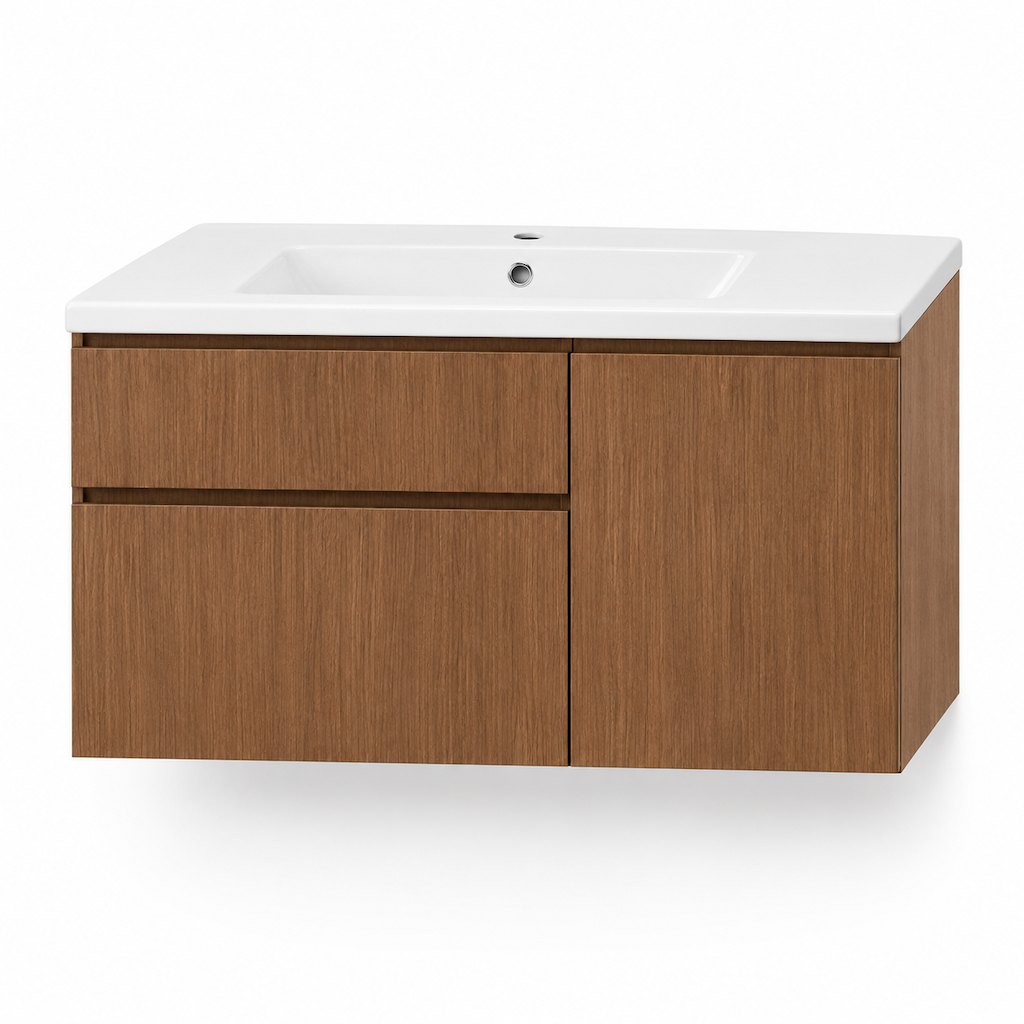
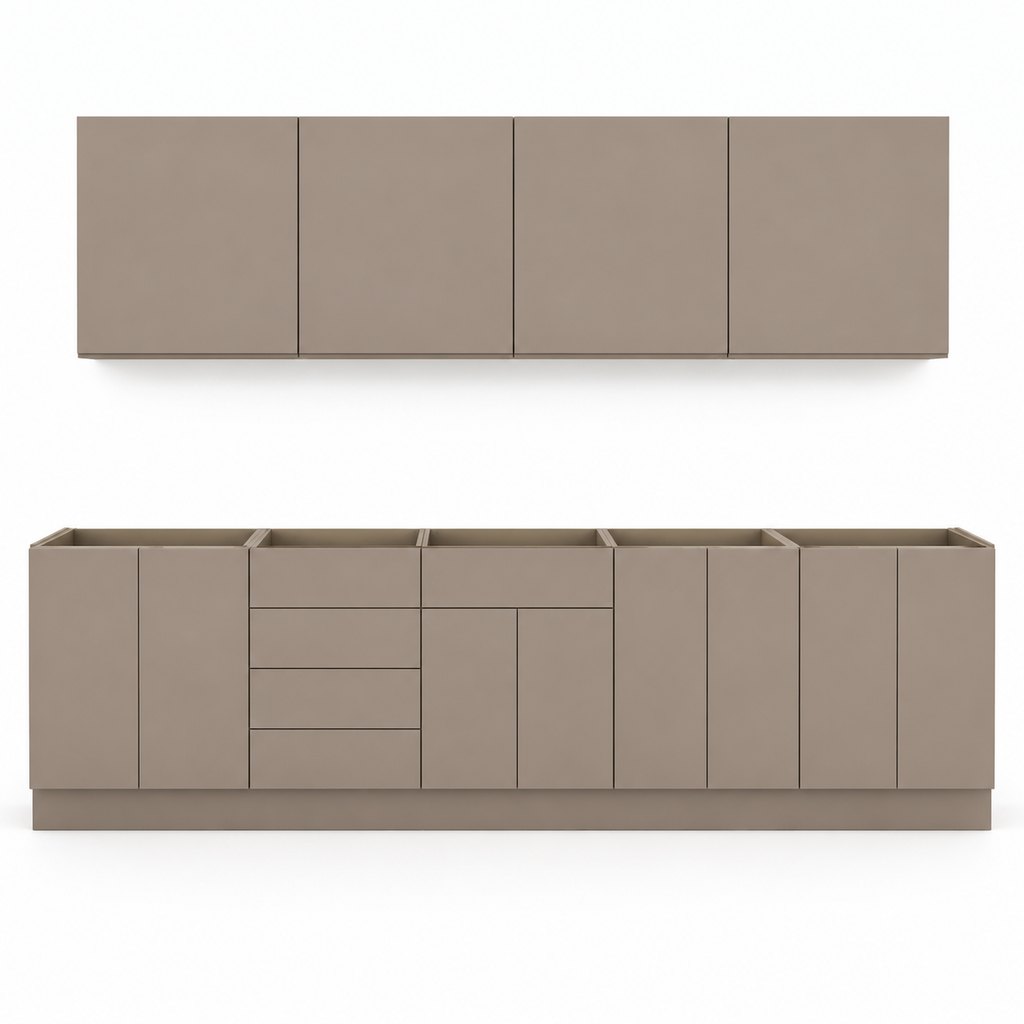
Kitchen furniture of wood is classified in NCM 9403.40.00 and other wooden furniture, which is where a bathroom vanity sits, in 9403.60.00. Both carry an import duty of 16.2 percent, IPI of 3.25 percent, PIS of 2.1 percent and COFINS of 9.65 percent, before any state ICMS. Those are the published rates, and a supplier cannot discount them; what a supplier can do is write the invoice so the entry is filed correctly the first time.
There are three mechanisms that change the duty and only one of them is open to a distributor. Ex-tarifario reduces duty and IPI on capital goods and certain IT and telecom goods that have no national equivalent production, and furniture is not in that category, so it is not a route here. Drawback suspends or exempts the taxes on inputs used to make goods that will be exported, which is a manufacturer's mechanism; a distributor importing to resell domestically does not qualify.
The third is classification itself, and it works in both directions. Hardware shipped as its own commercial line, ceramic basins in chapter 69, glass, and LED mirrors as electrical goods can all sit at different rates from the cabinet they belong to, and a mixed container is where those lines get tangled. The packing list should be written the way the entry will be filed, and the broker should confirm the code of every line before the deposit, not after the vessel sails.
The checks worth making on the file before money moves:
- The NCM on the commercial invoice matches the NCM the broker will declare, line by line, including hardware and any spares carton
- Whether an antidumping measure applies to the specific NCM, which is a check the broker makes against the current list rather than an assumption
- Whether the goods attract a licensing or certification requirement at the border, which is separate from the tax calculation and stops cargo rather than costing money
- Whether the description is specific enough for the officer to tie the invoice to the goods, rather than a generic furniture description
- Whether the value declared includes the assists and the freight correctly, because an under-declared freight is a fine, not a saving
IPI and PIS/COFINS: small lines, real credits
IPI is 3.25 percent and looks like a rounding error until it is read in the right place. Its base is the customs value plus the import duty, it is paid at the entry, and it is creditable against the IPI charged on a domestic sale of the same goods. It also enlarges the ICMS base, so 3.25 percent of IPI adds about 0.7 percent of ICMS on top.
PIS and COFINS-importacao are the two largest lines after ICMS: 2.1 percent and 9.65 percent of the customs value, taken together about 11.75 points. In the non-cumulative regime the amounts paid at import are creditable against the PIS and COFINS due on domestic sales, subject to the normal rules on how the goods are used. A distributor that sells to a mix of businesses and consumers should model the credit recovery rather than assume it, because the credit only converts to cash at the speed of domestic sales.
Both credits depend on the same condition as the ICMS credit, which is that the import is documented in the name of the company that will take the credit. That is why the next section matters more than the rate itself.
What the credit position looks like on the USD 100 set:
- IPI paid 4.25, creditable in full against IPI on domestic sales of the same goods
- PIS 2.36 and COFINS 10.87, creditable in the non-cumulative regime, recovered at the pace of domestic sales rather than at the port
- ICMS 32.79, creditable but only if the entry is in the establishment's own name, and only recovered as goods are sold
- Duty 18.24, AFRMM 0.96 and the Siscomex fee: no credit, permanent cost, and the number a landed cost sheet should be built around
- The credits are not free money: they are cash out at the port and cash back later, so the working capital line is the one that decides the order size
ICMS belongs to your state, and it is collected gross
ICMS on an import is collected by the state where the importer is established, at that state's internal rate, on goods destined for consumption or resale there. Internal rates across the states run from 17 to 23 percent, and the difference between a 17 percent state and a 20 percent state is 6.7 points of total tax on the same container, which is larger than the entire IPI line.
The base is the customs value plus import duty, IPI, PIS, COFINS, AFRMM and the Siscomex utilisation fee. That composition is set in the ICMS law and confirmed in state tax rulings, and it is why a cheaper freight quote does not always produce a cheaper landed cost: AFRMM is a percentage of the freight, and both the freight and the AFRMM sit inside the ICMS base, so a freight line that is USD 2,000 lower also removes ICMS on that difference.
Because the tax is calculated por dentro, the base is divided by one minus the rate. A calculation that multiplies a total by 18 percent and stops there understates the ICMS by about USD 4 per USD 100 set, which across a container is the broker's fee several times over.
The practical consequences for a distributor choosing where to book:
- The destination state, not the port state, sets the ICMS rate, so the port choice is a freight and schedule decision while the tax decision belongs to where the company is registered
- An establishment in a 17 percent state pays about 2 points less total tax than one at 18 percent, which on a 297-set container is roughly USD 600
- The credit requires the entry in the establishment's own name, so a purchase through a third party's import does not create ICMS credit for the buyer
- State incentives and special regimes exist and are negotiated, and they are a question for the state tax authority or a local advisor rather than for the supplier
- The ICMS on the entry is only recovered as the goods are sold, so a slow-moving decor ties up cash in tax as well as in stock
AFRMM: 8 percent of the freight, paid before the entry
AFRMM, the additional freight for the renewal of the merchant marine, is 8 percent of the ocean freight on long-course navigation, plus the charges recorded in the freight document. It was 25 percent until the BR do Mar law cut it to 8 percent for vessels that first called at a Brazilian port from 25 March 2022. It is paid through the Mercante system, in practice before the import declaration is registered, and it is collected by the Receita Federal.
Two details catch first-time importers. The payment runs through the Mercante system, which needs the consignee registered and a despachante linked to the account, so the registration is a lead-time item rather than an entry-day item. And AFRMM enters the ICMS base, so it is not an isolated 8 percent: it is 8 percent of the freight that then attracts a further slice of state tax.
Exemption and suspension exist, but they are requested in the Mercante system before the declaration is registered, not claimed afterwards. On a cabinet program the honest answer is that the line is small and the process is not worth optimising around, unless the freight is unusually expensive.
Where the freight line actually moves money on a cabinet container:
- AFRMM is a percentage of the declared freight, so an inflated freight line inflates AFRMM and the ICMS base with it
- Freight per set is a cube function: at 0.22 m3 a 950 to 1,000 mm vanity set puts 297 sets in a 40HQ, and at 0.62 m3 a 3,200 mm kitchen run puts 105 runs in the same box
- A CIF quote hides the freight inside the unit price, which makes both AFRMM and the ICMS base harder to check; an FOB quote with freight shown separately is easier to audit
- The Mercante registration, the consignee record and the despachante link are set-up items, and they gate the first entry rather than the hundredth
Who is the importer of record decides where 50 points of credit land
Brazil has two legitimate structures for buying abroad without becoming an importer yourself, and they produce very different tax positions. In an importacao por conta e ordem, a trading company is the importer of record in its own name and sells the goods to you domestically; the taxes are paid and credited in the trading company's books, and you receive a domestic invoice. In an importacao por encomenda, you are the importer of record and the trading company acts on your behalf; the credits accrue to you, and so does the compliance exposure.
For a distributor with domestic sales to offset the credits, importing in its own name is normally the better arithmetic: 50 points of credit against domestic tax beats a domestic invoice that has already absorbed those taxes into its price. For a first order, or a company without the registrations in place, conta e ordem is the faster route to a container on the water and the more expensive one over a year.
The trade is not only tax. Being the importer of record means owning the classification, the value declaration and the origin of the goods in front of the Receita Federal, with the five-year documentation obligation that comes with it. That is a real function, and it needs either an in-house analyst or a broker relationship that is more than transactional.
The questions that settle the structure before the first purchase order:
- Do you have RADAR authorization and the capacity to be the importer of record, and at which establishment
- Is the establishment in the state whose ICMS rate you have modelled, since that rate follows the importer and not the port
- Do you have domestic sales volume to absorb IPI, PIS, COFINS and ICMS credits at a reasonable pace
- Who holds the classification and value declaration risk, written into the contract rather than assumed
- Who pays the AFRMM registration, the Siscomex fee and the broker, and how those appear as separate lines in the landed cost
- If a trading company is used, is the domestic invoice priced with the taxes visible, so the comparison against direct import is honest
Cube is what turns a tax rate into a cost per set
Every number above is a percentage of FOB, which is only useful if the FOB per unit is fixed by the freight. A 1,000 mm vanity at 0.22 m3 per set fills a 40HQ at 297 sets, 65.3 of 65.4 usable cubic meters, with nothing left over. A 3,200 mm flat-pack kitchen at 0.62 m3 fills the same box at 105 runs. A mixed order of 55 kitchen runs and 140 vanity sets comes to 64.9 m3, which is a full container with the tolerance left for bracing.
That is why the two questions worth asking a supplier are not about the tax rate, which is published, but about the cube per set and the largest carton dimension. A carcass that nests inside another carcass, a top that ships in its own carton without doubling the outer box, and a plinth that travels flat all move the same goods into fewer cubic meters, and fewer cubic meters means fewer containers for the same order.
The reason this connects back to the cascade is that the freight enters the customs value. A program that cuts cube by 8 percent cuts containers by roughly the same amount, and cuts the freight component of the ICMS base with it, on top of the freight saving itself. The tax rate stays 16.2 percent either way; what changes is how many times you pay it, and on what.
What to put on the quotation request so the landed sheet can be built:
- Cube per set or per run, not only the carton count, so the container arithmetic can be checked independently
- Largest carton dimensions in millimeters, because one oversized carton can waste a tier of the container
- Whether the unit ships flat pack or assembled, and the cube for each, since assembled units cannot nest
- Packing list with carton count, gross weight and dimensions per carton, which is also what the declaration and the transport document have to agree with
- An FOB price and a separately quoted freight, so AFRMM and the ICMS base can be verified against the freight document
- The NCM per line, with the description written once and copied exactly onto the invoice, the certificate and the packing list
Questions Buyers Ask
Why is the total tax about 70 percent and the real cost only 19 percent?
Is the ICMS rate the port state's or my state's?
Does an ex-tarifario or drawback apply to cabinets?
How does freight change the tax if the duty is a percentage of FOB?
Want the Numbers for Your Own Program?
Send your model list, sizes and destination port — we reply within 24 hours with FOB pricing, MOQ and lead time.