Brazil Cabinet Imports: NCM, DUIMP, AFRMM, Container Math
Brazil is the Latin American market where a Chinese cabinet program pays full tariff and still loses money on paperwork rather than on duty. Three product lines share one container, the tax is a cascade instead of a sum, and the pallet under the cartons is a regulated object in its own right. Here is the order a Brazilian importer actually asks the questions in.
3 November 2026 · BR market · Fame Industry Co., Ltd.
Bathroom units and kitchen units do not share a tariff line
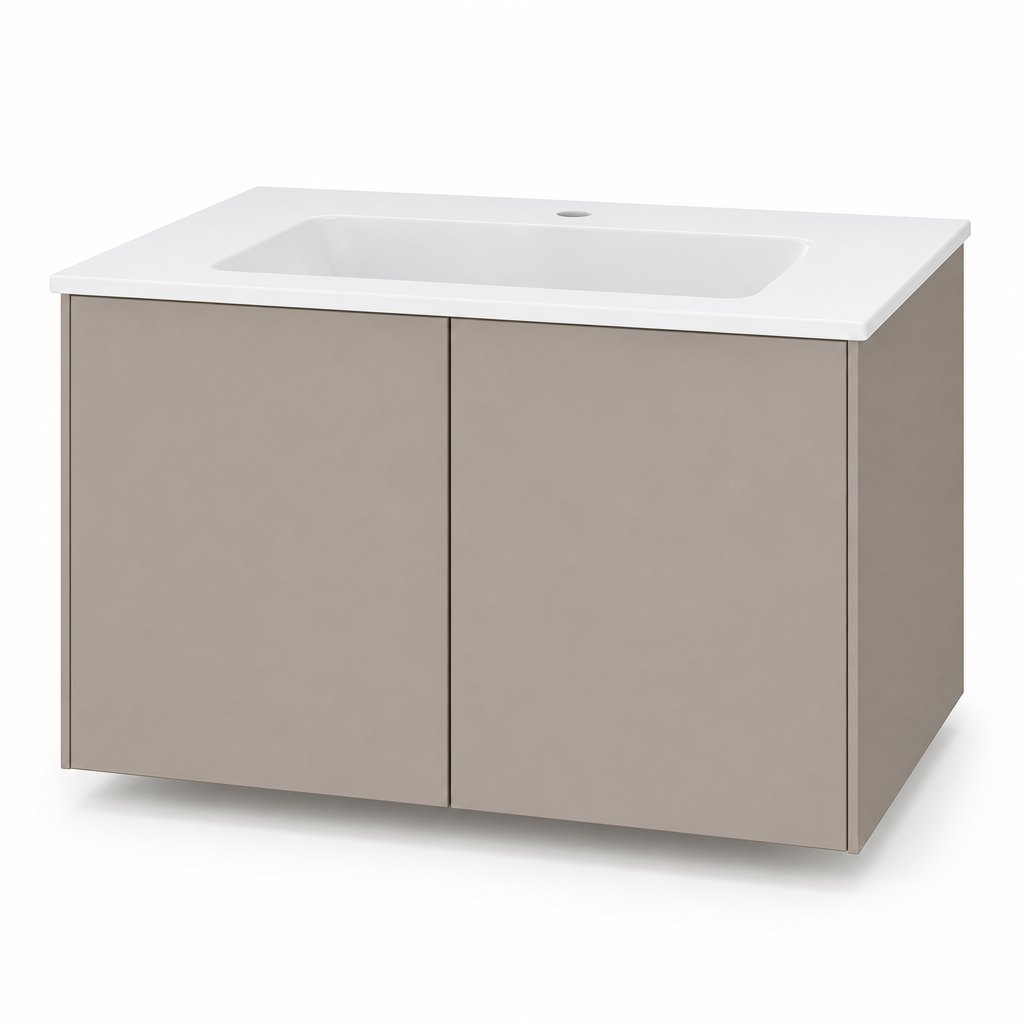
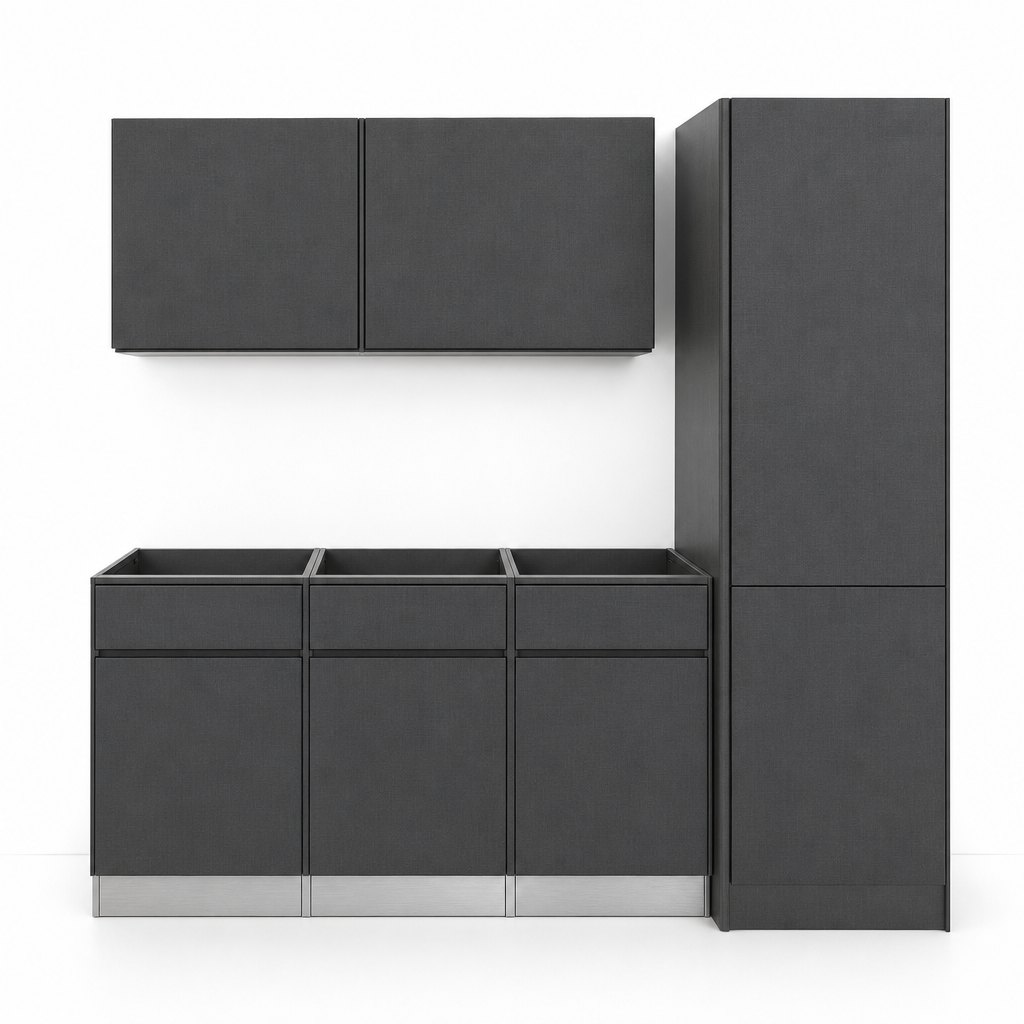
Chapter 94 splits wooden furniture by the room it serves. Kitchen units are 9403.40.00, wooden furniture of a kind used in kitchens. A bathroom vanity is 9403.60.00, other wooden furniture. A ceramic basin top is not furniture at all: it belongs to chapter 69 as ceramic sanitary ware. One mixed container therefore carries three descriptions, and the commercial invoice has to show them line by line with a Portuguese description and a unit price for each.
This is not bureaucratic decoration. The entry is checked line by line, and a single averaged code stretched across a mixed container is the quickest route to a reclassification and a revised duty calculation after the ship has berthed. Two or three lines also let a distributor quote a cabinet-only program separately from a basin-included one, which is how the local trade actually buys.
- 9403.40.00 — wooden kitchen furniture: base, wall and tall units
- 9403.60.00 — other wooden furniture: bathroom vanities, mirror cabinets
- 6910.10 — ceramic sinks and washbasins, including a one-piece basin top
- 9405 — luminaires, which is where a lit mirror stops being furniture and starts being an electrical product with its own conformity route
The landed cost is a cascade, not a sum
Duty is charged on the customs value: the transaction value plus international freight and insurance to the port of discharge, per Decreto 6.759/2009, art. 75. The rate comes from the TEC, fixed by Resolução Gecex 272/2021 and amended by later resolutions, with the LETEC and ex-tarifário lists able to override the general line. MDIC publishes a tarifas vigentes spreadsheet that is updated continuously, so a costing built on a copy downloaded last quarter is not evidence for this quarter.
The cascade is the part that catches people. The Imposto de Importação enters the IPI base, and both of them enter the ICMS base. ICMS is calculated por dentro, meaning it is charged on a base that already contains itself: the state rate is divided out of the base rather than added on top of it. That single mechanic is why a landed-cost sheet built by adding percentages down a column understates the real cost, and why two importers working from the same FOB can arrive at different landed numbers without either of them being wrong.
PIS/COFINS-Importação is charged at the combined federal rate — 2.1% PIS and 9.65% COFINS, 11.75% together in the standard regime — and the Siscomex fee is charged per declaration with an addition per further item. Both belong in the sheet before the margin, not after it.
- Customs value = FOB + international freight + insurance to the port of discharge
- II = customs value × the TEC rate for the declared NCM
- IPI = (customs value + II) × the IPI rate for the same NCM
- PIS/COFINS-Importação = customs value × the combined federal rate
- ICMS base = (customs value + II + IPI + PIS/COFINS + Siscomex fee + AFRMM) ÷ (1 − the state ICMS rate)
Freight is a tax base, so the CFR number is not a detail
AFRMM, the Adicional ao Frete para Renovação da Marinha Mercante, is charged at 8% of the ocean freight on long-course navigation and is paid before customs clearance. It does not enter the Imposto de Importação base, but it does enter the ICMS base, so a freight figure agreed casually with a forwarder moves a number two steps removed from the quotation.
The practical consequence is that freight should be quoted at a level you can defend, not at a level that makes the CIF look tidy. Shaving the declared freight does not move the Imposto de Importação much when the FOB is the honest number, but it does create an AFRMM discrepancy, and that discrepancy is the importer's problem at the port, not the factory's. For a cabinet program the clean structure is FOB Ningbo or Shanghai with a freight and insurance figure the forwarder will put in writing.
No free trade agreement, so origin paperwork buys nothing
China and Mercosur have no trade agreement in force. A Chinese-origin cabinet lands in Brazil at the TEC rate, and a certificate of origin does not change that. This is the structural difference from Chile, where a China-Chile FTA certificate is worth real points of duty: in Brazil the effort belongs in classification and valuation, because that is where the money is.
What the operation does need is the importer side in order before the container sails: a Radar habilitação, the Siscomex authorisation that lets a company import at all, an entry made through the DUIMP as the declaration migrates off the old DI, and any prior licence or LPCO that the specific NCM attracts. Furniture is rarely a licensed category, but rarely is not never, and the check is done per NCM at classification rather than assumed at the terminal.
Wood packaging: ISPM 15 or the container sits on the quay
Solid wood packaging — pallets, crates, dunnage — must carry the ISPM 15 mark: wood that has been heat-treated or fumigated, stamped with the country code, the producer registration and the treatment code. A container of flat-pack cabinets is mostly carton sitting on pallets, so the pallets are what gets inspected, and an unstamped pallet is a re-export order rather than a delay.
Processed board is exempt. MDF, particle board, plywood and OSB are not solid wood for ISPM 15 purposes, so crates can be built from plywood and sidestep the issue entirely, while the pallet underneath still needs its stamp. Ask for the packing declaration with the shipping documents; a declaration that arrives after the container has been inspected is worth very little.
Cube decides the container, and the basin is what eats it
A 40HQ is about 76 m3 nominal and roughly 68 m3 usable once pallets and stowage loss are allowed for. A wall-hung 900 mm vanity with a one-piece ceramic top packs to 0.14 m3 in two cartons — 0.088 m3 for the knocked-down carcass, 0.052 m3 for the basin — against approximately 0.32 m3 assembled. In one container that is the difference between about 460 sets and about 210.
Kitchens load more evenly. A ten-metre run in graphite linen packs to 1.65 m3 in 14 cartons at 210 kg gross, so a 40HQ carries roughly 400 linear metres. A mixed order usually fills the balance with kitchen runs rather than with more vanities, because a run uses the cube evenly while basin cartons stack badly once the height runs out.
What to put in the RFQ so the quote survives the entry
Most import surprises are created before the order, in an RFQ that asked for a price and not for a specification. Seven items decide whether the number still holds ninety days later.
- NCM per line, not per container, with a short Portuguese description against each
- Carton list: per-carton dimensions, net and gross weight, and which module sits inside
- Board specification: 18 mm HMR, E1 class, ABS edge thickness — the three facts a quality claim or a reclassification turns on
- Finish reference by decor name or code, not as grey or walnut
- ISPM 15 status for pallets and crates, plus a signed packing declaration
- One Incoterm and one port pair, stated as FOB Ningbo or CFR Santos, never both in the same quotation
- Lead time counted from deposit and drawing approval, with the Chinese New Year window named if delivery lands in the first quarter
Questions Buyers Ask
Does a Chinese cabinet pay less duty in Brazil under any trade agreement?
Can one NCM cover a container of vanities and kitchen units?
Is the ceramic basin taxed as part of the cabinet?
What should the factory send with the shipping documents?
Want the Numbers for Your Own Program?
Send your model list, sizes and destination port — we reply within 24 hours with FOB pricing, MOQ and lead time.