Brazil Cabinet Imports: The Pallet, the NCM and the Cube
Most Brazil quotes are argued on the FOB price and lost on the packing list. This is the paperwork a cabinet container actually needs before a deposit is worth sending.
10 November 2026 · BR market · Fame Industry Co., Ltd.
The pallet is the first thing that can stop the container
Wood packaging entering Brazil has to meet ISPM 15, the international standard for wood packaging material. In practice that means solid wood pallets, crates, dunnage and bracing must be treated and marked before they leave the country of origin, and the mark is not decorative: it identifies the producer and the treatment that was applied.
The treatment is either heat treatment, where the wood is brought to 56 C for a minimum of 30 continuous minutes at the core, or a kiln or dielectric schedule, or methyl bromide fumigation. A heat-treated pallet carries an IPPC mark showing the ISO country code, the registered producer code and the treatment code. An unmarked solid wood pallet is the cheapest way to have a container held at the port of entry while a cargo agent, an agronomist and a broker all charge by the day.
- Solid wood pallets, crates, wedges and bracing: ISPM 15 treatment plus the IPPC mark, no exceptions
- Manufactured wood: plywood, OSB, MDF, particleboard and cardboard are outside the scope of the standard because they are processed, not raw wood
- Plastic and metal pallets: outside the scope, which is why a plastic pallet pool is often the cheapest compliance decision on a repeat lane
- The importer declares the presence of wood packaging to the federal agricultural inspection, so the packing list has to state what the pallets are, not just how many
The NCM decides the file, and the file decides the timing
A cabinet container is not cleared on the word cabinet. The Mercosur nomenclature splits furniture by material and by use, and the split changes what the broker has to attach. Getting the code wrong at the proforma stage is the slowest mistake in the chain, because it surfaces after the cargo has sailed.
The four codes that cover most of what a flat-pack program ships are set out below. They are the starting point for a conversation with a Brazilian despachante aduaneiro, not a substitute for one: the classification argument is about what the product is made of and what it is for, and the federal and state treatment follows from it.
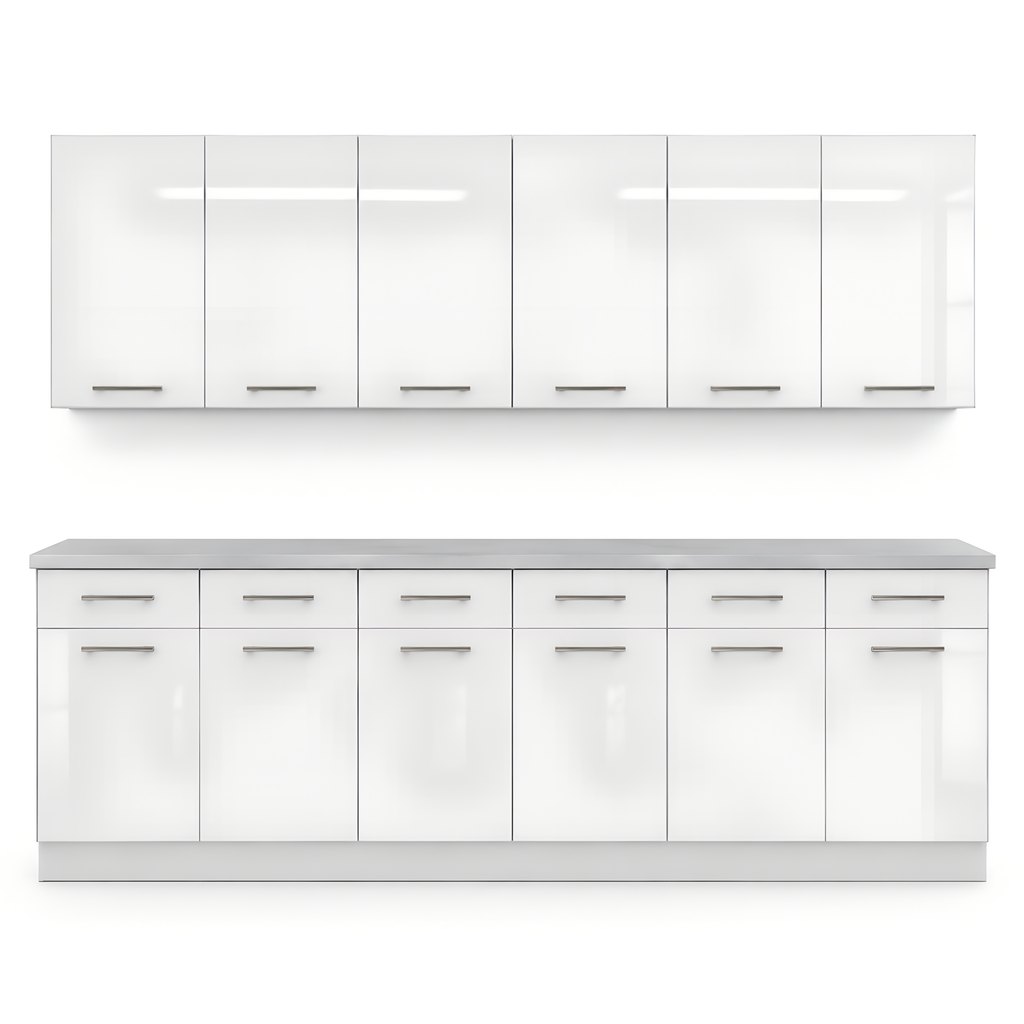
- 9403.40.00: wooden furniture of the kind used in kitchens, which is where a flat-pack kitchen program usually lands
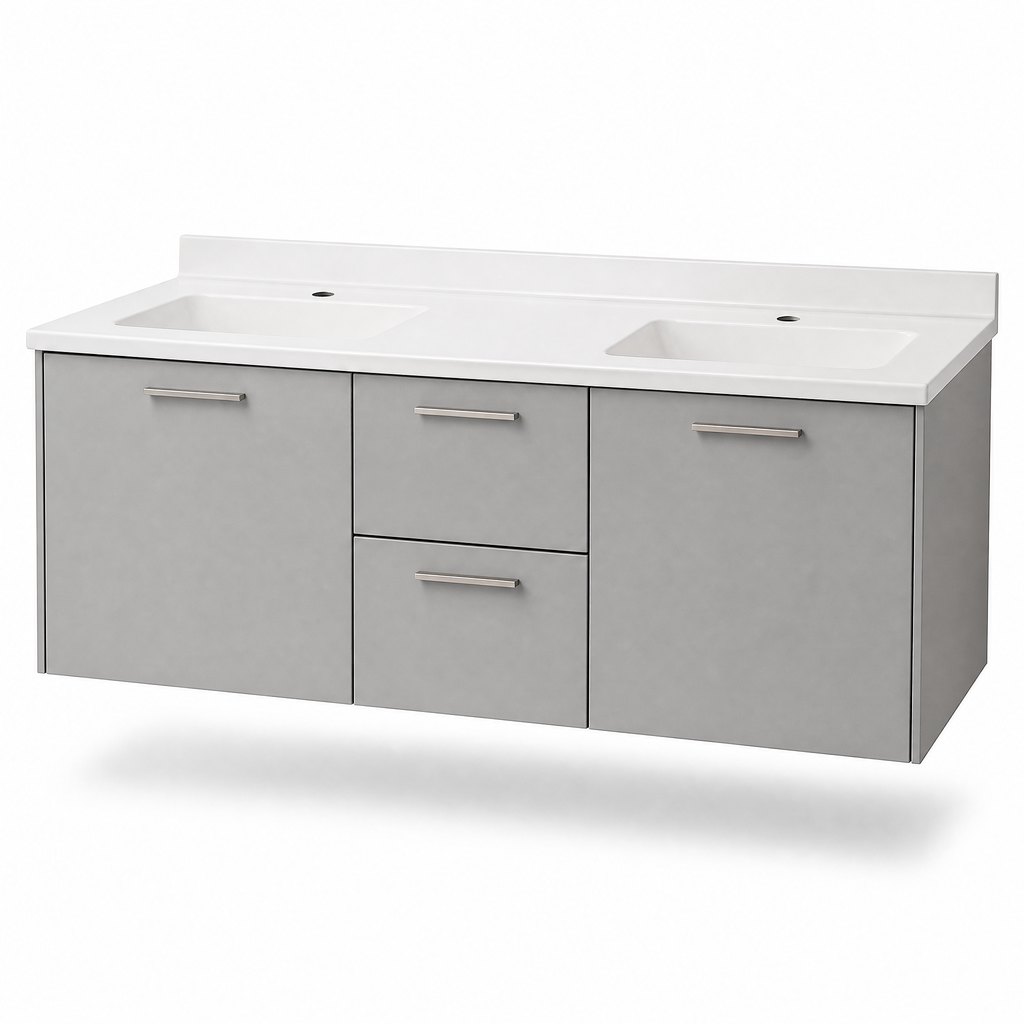
- 9403.60.00: other wooden furniture, the code a wooden or melamine bathroom cabinet is normally argued under
- 9403.20.00: other metal furniture, the distinction that matters if the product is an aluminum cabinet rather than a board cabinet
- 7009.92.00: framed mirrors, the separate line for a mirror cabinet or an LED mirror, which is a glass article and not a furniture item
Cube per metre is the number that survives the freight
Ocean freight is bought in cubic meters, and a cabinet program is sold in linear meters, so the only figure that connects the two is cube per meter. It is also the figure most quotes leave out, because a supplier who quotes a unit price and a carton count expects the buyer not to divide one by the other.
Take a 3.6 m run of twelve units. Six 600 mm bases at 720 x 560 mm and six 600 mm walls at 720 x 350 mm flat-packed come to fifteen cartons, 1.08 m3 and 142 kg, which is 0.30 m3 per metre of run. At a 68 m3 planning figure for a 40HQ that is about 62 packs, or roughly 223 linear meters of kitchen in one container. The same twelve units ordered loose, each with its own void and its own pallet, land nearer 0.36 m3 per metre, and the difference is not board thickness. It is nesting.
- Ask for the carton list with dimensions and weights, not the carton count, then multiply it yourself
- A one-piece kick board is the longest carton in the pack and the only one that has to be floor-loaded, so it sets the loading pattern
- Ceramic tops and gloss fronts travel in their own cartons and cannot be stacked under carcass cartons, which changes the pallet plan and therefore the cube
- Recompute the loading quantity every time the module mix changes, because wall units at 350 mm deep nest better than bases at 560 mm
A board cabinet in a Brazilian bathroom is a humidity specification
The failure that costs a distributor money in a warm, humid market is not a hinge, it is a swollen panel edge. Particleboard is a wood-based panel, and a bathroom cabinet is a wood-based panel standing in a wet room, so the specification that matters is the one written on the board and on the edge.
Three lines carry that specification. The grade tells you the board is intended for load-bearing use in humid conditions. The emission class tells you what the mill declares about formaldehyde, and it is declared against the mill's production, so the document to hold is the mill's test report naming the grade, the class and the mill. The third line is the one nobody puts in a brochure: every exposed edge banded before assembly, and a back panel that is rebated into the sides rather than stapled onto them, because the joint under a sink is where water arrives first.
- Board grade for humid, load-bearing use, declared by the mill rather than by the cabinet maker
- Emission class stated on the mill's test report and matched to the board actually in the shipment
- Edge banding on all four sides of every front and every exposed carcass edge, applied before assembly not after
- A rebated back panel, because a stapled back is an open edge sitting in the wettest part of the unit
What the carton plan has to survive before it reaches a shop
A cabinet container is loaded at the factory, handled at least four times, and stored somewhere with a roof that may or may not be intact. The carton plan is the only part of the specification that is tested on every single shipment, and it is the part a purchase order usually leaves to the supplier.
Two items deserve their own line on the order. A ceramic top travels bowl-face-down on a molded cradle with clearance at each end, in a carton marked as the one item in the set that cannot be stacked more than two high, because a carcass carton placed on a top carton will flex the deck and crack it later at a tap hole. A high-gloss front travels flat with a removable protective film still on the face, in its own carton rather than assembled on the carcass, because an assembled gloss door in a container is a door leaning against an edge for six weeks.
- Stack plan issued with the carton list, naming which cartons can carry load and which cannot
- Ceramic and glass in their own cartons, at the top of the pallet, marked accordingly
- Gloss fronts flat-packed with protective film, never shipped assembled
- One numbered hardware bag per carton, so a missing hinge is a bag and not a set
The document set to ask for before the deposit
Everything above is cheaper to verify before money moves than after a container is on the water. A supplier who can produce these six items at quotation stage is a supplier whose FOB number means something; one who cannot is quoting a price that will be reopened at the port.
None of this replaces a despachante aduaneiro or a customs broker in the destination. It is the input that lets them file quickly, which in a market where clearance time is the variable cost is the whole game.
- Carton list with dimensions, cube and gross weight per carton, plus the stack plan
- Mill test report naming board grade and emission class for the board in the shipment
- ISPM 15 mark details, or a statement that the pallets are manufactured wood or plastic
- Dimensioned drawing with handle and tap drilling centers, so a replacement front matches
- Module and cutting list for the exact run being ordered, since the cube changes with the mix
- First-article photographs of the actual finish and the actual cartons before the balance is paid
Where the cost sits, line by line
The import taxes are not the interesting part of a Brazilian landed cost, because they are the same for every supplier quoting the same code. The variable part is the three lines a buyer can actually negotiate: cube per meter, carton protection, and the hardware tier.
Cube is the largest of the three and the easiest to test, since it comes straight off a carton list. Carton protection is small per set and enormous per claim. Hardware tier is where a supplier quietly moves a program from a 40,000 cycle hinge to an unbranded one without changing the price, which is why the hinge and runner model belongs in the specification and not in the conversation.
- Cube per meter: the divisor for every freight quote, and the one number a buyer can recompute
- Carton protection: separate cartons for ceramic and gloss, film on fronts, stack marking
- Hardware: name the hinge and runner model and the rated cycles, or the tier will drift
- Finish as a line on the order: one finish is one minimum, and a second color is a second minimum
Questions Buyers Ask
Do I need ISPM 15 if the cabinets themselves are particleboard?
Which NCM applies to an aluminum bathroom cabinet?
How do I check a cube figure I have been quoted?
What is the single most expensive specification mistake in a humid market?
Want the Numbers for Your Own Program?
Send your model list, sizes and destination port — we reply within 24 hours with FOB pricing, MOQ and lead time.