BMSB Season Is a Date on the Bill of Lading, Not a Date on the Order
A Chinese cabinet container shipped in November is inside Australia's BMSB season whether or not anyone planned for it. The goods are furniture under chapter 94 and are not on the target high risk list. The hinges, runners and spare handles in the same container are another matter, and one target high risk line changes how the whole box is handled.
22 November 2026 · AU market · Fame Industry Co., Ltd.
The season runs on the shipped-on-board date, not on the order date
Australia's seasonal measures for brown marmorated stink bug apply to targeted goods manufactured in or shipped from target risk countries and shipped between 1 September and 30 April inclusive. The date that decides whether a shipment is in season is the shipped-on-board date shown on the ocean bill of lading. Gate-in dates and times at the origin terminal are not accepted as evidence, and container tracking is not accepted either.
For a program shipping out of Ningbo or Shanghai in late November, that means the shipment is in season and stays in season whatever the vessel does on the way. It also means the date is negotiable in one direction only: a booking can slip past a vessel's cut-off and land in a later, still in-season window, so the treatment plan has to survive a two-week delay rather than assume the first booking.
China sits on two of the department's lists at once this season. It is a target risk country, with heightened vessel surveillance applying to roll-on roll-off vessels rather than to container ships, and it is named as an emerging risk country, which puts goods from chapters 39, 94 and 95 into random onshore inspection.
- Season window: goods shipped 1 September to 30 April inclusive
- Evidence date: shipped-on-board date on the ocean bill of lading, not gate-in and not container tracking
- Target high risk goods: mandatory treatment, listed by tariff chapter
- Target risk goods: random inspection rather than mandatory treatment, chapters 27, 28, 29, 38, 39, 40, 48, 49 and 56
- Emerging risk countries this season: United Kingdom, China, Japan and the Republic of Korea, with chapters 39, 94 and 95 in scope for random inspection
- Ro-Ro vessels from target risk countries face mandatory seasonal pest inspection on arrival; container ships are not covered by that vessel measure
Furniture is not on the list, and the hardware in the carton is
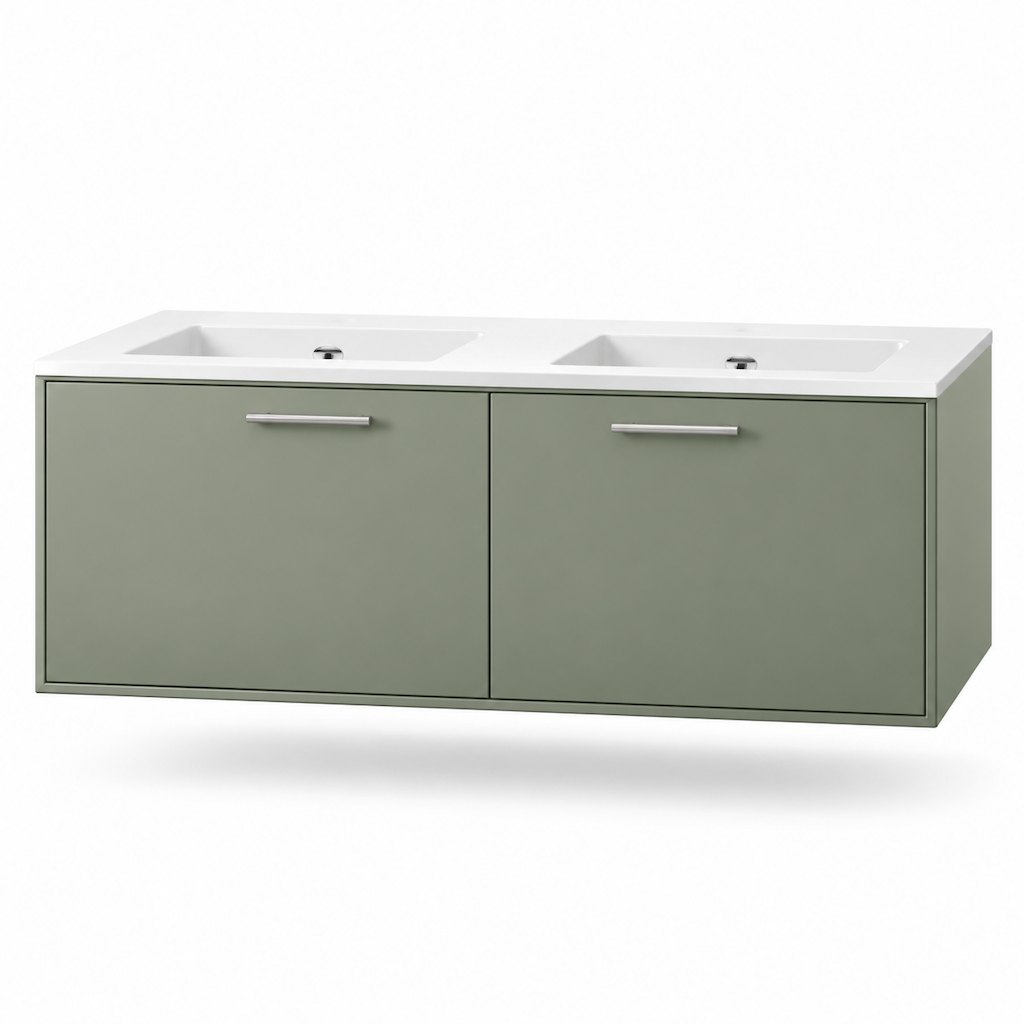
Chapter 94 does not appear on the target high risk list and does not appear on the target risk list. A container of vanities and kitchen units, classified correctly under 9403, therefore has no mandatory BMSB treatment on its own account. That is the part suppliers quote, and it is true.
It stops being true as soon as the same container carries a line that is on the list. Chapter 83, miscellaneous articles of base metal, is target high risk, and that is where furniture fittings live: hinges, drawer runners, handles and connecting fittings. Chapter 76, aluminum and articles of aluminum, is target high risk as well, which catches a program that ships extrusion profiles as a separate commercial line rather than as a finished cabinet. The department's rule is explicit: goods that are not in either category still become subject to the measures if they are packed with target high risk or target risk goods.
The commercial consequence is that a spares allowance is a biosecurity decision. Two doors, a drawer box and a hinge set per fifty units, invoiced as a separate spare-parts line under 8302, is a target high risk line in a container full of chapter 94 goods. That single line can move a box from random inspection into mandatory treatment, at the container level, with deconsolidation not permitted before treatment.
- Chapter 94 furniture: not target high risk, not target risk, no mandatory treatment on its own account
- Chapter 83 base metal fittings, including hinges, runners and handles: target high risk, mandatory treatment
- Chapter 76 aluminum articles: target high risk, which catches loose profiles and panels shipped as components
- Mixed containers adopt the stricter treatment of their contents, so one chapter 83 line changes the whole box
- Practical fix: pack spares inside the finished cabinet cartons and invoice them as part of the cabinet, or ship spares in a separate LCL consignment
- Practical fix: keep extrusion and hardware purchase orders out of the finished-goods container
FCL can be treated onshore, and only at container level
Containerised cargo arriving in sealed six hard sided containers can be treated offshore before sailing or onshore after arrival. Refrigerated containers and sealed hard top containers are treated as equivalent. That flexibility is the reason a missed offshore treatment is inconvenient rather than fatal for an FCL cabinet container.
What is not flexible is the sequence. Onshore treatment happens at the container level, and deconsolidation or removal of goods before treatment is not permitted. A container packed to the doors with cartons that leave no air path is a container that gets treated for longer, or gets treated and fails the end-point reading, which means treatment again. Packing discipline is therefore part of the freight cost, not a warehouse preference.
Break bulk is the harder path and worth knowing before a program books flat racks to save on freight. Break bulk includes goods on flat racks and in open top containers, and all target high risk break bulk must be treated offshore before arrival. Untreated break bulk is denied discharge or directed for export, and onshore treatment is not permitted. Shipper owned containers that have been modified, for example to house a generator or filtration plant, are no longer sealed six hard sided containers and are treated as break bulk.
- FCL and FCX in sealed six hard sided containers: offshore or onshore treatment, both permitted
- Onshore treatment is at container level; goods cannot be removed or deconsolidated first
- Pack for air movement: cartons short of the container doors and off the side walls, not a solid block
- Break bulk, flat racks and open tops: offshore treatment only, onshore not permitted, untreated goods denied discharge
- Modified shipper owned containers lose sealed-container status and fall into the break bulk rules
- LCL and FAK containers are managed at container level before deconsolidation, then at consignment level for everything else
Offshore treatment has one gate, and it is the provider list
A treatment certificate is only worth the provider who issued it. Offshore providers performing BMSB treatment in target risk countries must be registered under AusTreat and listed as approved on the department's list of treatment providers before the treatment is carried out. A certificate from an unregistered, suspended, withdrawn or under-review provider is not accepted: containerised goods are directed for onshore treatment, and break bulk is directed for export.
The failure mode is quiet, because the paperwork looks complete. A forwarder offers a fumigation certificate, the certificate is genuine in the sense that a treatment happened, and the entry stalls because the provider was not on the list at the time. Checking the provider against the list before the container is stuffed costs ten minutes; discovering it after arrival costs a treatment, a delay and a demurrage clock.
Fraudulent certificates are actively screened. A consignment identified with one is directed for onshore treatment where that is permitted, or exported. For a program with a fixed handover date, either outcome is worse than paying for a compliant treatment in the first place.
- Offshore providers in target risk countries must be AusTreat-registered and listed as approved before treatment
- Unregistered, suspended, withdrawn or under-review providers invalidate the certificate
- Containerised goods with an invalid certificate go to onshore treatment; break bulk goes to export
- Check the provider on the live list at booking, not after arrival, and keep a dated screenshot with the shipping file
- Fraudulent certificates are detected and lead to onshore treatment or export
- File item: treatment certificate naming the provider, the container number, the treatment date and the dose or temperature record
The 120-hour sealing declaration closes on 1 December
A sealing declaration is the document that lets an FCL container avoid treatment when the goods were sealed before the season or under specific conditions. The department accepts it in four situations: goods containerised and sealed before 1 September but shipped on board after that date, a bill of lading without a shipped-on-board date, target high risk goods manufactured, packed and sealed in a non-target country but shipped from a target risk country, and goods sealed inside the container within 120 hours of an offshore treatment.
That last clause carries a date. The 120-hour sealing option applies to treatments carried out before 1 December. A cabinet container treated offshore in the last week of November and sealed within the 120-hour window can use the declaration; the same container treated in the second week of December cannot, and needs the treatment to have been done in a way that stands on its own. That is a scheduling decision made at the factory, not at the port.
The declaration has to be completed and signed at the origin port by the exporter, the freight forwarder or the shipping company. A declaration signed by nobody, or signed after the vessel sailed and backdated, is the kind of document that turns a clean entry into an inspection.
- Sealing declaration accepted where goods were sealed before 1 September but shipped after it
- Accepted where the bill of lading has no shipped-on-board date, or goods were packed in a non-target country and shipped from a target one
- Accepted where goods were sealed within 120 hours of an offshore treatment, for treatments before 1 December
- Signed at origin by exporter, forwarder or shipping company, never reconstructed at destination
- A November treatment plus a same-week seal is the cheapest compliant route in this window
- File item: the signed sealing declaration, matched to the container number and the treatment certificate date
Heat, methyl bromide, sulfuryl fluoride and the new ethyl formate option
Heat treatment means 56 degrees Celsius or higher at the coldest surface of the goods for a minimum of 30 minutes. It is the treatment that leaves no residue and no re-entry delay, and it is the one that suits cartoned furniture, because the coldest surface is a carton face rather than a metal void. The alternative rate, 60 degrees for 10 minutes, applies only to individual goods under 3,000 kg shipped as break bulk.
Methyl bromide is dosed at 24 grams per cubic meter or above, at 10 degrees Celsius or above, for 12 to 24 hours with a minimum end-point reading of 12 grams per cubic meter, or for 24 hours or longer with a minimum end-point of 8. Sulfuryl fluoride follows the same figures. Both fail if the concentration drops below the end-point at any point, and topping up at the end of the treatment is not permitted, which is why a leaking or over-packed container is a re-treatment rather than a conversation.
The 2026-27 season adds an onshore ethyl formate option for a 16.7 percent ethyl formate and 83.3 percent carbon dioxide formulation, with a four to four and a half hour exposure at set initial and final concentrations. The season also removes the rolled goods policy and the safeguarding scheme, which simplifies the document set for most cabinet importers and removes an exemption route some programs had been relying on.
- Heat: 56 degrees Celsius at the coldest surface for at least 30 minutes, no residue and no re-entry delay
- Methyl bromide: 24 g/m3 or above at 10 degrees Celsius or above, 12-24 hours with a 12 g/m3 end point, or 24 hours plus with 8 g/m3
- Sulfuryl fluoride: same dose, temperature and end-point structure as methyl bromide
- Ethyl formate, new for 2026-27: onshore option, 16.7 percent formulation with carbon dioxide, four to four and a half hours
- Dose increases to compensate for temperatures below 10 degrees are not permitted, so winter fumigation needs a heated space
- Rolled goods policy and safeguarding scheme are both withdrawn this season; build the file without them
Where the duty saving and the treatment cost actually land
Australian Border Force carries wooden furniture of a kind used in the kitchen at 9403.40.00 with a 5 percent rate, and other wooden furniture at 9403.60.00 also at 5 percent. Metal furniture sits at 9403.20.00, 5 percent. Those are the general rates, and they are the number a supplier quotes when it says the market is protected.
The number that matters for a Chinese-origin program is the ChAFTA rate. With a valid certificate of origin or declaration of origin and goods that meet the rules of origin, the 5 percent line goes to zero. On a container of vanities or kitchen runs at a few tens of thousands of dollars of customs value, that is a five-figure saving, and it is a document rather than a negotiation. GST is separate and is 10 percent, calculated on the customs value plus duty plus international transport and insurance, and it is recoverable for a registered importer rather than a cost.
Treatment cost belongs in the landed cost per cubic meter, not in a general overhead line, because it scales with the container rather than with the value. That is the argument for cube efficiency: a vanity at 0.30 cubic meters per set and a 2,700 mm kitchen run at 0.55 cubic meters per run both load on cube far below the weight limit, so the treatment, the freight and the handling are spread over more units per container. Flat-pack is not a fashion in this market; it is what keeps the per-unit share of a fixed container cost low enough to survive a 5 percent duty line going to zero under preference.
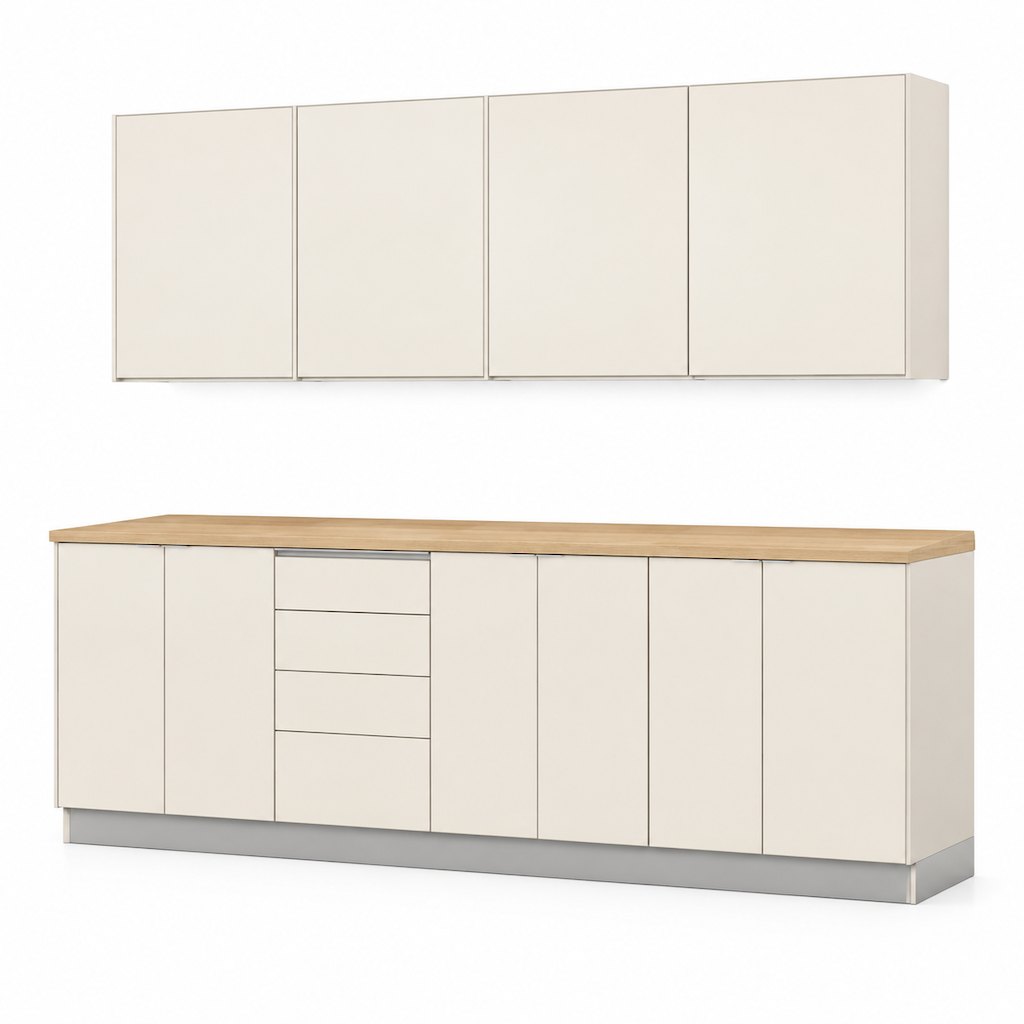
- 9403.40.00 wooden kitchen furniture: 5 percent general rate
- 9403.60.00 other wooden furniture, which covers a bathroom vanity: 5 percent general rate
- 9403.20.00 other metal furniture, which covers an aluminum carcass: 5 percent general rate
- ChAFTA: zero with a valid certificate of origin or declaration of origin and goods meeting the rules of origin
- GST: 10 percent on customs value plus duty plus international transport and insurance, recoverable for a registered importer
- Cube is the lever: 0.30 m3 per vanity set and 0.55 m3 per 2,700 mm kitchen run both load far below the weight limit
- File item: the certificate of origin matched line by line to the invoice, because one code per container is a misdeclaration
Questions Buyers Ask
Does a bathroom vanity container need BMSB treatment to enter Australia?
My supplier says the container was fumigated. Is that enough?
Is it cheaper to treat offshore or onshore?
What duty will a cabinet container actually pay?
Want the Numbers for Your Own Program?
Send your model list, sizes and destination port — we reply within 24 hours with FOB pricing, MOQ and lead time.