Selling Cabinets in Germany: The Paperwork Before the Price
German buyers rarely open with a price request. They open with a compliance checklist — and a factory that cannot answer it never gets to the quotation stage. Here is what that checklist contains.
29 October 2026 · DE market · Fame Industry Co., Ltd.
The first email is never about price
A German importer sourcing bathroom or kitchen cabinetry for its own brand sends a document request before a drawing request. Typically it asks for the safety test report to EN 14749, the E1 or E05 formaldehyde declaration for the boards, the packaging registration number under the Verpackungsgesetz, and confirmation of who the importer of record will be.
This is not bureaucracy for its own sake. Under German product safety law the importer carries the obligations of the manufacturer, so an importer that cannot show test documentation is exposed. The practical consequence for a factory is simple: if you cannot produce these four documents quickly, you are not compared on price, because you are not compared at all.
EN 14749 is the document that decides the conversation
EN 14749 covers domestic and kitchen storage units and worktops — safety requirements and test methods. For a cabinet supplier it means the unit has been tested for stability, shelf loading, door and drawer endurance, and wall-fixing strength, and that a test house has issued a report naming the construction.
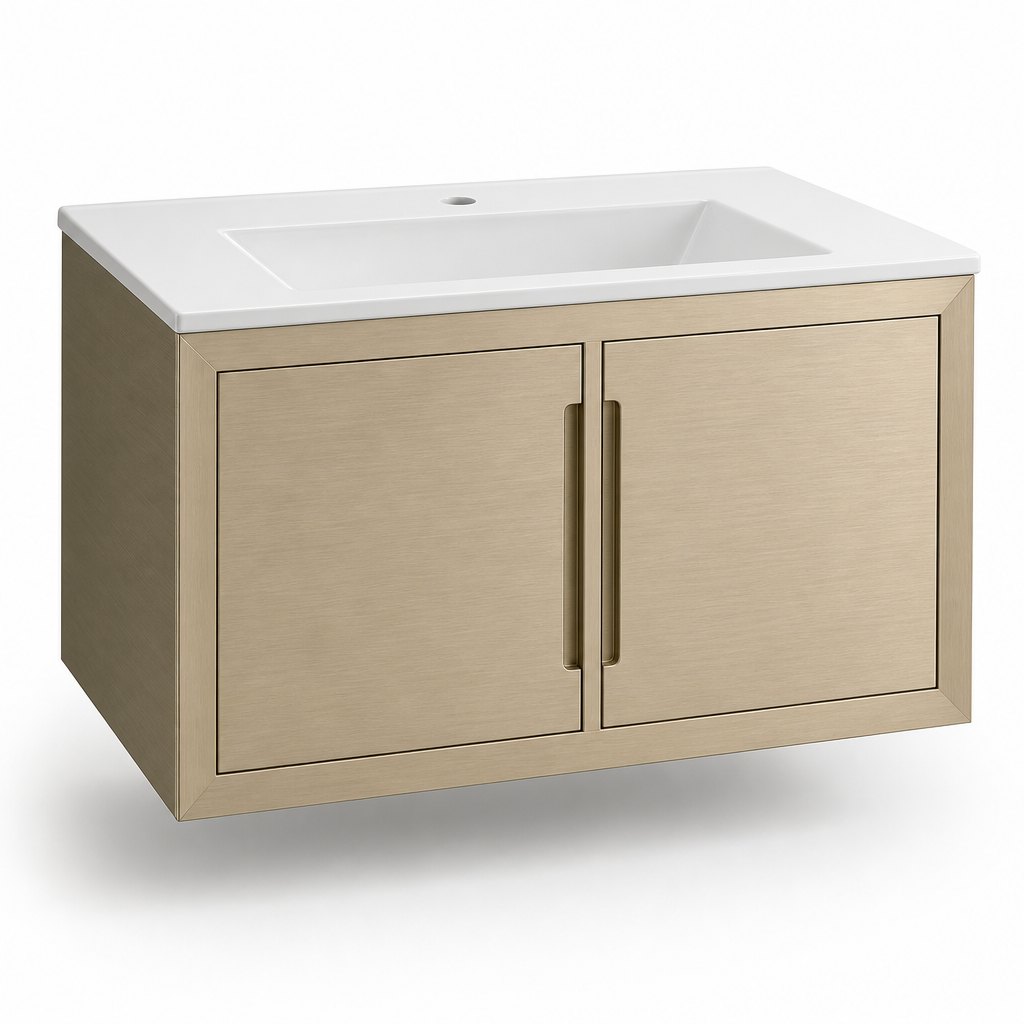
Two details trip suppliers up. First, the report names a construction, not a catalogue: change the carcass thickness, the hinge brand or the wall-hanger and the report no longer describes the product you are shipping. Second, an aluminum or mirror cabinet is outside the timber-cabinet assumptions most reports are written around, and buyers know it — expect a specific question about how the wall bracket is rated.
GS marking, and when it is genuinely required
GS is a voluntary German safety mark issued by a state-approved testing body. It is not legally mandatory for cabinets, but German retail chains and buying groups frequently make it a condition of listing, and it is close to universal for private-label programs sold through specialist sanitary retail.
The distinction matters for planning. A buyer asking for GS is asking for a factory audit plus product testing plus ongoing production surveillance — a program measured in months, not weeks. Suppliers who quote a lead time without asking whether GS is in scope usually lose the order at the second meeting.
Packaging: the registration buyers check before the container ships
The Verpackungsgesetz requires anyone who places packaging on the German market to be registered with the central packaging register, LUCID, and to have a system-participation contract for the volumes involved. A Chinese factory shipping to a German importer normally does not register itself — the importer does, because the importer places the filled packaging on the market.
What the factory must supply is the data: packaging weight by material, carton dimensions, and whether any plastic film, foam or edge protection is included. Invoices that omit this force the importer to estimate, and estimates get marked up. Suppliers who ship a packaging data sheet with every quotation remove a whole round of correspondence.
Board grade and the E1 conversation
E1 remains the baseline formaldehyde class for wood-based panels sold in Germany, with E05 available at a premium for buyers positioning on indoor air quality. In practice the question arrives as a request for a test certificate naming the specific board producer, not the cabinet factory — board certificates are issued to the panel maker.
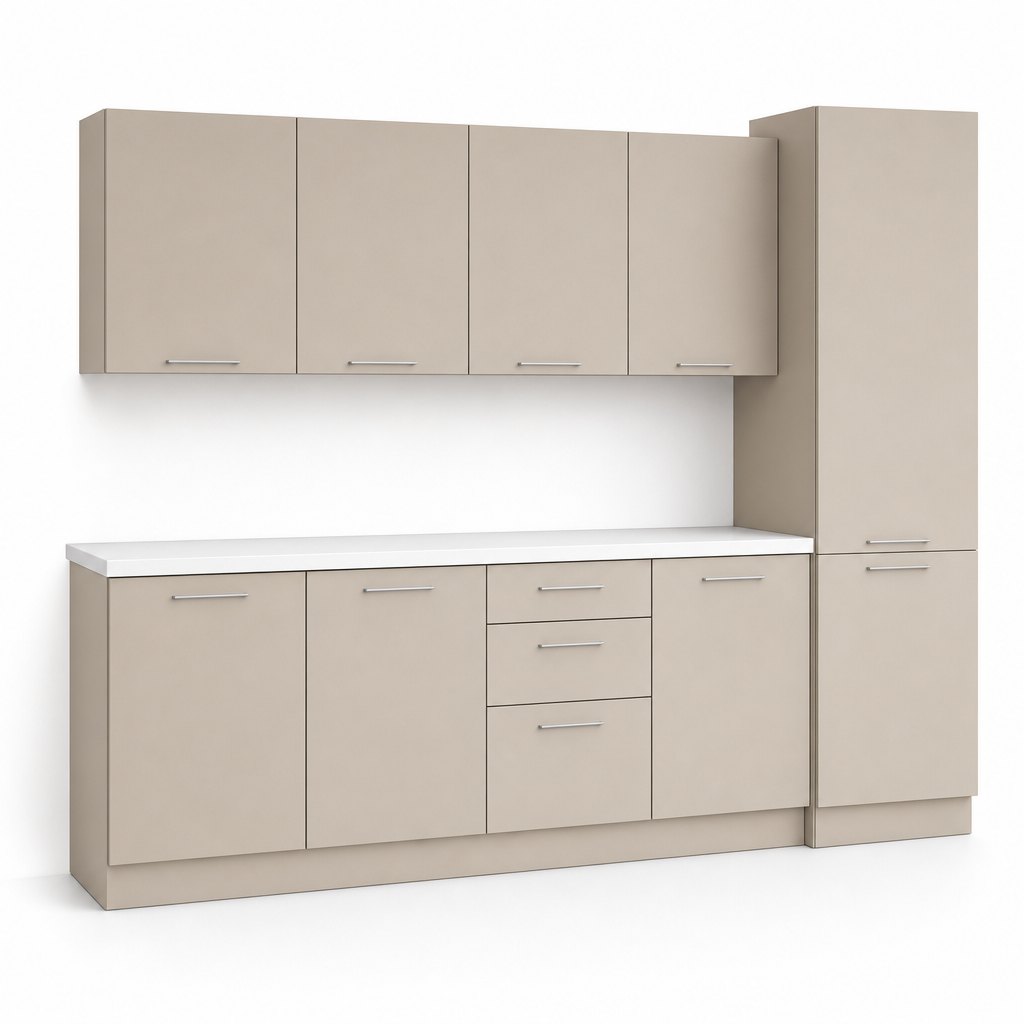
This is where a melamine kitchen and a painted kitchen diverge commercially. A melamine carcass can be traced to one board supplier with one certificate. A painted MDF door adds a second board source and a coating process, so the documentation chain lengthens and the buyer's audit gets longer with it.
What a German-ready quotation actually contains
Once the paperwork is settled, the quotation a German buyer expects is more structured than a price per unit. In our experience it needs to show:
The pattern that works is to answer the compliance questions in the same document as the price, so the buyer's technical and commercial reviewers can sign off in parallel. That single change shortens the cycle more than any discount.
- FOB price per unit at a named port, with the packaging cost broken out rather than absorbed
- Carton count, volume and gross weight per set, so the importer can model freight and LUCID fees
- Board grade and board producer, with the certificate reference
- Test report number and the construction it covers, plus what would void it
- Loading quantity per 20GP and 40HQ for the exact configuration quoted
- Lead time measured from deposit and from drawing approval, stated separately
Where the price actually lands
German specialist retail runs two price architectures side by side: a painted or lacquered program sold on design and longevity, and a melamine program sold on fitted price per meter. A factory that can supply both from one quality system is easier to audit than two suppliers, and buyers increasingly consolidate for that reason rather than for the unit price.
For a Chinese cabinet factory the implication is that the aluminum and melamine lines are not the low-margin corner of the catalogue — they are the entry ticket to a buyer who will later move volume into painted doors. German buyers rarely switch suppliers on price alone; they switch when documentation fails.
Questions Buyers Ask
Do we need GS marking to sell cabinets in Germany?
Who registers packaging under the Verpackungsgesetz, the factory or the importer?
Does an EN 14749 report cover every cabinet we buy from the same factory?
Is E1 board enough for the German market?
Want the Numbers for Your Own Program?
Send your model list, sizes and destination port — we reply within 24 hours with FOB pricing, MOQ and lead time.